

What age can a child ride in a bike trailer
A child can ride in a bike trailer only when the trailer manual’s minimum age and developmental requirements are met and the child can use its restraint correctly. There is no single age that applies to every trailer.
Check the trailer before using an age number
Find the exact make and model, then read its current manual. Compare your child with every stated requirement, including minimum age, body size, seating ability and any restrictions on infant-support accessories. Also check the permitted number of passengers and the trailer’s load limit.
If the manual is missing, the model cannot be identified, or a requirement is unclear, do not guess. Ask the manufacturer or a qualified bicycle mechanic. An accessory should not be treated as permission to carry a younger child unless the exact trailer manual approves that accessory for cycling.
Measure and observe your child
Record the child’s current height and weight so you can compare them with the manual. Then check the abilities the manufacturer requires. A child who cannot maintain the specified seated position, slumps during a stationary fitting, or cannot be secured as directed is not ready for that trailer, regardless of birthday.
- Measure: current height and weight, using ordinary clothing and no estimates.
- Compare: the measurements and age with the exact manual’s minimums and maximums.
- Observe: whether the child maintains the required seated posture and head position.
- Confirm: the restraint fits and fastens exactly as its instructions describe.
Age is therefore a screening point, not the whole decision. If any required measurement, developmental condition or restraint check fails, wait and reassess later.
Fit the helmet and restraint separately
Use a properly fitting bicycle helmet for the child. It should sit level, and its straps should be adjusted according to the helmet manufacturer’s instructions. A helmet that is tilted, loose or incorrectly strapped needs adjustment or replacement before the ride.
Next, place the stationary trailer on level ground and secure the child exactly as its manual directs. Check that the helmet and the trailer seat work together without forcing the child’s head forward or causing a slumped position. Never improvise padding, alter the restraint or copy a setup from a different model.
Do a stationary check, then a short first ride
- Inspect and assemble the trailer according to its manual, including its bicycle attachment and any retaining components.
- Seat and secure the child while the bicycle remains stationary.
- Check posture, helmet position and restraint fit once more.
- Begin with a short, calm ride in an appropriate low-risk area.
- Stop if the child slumps, becomes distressed, interferes with the restraint, or cannot maintain the required position.
Follow the exact product manual for assembly, maintenance, compatibility and load limits. If the attachment, restraint or frame condition is uncertain, have a qualified bicycle mechanic inspect it before carrying a child.
When the supplied kids’ bikes become relevant
The supplied products are bicycles, not bike trailers, so they cannot establish when a child is ready to be a trailer passenger. They become relevant later when comparing an independently ridden training-wheel bike. Their 12-, 14- and 16-inch options provide starting points for that separate transition, followed by an individual fit check.
 Girls 12/14/16 Inch Kids Bike by XJD with Training Wheels – Peach
A Training Wheel Bike offered in supplied 12-, 14- and 16-inch SKU labels. It is relevant to a later independent-riding fit comparison, not to determining bike-trailer passenger readiness.
 XJD Light Purple Girls Bike with Basket, Training Wheels, 12/14/16/20 Inch
A Training Wheel Bike with supplied available SKU labels of 12, 14 and 16 Inch. It can inform a later bicycle fit comparison but is not a trailer or evidence of trailer readiness.
Girls 12/14/16 Inch Kids Bike by XJD with Training Wheels – Peach is listed in the Training Wheel Bikes category with supplied 12-, 14- and 16-inch SKU labels.
XJD Light Purple Girls Bike with Basket, Training Wheels, 12/14/16/20 Inch is also categorized as a Training Wheel Bike. Although 20 Inch appears in its catalog title, the supplied available SKU labels are 12 Inch, 14 Inch and 16 Inch, so availability beyond those labels should not be assumed.
Compare bike size only when independent riding begins
For a first size comparison, XBikes lists 12 Inch for ages 3–4 and heights 34–40 in (86–102 cm), 14 Inch for ages 3–6 and heights 37–45 in (94–114 cm), and 16 Inch for ages 4–7 and heights 40–48 in (102–122 cm). These ranges are bicycle starting points only; they do not determine trailer readiness.
Measure the rider’s height and inseam, then have the child try the bicycle. Check stand-over clearance, reach, brake control and present confidence. Do not buy an oversized bicycle merely to allow room for growth. Where ranges overlap, choose according to the actual fit and control rather than age alone.
Your decision before the next ride
Use the trailer only if your child meets every requirement in its exact manual, maintains the required seated posture, fits the restraint correctly and wears a properly fitted helmet. Otherwise, wait. Consider the supplied kids’ bikes only when the child is ready to ride independently and passes a separate, hands-on bicycle fit check.
Bikes for your next adventure
-

Kids Bike Helmet by XJD for Girls – Pink
The XJD Kids Bike Helmet in Pink is a lightweight multi-sport helmet for girls r…$59.99
$99 -

Blue XJD Kids Bike Helmet for Boys & Girls
The Blue XJD Kids Bike Helmet is a lightweight, adjustable multi-sport helmet fo…$59.99
$99 -
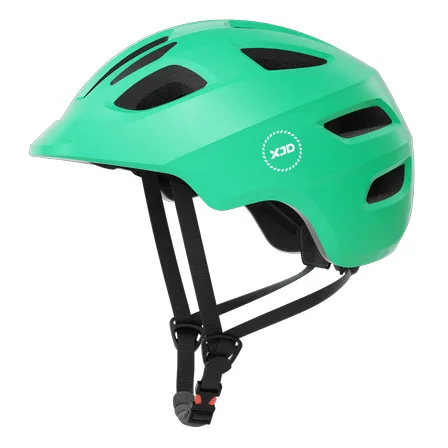
Green XJD Kids Bike Helmet for Boys & Girls
The Green XJD Kids Bike Helmet is a lightweight multi-sport helmet for toddlers …$59.99
$99