

What age can a child go on a bike seat
There is no single age when every child can go on a bike seat. Use the seat manual, the child’s development and fit, and local rules—not age alone.
Start with the type of “bike seat”
If you mean a passenger seat attached to an adult’s bicycle, do not use a bicycle wheel-size chart to decide readiness. The child must satisfy every requirement in the exact passenger-seat manual, including its stated developmental, size and load limits. The seat must also be compatible with the bicycle and correctly installed.
If you mean the saddle on a bicycle the child will ride independently, age is only a starting point. Measure the rider and check the actual bicycle for stand-over clearance, reach, balance and brake control.
For a passenger seat, check readiness before age
A child should not ride in a passenger seat merely because they have reached a particular birthday. Before riding, confirm all of the following:
- The child meets every minimum requirement stated by the seat manufacturer.
- The child can maintain the posture and stability required by that manual throughout the ride.
- The child, seat and any carried items remain within every stated load limit.
- The seat is explicitly compatible with the adult bicycle and its mounting points.
- The restraints and foot protection fit and operate exactly as described.
- A properly fitting bicycle helmet can sit level without interference from the seat.
- The arrangement complies with applicable local passenger and helmet rules.
If a limit, compatibility detail, torque value or installation step is missing, do not guess. Consult the exact product manual or ask a qualified bicycle mechanic. If the child cannot yet meet every requirement, wait rather than treating age as permission.
If the child will ride their own bicycle
Measure standing height and inseam without shoes, then compare those measurements with the actual bicycle. The child should try the bike rather than receiving an oversized model “to grow into.” Check that they can stand over it appropriately, reach the controls without stretching, steer confidently and operate the brakes reliably.
| Wheel size | Starting age | Rider height |
|---|---|---|
| 12 Inch | 3–4 | 34–40 in / 86–102 cm |
| 14 Inch | 3–6 | 37–45 in / 94–114 cm |
| 16 Inch | 4–7 | 40–48 in / 102–122 cm |
| 18 Inch | 5–9 | 43–52 in / 109–132 cm |
| 20 Inch | 7–12 | 48–60 in / 122–152 cm |
| 24 Inch | 10–14 | 54–64 in / 137–163 cm |
| 26 Inch | Youth and adults | Over 60 in / 153 cm |
These ranges are starting points, not proof of fit. Where age and measurements suggest different sizes, prioritize measured height, inseam, reach, brake control and current confidence. A child at the edge of a range should try the relevant sizes rather than automatically moving up.
How the supplied bicycles relate to this question
The catalog options below are complete beach cruiser bicycles, not child passenger seats. They help only when comparing an older child’s independent-bike fit: both provide a 24-inch option, while one also provides a 26-inch option. They are not substitutes for a passenger seat or evidence that a younger passenger is ready.
 XJD 24-Inch Green Beach Cruiser Bike with U-Brake
A complete beach cruiser bicycle rather than a passenger seat. Its 24-inch labels provide an independent-rider comparison for ages 10–14 and heights 54–64 inches, subject to an individual fit check.
 Pink XJD Beach Cruiser Bike, 24"/26", U-Brake
This beach cruiser is offered with 24 Inch and 26 Inch labels, making it relevant only for comparing an older child’s independent-bike fit, not for deciding passenger-seat readiness.
The XJD 24-Inch Green Beach Cruiser Bike with U-Brake is listed with Green / 24 Inch, Pink / 24 Inch and Pink / 26 Inch SKU labels. Its 24-inch versions correspond to XBikes’ starting point of ages 10–14 and heights of 54–64 inches, but the rider must still pass an individual fit check. The Pink / 26 Inch label is instead a comparison for youth and adults over 60 inches.
The Pink XJD Beach Cruiser Bike, 24"/26", U-Brake offers 24 Inch and 26 Inch labels. Compare the 24-inch option for a measured rider 54–64 inches tall and the 26-inch option for a rider over 60 inches; the overlap requires an actual trial for reach, stand-over and control.
Check the helmet and bicycle before every ride
A bicycle helmet must fit properly, sit level and have its straps adjusted according to the helmet manufacturer’s instructions. For a passenger, also verify that the helmet does not strike the seat in a way that forces the head forward.
Follow the exact manuals for assembly, inspection, maintenance, compatibility and load limits. Stop if a mount is loose, a restraint does not secure correctly, the child cannot maintain the required position, or an independent rider cannot confidently reach and operate the brakes.
Make the decision
For a passenger seat, proceed only after the child meets every manual requirement and the seat, bicycle and helmet work together correctly. For an independent bicycle, measure height and inseam, choose the matching wheel-size starting point, and have the child demonstrate stand-over, reach, braking and confident control before riding.
Bikes for your next adventure
-

Flower Pink XJD Girls Bike with Doll Seat & Basket
The XJD Flower Pink girls' bike is made for riders 71–122 cm tall (roughly ages …$69.99
-
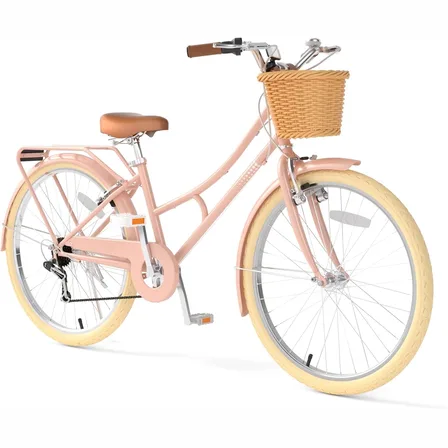
Pink XJD Beach Cruiser Bike, 24"/26", U-Brake
The XJD Pink Beach Cruiser Bike is a single-speed cruiser built for older kids a…$159.99
-
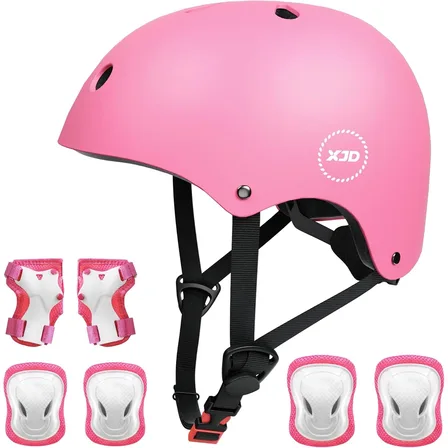
XJD Kids Helmet & Protective Gear Set for Girls, Pink
The XJD Kids Helmet & Protective Gear Set in Pink is a complete safety kit for g…$24.64