

What age can a child go in a bike seat
There is no single age when every child can go in a bike seat. Use the seat manual’s minimum age, developmental, size and load requirements, and comply with local law. A child must also have the head and trunk control required by that specific seat.
Check readiness before age
Age is only an initial screening question. Before carrying a child, confirm that the child can maintain the position required by the seat throughout the ride, including while wearing a properly fitted bicycle helmet. The child should not slump, lose head control or be unable to remain securely positioned.
Do not guess at a minimum age or weight. Find the exact make and model of the child seat, then read its manual. Compare all of the following with the child and the planned bicycle:
- The manufacturer’s minimum age and developmental requirements.
- The child’s current measured height and weight.
- The seat’s stated load and size limits.
- The required harness adjustment and foot retention.
- Any restrictions concerning bicycle type, mounting position or carrier compatibility.
- Applicable passenger laws where the bicycle will be used.
If the manual is missing, unclear or does not identify the seat precisely, contact its manufacturer or ask a qualified bicycle mechanic. Do not infer limits from a visually similar model.
Confirm that the seat and bicycle are compatible
A child may meet the seat’s requirements while the bicycle does not. Follow the exact seat and bicycle manuals for mounting points, compatible frames or racks, fasteners, load limits, assembly, maintenance and torque. These details cannot be determined from wheel diameter or the child’s age.
Have a qualified bicycle mechanic inspect the setup if either manual leaves doubt, the bicycle has an unusual frame, or the mount moves after installation. Before each ride, follow the manufacturer’s inspection instructions and confirm that straps, feet, clothing and loose objects cannot contact moving parts.
Fit the helmet and harness
A bicycle helmet must fit properly, sit level and have its straps adjusted according to the helmet manufacturer’s instructions. A helmet that is pushed backward, loose or obstructed by the seat is not correctly fitted.
Adjust the seat’s harness and foot restraints exactly as its manual directs. Recheck the fit as the child grows or clothing changes. Stop using the seat when the child exceeds any stated limit or can no longer sit in the required position, even if the child has not reached an expected age.
Do a controlled first check
- Measure the child’s height and weight and record the results.
- Compare them with every requirement in the exact seat manual.
- Verify the mounting bicycle against both manufacturers’ compatibility instructions.
- Fit the helmet, harness and foot restraints with the bicycle stationary.
- Check that the rider can mount, stop, balance and control the loaded bicycle in a traffic-free area.
Carrying a passenger changes balance, steering and stopping. If the adult cannot control the bicycle confidently with the child aboard, do not proceed. Resolve fit or installation uncertainty with a qualified bicycle mechanic.
A child bike seat is not a child-sized bicycle
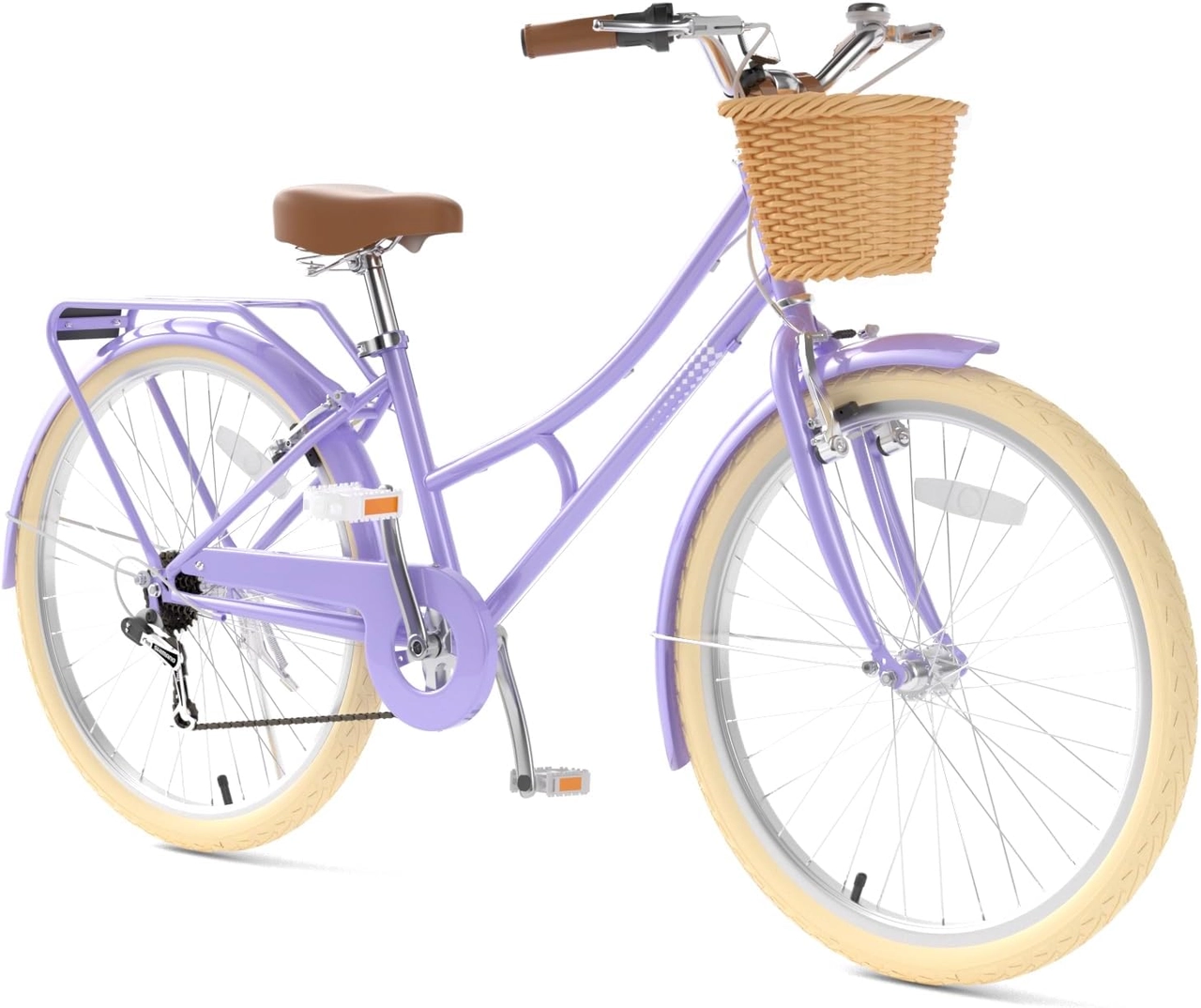
The supplied catalog item, 26-Inch XJD Beach Cruiser Bike for Girls – Purple, V-Brake, is a bicycle rather than a child passenger seat. Its available SKU labels cover 20-inch, 24-inch and 26-inch options in the listed colors. Those wheel sizes provide comparison points only for deciding whether a child may be ready to ride independently; they do not establish when a child can ride as a passenger or whether a passenger seat fits the bicycle.
These catalog options help answer the title by separating two different decisions: readiness for a passenger seat and fit for riding a bicycle independently. They are relevant only if the family is also considering a transition from being carried to riding.
If the child is ready to ride independently
Use measured fit rather than age alone. XBikes lists these starting points for the wheel sizes represented by the catalog item:
| Wheel size | Starting age | Rider height |
|---|---|---|
| 20 Inch | 7–12 | 48–60 in / 122–152 cm |
| 24 Inch | 10–14 | 54–64 in / 137–163 cm |
| 26 Inch | Youth and adults | Over 60 in / 153 cm |
These ranges are starting points, not proof of fit. Have the child try the bicycle. Check stand-over clearance, reach, brake control and present confidence, and do not choose an oversized bicycle merely to allow room for growth.
For the title’s decision, proceed only when the child satisfies every requirement in the exact passenger-seat manual, the helmet and restraints fit correctly, the bicycle is confirmed compatible, and the adult can control the loaded setup. If any one of those checks fails, the child should not go in that bike seat yet.
Bikes for your next adventure
-

Flower Pink XJD Girls Bike with Doll Seat & Basket
The XJD Flower Pink girls' bike is made for riders 71–122 cm tall (roughly ages …$69.99
-
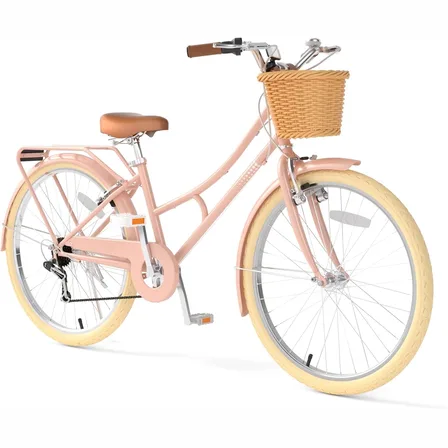
Pink XJD Beach Cruiser Bike, 24"/26", U-Brake
The XJD Pink Beach Cruiser Bike is a single-speed cruiser built for older kids a…$159.99
-
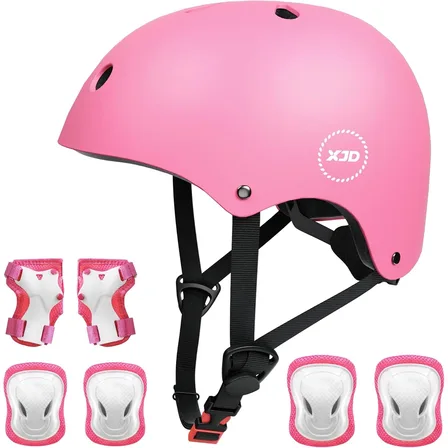
XJD Kids Helmet & Protective Gear Set for Girls, Pink
The XJD Kids Helmet & Protective Gear Set in Pink is a complete safety kit for g…$24.64