

What age can baby go in bike seat
There is no single age when every baby can go in a bike seat. Wait until your child can sit upright unsupported, hold their head steady while wearing a properly fitted helmet, and meet every limit in the seat’s manual.
Readiness matters more than a birthday
A calendar age is only a starting question. Babies develop head, neck and trunk control at different rates, while child bike seats can have different eligibility rules. Do not place a baby in a seat merely because another child used one at the same age.
Before riding, confirm that your child can remain stable without being propped up. Check this while the child is wearing the helmet intended for the ride, because the helmet changes the space around the head and seat. If the child slumps, cannot keep their head steady or appears cramped, wait.
The exact seat manual is decisive. Compare your child’s measurements with its stated minimum and maximum age, weight and height requirements, if provided. Follow its instructions for harness adjustment, foot restraints, mounting, bicycle compatibility, maintenance and load limits. When instructions are missing or unclear, contact the manufacturer or use a qualified bicycle mechanic rather than guessing.
What to measure and compare
- Current weight and height: Measure them now rather than relying on an older medical record or clothing size, then compare them with the exact seat manual.
- Seated body position: Confirm that the child sits upright with the back supported and the head controlled, without slumping to either side.
- Harness and foot fit: Use the manufacturer’s adjustment instructions. The restraints must work in the intended positions without improvised padding, knots or extensions.
- Helmet fit: The U.S. Consumer Product Safety Commission advises that a bicycle helmet should fit properly, sit level and have its straps used according to the helmet manufacturer’s instructions.
- Bicycle compatibility: Verify that the seat, rack or mounting system is approved for your exact bicycle. Have a qualified mechanic check it if compatibility or installation is uncertain.
Checks before the first ride
- Read the manuals for the child seat, bicycle and helmet, including all warnings and limits.
- Install the seat exactly as directed. Do not invent torque values or substitute mounting hardware.
- Place the bicycle on stable ground and have another adult steady it while you check the child’s seated position and restraints.
- Confirm that no straps, clothing, hands or feet can reach moving parts under the conditions described in the manual.
- Start only when the adult rider can mount, balance, steer and stop confidently with the changed load. Recheck the installation and fit before later rides as the child grows.
Also check the laws and helmet rules that apply where you ride. If your baby was premature, has low muscle tone, delayed head control or another medical concern, ask the child’s healthcare professional whether seated bicycle travel is appropriate.
When the supplied XBikes products are relevant
The supplied products are training-wheel bicycles, not baby bike seats. They do not answer passenger-seat compatibility, installation or load-limit questions. They become relevant only later, when a child is ready to ride a bicycle and fits an available wheel size after an individual check.
These particular catalog options help by providing 12, 14 and 16 Inch comparison points for that later transition. Their sizes begin at the XBikes starting point of ages 3–4 and 34–40 in / 86–102 cm for a 12 Inch bicycle; this does not make them suitable substitutes for a baby seat.
 XJD Boys 12/14/16" Training Wheel Bike – Blue
A Training Wheel Bike offered in 12, 14 and 16 Inch labels. It is relevant only for a later child-rider transition after measurement and fit checks, not as a baby bike seat.
 Black XJD Kids Bike for Boys – 12, 14 & 16 Inch Sizes
This Training Wheel Bike has 12, 14 and 16 Inch SKU labels. Use it as a later bicycle-size comparison point; supplied facts do not establish baby-seat compatibility or suitability.
 XJD Kids' Training Wheel Bike for Boys & Girls, 12/14/16 Inch – White
Cataloged as a Training Wheel Bike in 12, 14 and 16 Inch labels. It may become relevant once the child reaches the supplied size starting points and passes an individual fit check.
How the three bicycles compare
XJD Boys 12/14/16" Training Wheel Bike – Blue, Black XJD Kids Bike for Boys – 12, 14 & 16 Inch Sizes, and XJD Kids' Training Wheel Bike for Boys & Girls, 12/14/16 Inch – White are all cataloged as Training Wheel Bikes. Each has 12 Inch, 14 Inch and 16 Inch SKU labels. No supplied fact establishes differences in brakes, materials, weight, features or certification, so those details should not be assumed.
| Wheel size | XBikes starting point |
|---|---|
| 12 Inch | Ages 3–4; 34–40 in / 86–102 cm |
| 14 Inch | Ages 3–6; 37–45 in / 94–114 cm |
| 16 Inch | Ages 4–7; 40–48 in / 102–122 cm |
These ranges overlap and are not a substitute for trying the bicycle. Following the American Academy of Pediatrics guidance, have the child try it, check stand-over clearance, reach, control and brake reach, and do not buy an oversized bicycle merely for growth. Prioritize measured height, inseam, reach, brake control and current confidence over age.
Your decision now
If your baby lacks steady unsupported sitting or fails any requirement in the exact seat manual, wait. If every readiness, fit, helmet, installation and compatibility check passes, follow the manuals precisely and reassess before each ride. Consider the three supplied bicycles only when the child later reaches the stated 12, 14 or 16 Inch starting points and passes an individual bicycle fit check.
Bikes for your next adventure
-
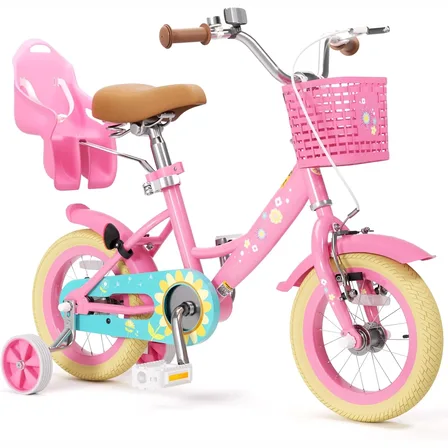
Flower Pink XJD Girls Bike with Doll Seat & Basket
The XJD Flower Pink girls' bike is made for riders 71–122 cm tall (roughly ages …$69.99
-
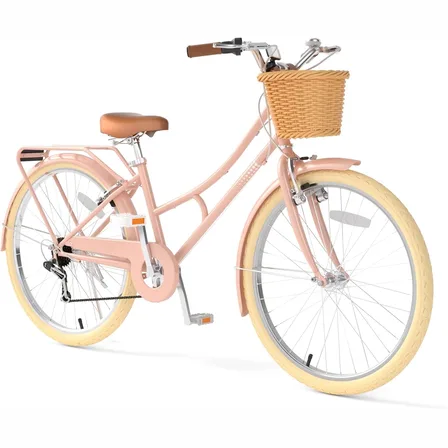
Pink XJD Beach Cruiser Bike, 24"/26", U-Brake
The XJD Pink Beach Cruiser Bike is a single-speed cruiser built for older kids a…$159.99
-
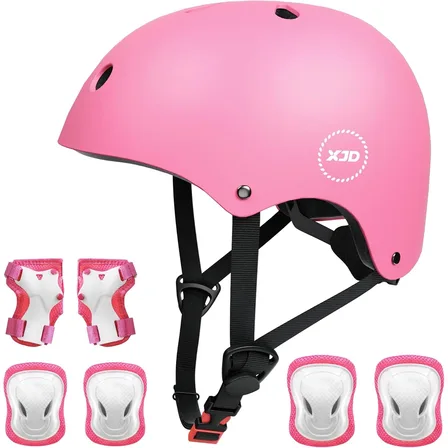
XJD Kids Helmet & Protective Gear Set for Girls, Pink
The XJD Kids Helmet & Protective Gear Set in Pink is a complete safety kit for g…$24.64