

What age can baby go on bike seat
A baby can go in a bicycle child seat only when they can sit upright unsupported, maintain steady head and neck control while wearing a properly fitted helmet, and meet the seat manufacturer’s minimum requirements. Age alone cannot establish readiness.
There is no single safe age for every baby
Development varies, and child-seat designs do too. Before riding, compare your child’s present abilities and measurements with the exact child-seat manual. Check its minimum age or developmental requirement, permitted child size and load limit, bicycle compatibility, installation instructions and any local rules that apply.
If the manual gives a minimum age, reaching that birthday is only one condition. A baby who slumps, cannot remain upright for the entire trip or cannot comfortably support their helmeted head is not ready. If the instructions are missing or unclear, do not improvise; contact the manufacturer or ask a qualified bicycle mechanic to identify and fit the system.
What to measure and observe
Use a current measurement rather than an estimate or clothing label. Then make four separate checks:
- Child size: Measure the child as directed by the seat maker and compare the result with every stated fit and load limit.
- Posture: Confirm that the child sits upright without being propped up and keeps their head controlled while wearing the helmet.
- Seat adjustment: Follow the manual for harness position, foot support and all adjustment points. The restraint should be used exactly as designed.
- Adult bicycle compatibility: Confirm that the particular seat, mounting system and bicycle are approved to work together. Wheel size alone does not prove compatibility.
Do not invent a mounting method, substitute hardware or guess at torque. Follow the exact manuals for the child seat and bicycle, including inspection and maintenance directions, or have a qualified bicycle mechanic do the installation.
Helmet fit is part of the decision
A bicycle helmet must fit the child properly, sit level and have its straps adjusted according to the helmet manufacturer’s instructions. Check the fit with the child sitting in the installed seat: the helmet and seat must not force the head forward or prevent a stable upright posture.
If the child cannot wear a correctly fitted helmet while maintaining head control, postpone the ride. A helmet does not make a developmentally unready baby ready for the movement and vibration of bicycle travel.
Make the first ride a controlled check
- Read the seat, bicycle and helmet instructions completely.
- Install the seat only on a bicycle the seat maker identifies as compatible.
- With the bicycle held securely and stationary, place the child in the seat and check posture, restraints, feet and helmet clearance.
- Start with a very short ride in a calm, traffic-free setting and stop immediately if the child slumps, becomes distressed or cannot hold a steady position.
- Recheck all attachment points and the child’s fit before every later ride, following the manuals.
The added passenger changes balance, steering, braking and mounting. The adult rider should practice controlling the loaded bicycle in a protected area before entering ordinary riding conditions.
How the supplied XBikes options relate
The supplied catalog item is not a baby carrier seat. The Black XJD Kids Bike for Boys – 12, 14 & 16 Inch Sizes is categorized as a Training Wheel Bike and is available in 12 Inch, 14 Inch and 16 Inch labels. Those options become relevant later, when a child is developmentally ready to ride a bicycle rather than travel as a passenger.
These particular catalog options help answer the title by separating two decisions: readiness for a mounted child seat now, and fit for an independently ridden children’s bicycle later. They are comparison points, not substitutes for a baby seat.

For that later stage, XBikes uses these starting points: 12 Inch for ages 3–4 and heights 34–40 in / 86–102 cm; 14 Inch for ages 3–6 and heights 37–45 in / 94–114 cm; and 16 Inch for ages 4–7 and heights 40–48 in / 102–122 cm. These ranges are not evidence that a younger baby can use a carrier seat.
When comparing those bicycle sizes, prioritize measured height, inseam, reach, brake control and current confidence over age. Have the child try the bicycle, check stand-over and control, and do not choose an oversized bicycle merely to allow room for growth.
Decide whether to ride today
Proceed only if the child can sit unsupported with steady helmeted head control, fits every limit in the exact seat manual, and the seat is correctly installed on a compatible bicycle. If any one of those checks fails—or the documentation cannot confirm it—wait and resolve that specific issue before taking the baby on the bike.
Bikes for your next adventure
-

Flower Pink XJD Girls Bike with Doll Seat & Basket
The XJD Flower Pink girls' bike is made for riders 71–122 cm tall (roughly ages …$69.99
-
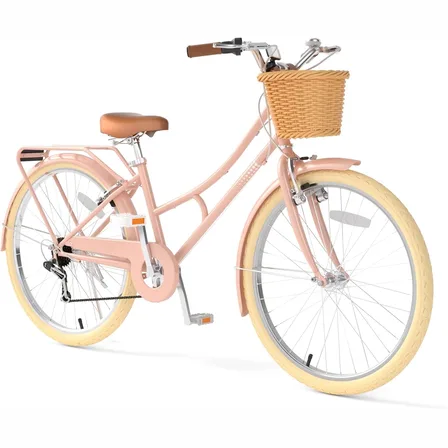
Pink XJD Beach Cruiser Bike, 24"/26", U-Brake
The XJD Pink Beach Cruiser Bike is a single-speed cruiser built for older kids a…$159.99
-
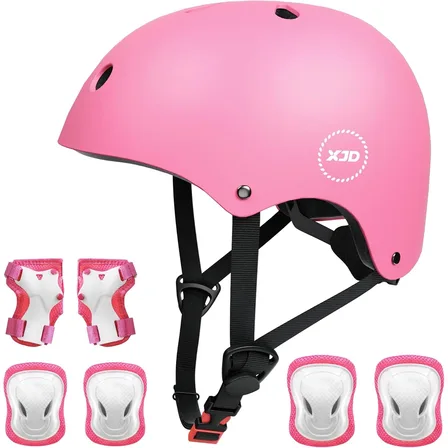
XJD Kids Helmet & Protective Gear Set for Girls, Pink
The XJD Kids Helmet & Protective Gear Set in Pink is a complete safety kit for g…$24.64