

What age can baby sit on back of bike
A baby can sit on the back of a bike only when they can sit unsupported, fit an approved rear child seat and helmet correctly, and meet the seat maker’s minimum requirements. Age alone cannot decide readiness.
Check the child before choosing a rear seat
Start with physical readiness, not a birthday. The child needs enough head and neck control to remain stable while the bicycle starts, stops, turns and travels over uneven ground. They must be able to sit upright without support for the whole journey.
Measure the child’s current height and weight, then compare both with the child seat manufacturer’s stated limits. Check the seat’s instructions for any minimum age or developmental requirement. If the child does not satisfy every requirement, do not carry them on the back of the bike. Ask the child’s healthcare professional if you are uncertain about head, neck or sitting control.
Confirm that the seat, bike and rider work together
A rear child seat is not automatically compatible with every bicycle. Use the exact manuals for the seat, bicycle and any rack or mounting hardware. Confirm the permitted mounting method, compatibility and load limits without guessing. A qualified bicycle mechanic should inspect the proposed setup if any instruction is missing or unclear.
- Child: measure height and weight; observe unsupported sitting and head control.
- Seat: compare those measurements with its stated limits and readiness rules.
- Bicycle: verify that its frame or rack accepts that exact seat system.
- Adult rider: make sure you can mount, balance, steer, brake and dismount with the added load.
Follow the product manuals for assembly, maintenance, fastener checks and torque. Do not improvise an attachment or rely on appearance alone.
Fit the helmet and restraints before riding
The U.S. Consumer Product Safety Commission advises that a bicycle helmet must fit properly, sit level and have its straps used according to the manufacturer’s instructions. Check that the helmet works with the child seat’s shape and does not force the child’s head forward.
Secure every supplied restraint and foot-retention component exactly as the child seat manual directs. Clothing, straps and feet must stay away from wheels and other moving parts. Recheck the fit whenever the child grows or clothing changes.
Do a stationary and low-speed check
Install the seat first, then test the bicycle without the child. With another adult helping to steady the bike, place the child in the seat while the bicycle remains stationary. Check posture, helmet position, restraint fit and clearance around the wheel.
Next, assess whether the adult can control the loaded bicycle in a traffic-free area. Added weight high on the rear can change balance, steering and braking. If the bicycle feels unstable, the child slumps, the helmet shifts or any component moves, stop and correct the issue before considering a trip. Follow applicable local laws about child passengers and helmets.
What the supplied kids’ bikes can—and cannot—answer
The catalog products below are child-ridden training-wheel bicycles, not rear child seats and not equipment for carrying a baby. They become relevant only when comparing a later stage: a child riding their own correctly fitted bicycle. Their listed wheel sizes provide useful starting points for that separate decision, but they do not establish readiness to ride as a passenger.
 XJD Kids Bike for Girls – Pink, 12/14/16/20 Inch with Training Wheels
A training-wheel bicycle offered in 12, 14, 16 and 20 Inch options. It is relevant only for comparing a later independent-riding stage, not as a rear child seat or baby-passenger solution.
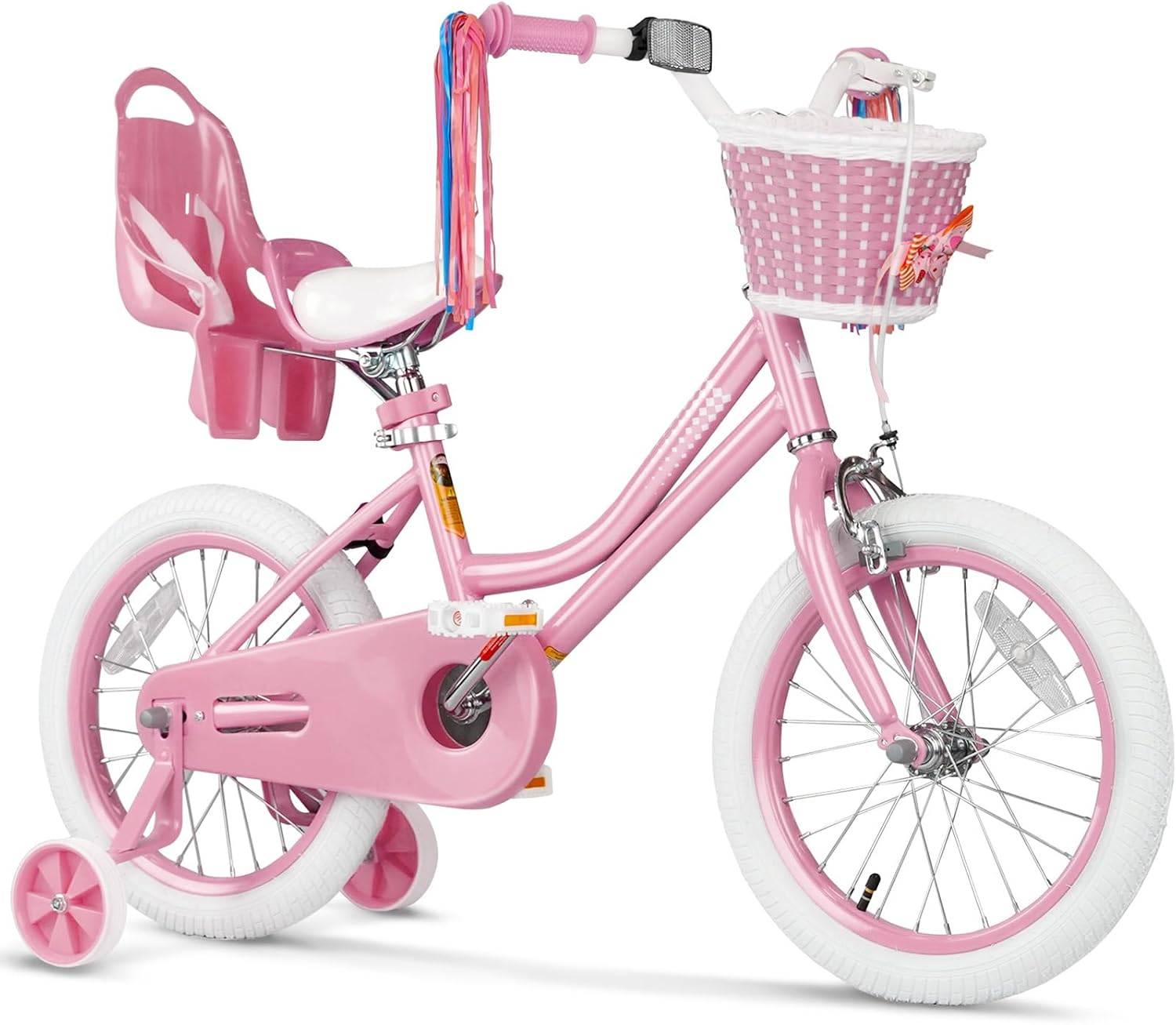 XJD Pink Girls' Bike – Kids 12/14/16 Inch Training Wheel Bicycle
A training-wheel bicycle offered in 12, 14 and 16 Inch options. Use those sizes only as starting points for an individual child-rider fit check; the product does not answer rear-seat compatibility.
XJD Kids Bike for Girls – Pink, 12/14/16/20 Inch with Training Wheels is listed in 12, 14, 16 and 20 Inch options. XJD Pink Girls' Bike – Kids 12/14/16 Inch Training Wheel Bicycle is listed in 12, 14 and 16 Inch options. The first therefore adds a 20 Inch comparison; otherwise, both cover the same three smaller listed sizes.
XBikes uses these wheel-size starting points: 12 Inch for ages 3–4 and heights 34–40 in / 86–102 cm; 14 Inch for ages 3–6 and 37–45 in / 94–114 cm; 16 Inch for ages 4–7 and 40–48 in / 102–122 cm; and 20 Inch for ages 7–12 and 48–60 in / 122–152 cm. These ranges apply to fitting a child who will ride the bicycle, not to determining when a baby can occupy a rear seat.
For either kids’ bike, prioritize measured height, inseam, reach, brake control and current confidence over age. Have the child try the bicycle, check stand-over and control, and avoid buying an oversized model just for growth. Any age-like wording in a product title is a catalog label, not proof of individual fit.
Make the decision
Do not put the baby on the back of the bike until unsupported sitting and head control are established, the child meets every seat-manufacturer requirement, the helmet and restraints fit, and the seat is explicitly compatible with the bicycle. If even one check fails or remains uncertain, wait; the listed kids’ bikes are future independent-riding comparisons, not substitutes for a compatible rear child seat.
Bikes for your next adventure
-

Flower Pink XJD Girls Bike with Doll Seat & Basket
The XJD Flower Pink girls' bike is made for riders 71–122 cm tall (roughly ages …$69.99
-
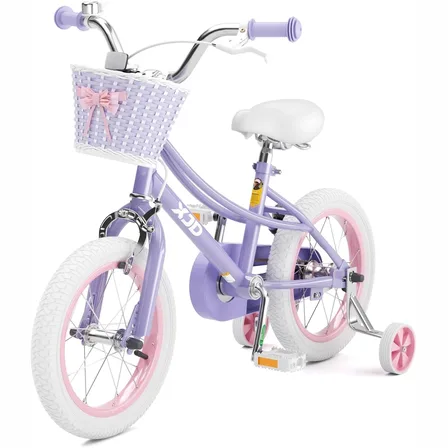
Girls' Training Wheel Bike by XJD with Basket – Purple
If you're shopping for a first bike for a girl roughly 3 to 12 years old (91–152…$75.99
-
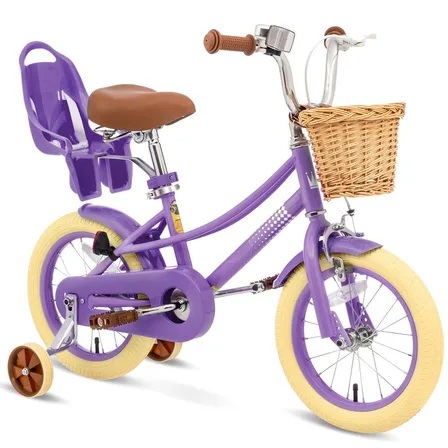
XJD Girls' Bike with Training Wheels, 12/14/16/20 Inch – Purple
The XJD girls' bike with training wheels in Purple is built to grow with your ri…$139
$159