

What age can child go in bike seat
There is no single age when every child can go in a bike seat. For a passenger seat, follow its exact manual, local rules and stated child limits; for a child’s own bicycle, measure fit and control rather than choosing by age alone.
First, identify which bike seat you mean
A passenger seat attached to an adult bicycle and the saddle on a child’s own bike require different decisions. A passenger seat is appropriate only when the child and bicycle meet every requirement specified by that seat’s manufacturer. Because no passenger-seat model or limits are supplied here, an exact minimum age, weight or installation method cannot be stated responsibly.
If you mean when a child can ride a bicycle independently, use age only as a starting point. The child should try the bicycle, and you should check height, inseam, stand-over clearance, reach, brake control and confidence. Do not buy an oversized bicycle merely to allow room for growth.
What to check for a passenger bike seat
Before carrying a child, find the manual for the exact seat and compare its requirements with both the child and the adult bicycle. Check all of the following:
- Child measurements: Record current height and weight, then compare them with the seat manufacturer’s stated limits. Do not estimate or substitute limits from another model.
- Development and positioning: Confirm that the child can maintain the posture and support required in the manual throughout the ride. If development or medical readiness is uncertain, ask the child’s healthcare professional.
- Bicycle compatibility: Verify that the bicycle, frame or rack is explicitly compatible with the exact passenger seat and mounting system.
- Secure fit: Use the supplied restraints and foot protection exactly as instructed, checking that clothing, feet and hands cannot contact moving parts.
- Adult control: Make sure the adult can start, steer, stop and balance the loaded bicycle confidently in a controlled area before riding in traffic.
Installation, fastener torque, maintenance intervals and load limits must come from the exact product manual. If the instructions are missing, unclear or conflict with the bicycle specification, use a qualified bicycle mechanic rather than improvising.
Helmet fit is a separate requirement
A bicycle helmet must fit the child properly, sit level and have its straps adjusted according to the helmet manufacturer’s instructions. A helmet does not make an incompatible passenger seat appropriate, and meeting a seat’s limits does not remove the need for correct helmet fit.
Recheck the helmet and restraint fit whenever clothing changes or the child grows. Stop using the seat when any manufacturer limit is reached, when the mounting system no longer remains secure, or when the adult cannot control the bicycle predictably.
If the child is ready for an individual bicycle
Measure the child without shoes against a wall for standing height. Measure inseam from the floor to the crotch using a firm book held level. Then have the child try the actual bicycle: check stand-over room, comfortable reach to the handlebar, access to the controls and the ability to operate the brakes. Confidence matters because a technically reachable bicycle can still be too demanding.
| Wheel size | Age starting point | Rider height starting point |
|---|---|---|
| 12 Inch | 3–4 | 34–40 in / 86–102 cm |
| 14 Inch | 3–6 | 37–45 in / 94–114 cm |
| 16 Inch | 4–7 | 40–48 in / 102–122 cm |
| 18 Inch | 5–9 | 43–52 in / 109–132 cm |
| 20 Inch | 7–12 | 48–60 in / 122–152 cm |
| 24 Inch | 10–14 | 54–64 in / 137–163 cm |
| 26 Inch | Youth and adults | Over 60 in / 153 cm |
These ranges are starting points, not a substitute for a fit check. If height suggests one size but reach, stand-over, brake use or confidence is poor, do not move ahead on age alone.
How the supplied bicycle options are relevant
The XJD Girls' Bike with Training Wheels, 12/14/16/20 Inch – Purple is not a passenger bike seat. Its supplied 12 Inch, 14 Inch, 16 Inch and 20 Inch options can help compare possible sizes when a child is moving toward riding an individual training-wheel bicycle. Each option still requires a hands-on fit and control check.

The available sizes cover several XBikes starting ranges, but they do not include 18 Inch, 24 Inch or 26 Inch. If the child’s measurements and trial fit point to one of those sizes, the listed options are nearest-size comparison points only, not substitutes; another wheel size is not equivalent.
Make the decision in this order
- Decide whether you are evaluating an adult-mounted passenger seat or a child’s own bicycle.
- For a passenger seat, locate the exact manual and verify the child limits, bicycle compatibility, mounting requirements and local rules.
- For an individual bicycle, record height and inseam, use the wheel-size table as a starting point, and arrange an actual fit check.
- Confirm level helmet fit, usable controls and confident stopping before the first ride.
If any passenger-seat requirement cannot be verified, do not carry the child in it. If choosing an individual bicycle, select only the size the child can stand over, reach, brake and control now—not the size intended for future growth.
Bikes for your next adventure
-
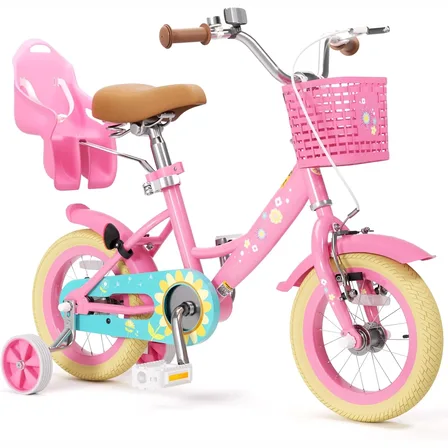
Flower Pink XJD Girls Bike with Doll Seat & Basket
The XJD Flower Pink girls' bike is made for riders 71–122 cm tall (roughly ages …$69.99
-
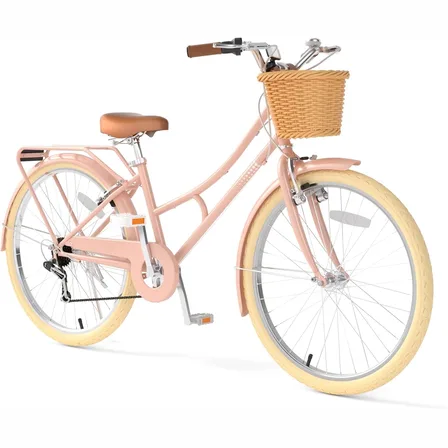
Pink XJD Beach Cruiser Bike, 24"/26", U-Brake
The XJD Pink Beach Cruiser Bike is a single-speed cruiser built for older kids a…$159.99
-
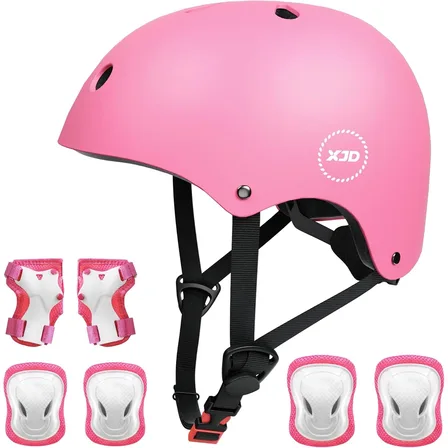
XJD Kids Helmet & Protective Gear Set for Girls, Pink
The XJD Kids Helmet & Protective Gear Set in Pink is a complete safety kit for g…$24.64