

What age can kids balance on bike
Most children can begin balancing on a bike at about age 3, but age alone cannot determine readiness. Measure height, check inseam and reach, and confirm that the child can control the correctly fitted bike with confidence.
When can a child balance on a bike?
The practical starting point is usually around age 3, when the XBikes chart begins with 12-inch bikes for ages 3–4 and heights of 34–40 inches (86–102 cm). Some children develop the coordination and confidence earlier or later, so this range is a starting point rather than a deadline.
A child is ready to practise balancing when they can sit securely, reach the handlebar without stretching, place their feet down for support, and steer while looking ahead. They should also follow simple instructions and remain calm enough to stop when asked.
Measure before comparing wheel sizes
Measure the child’s height without shoes, standing straight against a wall. Measure inseam from the floor to the crotch with the feet slightly apart. Then compare the measurements with the actual bicycle: the child needs suitable stand-over clearance, comfortable reach and access to the brake controls.
Have the child try the bike whenever possible. Do not choose an oversized bicycle simply to allow room for growth. A larger wheel-size range does not prove that the frame, seat position, reach or controls fit an individual rider.
| Wheel size | Starting age | Rider height |
|---|---|---|
| 12 Inch | 3–4 | 34–40 in / 86–102 cm |
| 14 Inch | 3–6 | 37–45 in / 94–114 cm |
| 16 Inch | 4–7 | 40–48 in / 102–122 cm |
| 18 Inch | 5–9 | 43–52 in / 109–132 cm |
| 20 Inch | 7–12 | 48–60 in / 122–152 cm |
| 24 Inch | 10–14 | 54–64 in / 137–163 cm |
| 26 Inch | Youth and adults | Over 60 in / 153 cm |
Where ranges overlap, prioritize measured height, inseam, reach, brake control and current confidence. Wheel diameter is useful for narrowing the options, but it cannot replace an individual fit check.
Use a simple fit-and-control check
- Stand over the bicycle: confirm the child can stand securely rather than being trapped or forced onto tiptoes.
- Check the seated position: make sure the child can put their feet down for balance during early practice.
- Check reach: the handlebar should be accessible without an uncomfortable forward stretch or locked arms.
- Check the brakes: the child must be able to reach and operate the fitted controls. Follow the exact product manual for adjustment instructions.
- Watch confidence: ask the child to walk the bike, steer and stop. Hesitation or loss of control means the setup or timing needs reconsideration.
How training-wheel options relate to balancing
The Light Pink XJD Girls' Bicycle with Basket & Training Wheels is catalogued as a training-wheel bike and is offered in 12 Inch, 14 Inch, 16 Inch and 20 Inch labels. Those sizes let a parent compare several XBikes starting ranges, while the training-wheel format may suit a child who is not yet ready to balance independently. It is not automatically appropriate merely because the child’s age appears in a wheel-size range; confirm the complete fit and controls first.
This catalog option helps answer the question by showing that supported riding and independent balancing are separate stages. It may be relevant when a correctly fitted child needs support while developing pedalling and steering confidence. It may be less relevant when the immediate goal is practising two-wheel balance without training wheels.

Practise balance in manageable steps
Choose a flat, open area away from traffic and obstacles. Start with walking the bicycle while seated, using the feet to steady and stop. When the child can steer predictably, encourage short glides with both feet briefly lifted. Keep sessions short enough that fatigue does not undermine control.
Do not push a nervous child into longer glides or a larger bicycle. Return to walking and steering if they cannot stop deliberately, repeatedly veer off course or need an adult to hold them upright throughout. For assembly, maintenance, compatibility or adjustments not stated in the supplied facts, consult the exact product manual or a qualified bicycle mechanic.
Helmet fit belongs in the readiness check
Use a bicycle helmet that fits properly, sits level and has straps positioned according to its manufacturer’s instructions. Recheck the fit before riding rather than assuming a previously adjusted helmet still fits. A helmet does not correct a poorly fitted bicycle or replace supervision and an appropriate practice area.
Make the decision from control, not a birthday
Begin around age 3 only if the measured child fits an appropriate bicycle and can sit, reach, steer, stop and place their feet down confidently. If any of those checks fail, change the fit or wait and try again; if they pass, begin with walking and short glides before expecting independent balance.
Bikes for your next adventure
-

XJD Kids Bike for Girls – Pink, 12/14/16/20 Inch with Training Wheels
The XJD Kids Bike for Girls in Pink is a training-wheel bike built to carry your…$139
$159 -
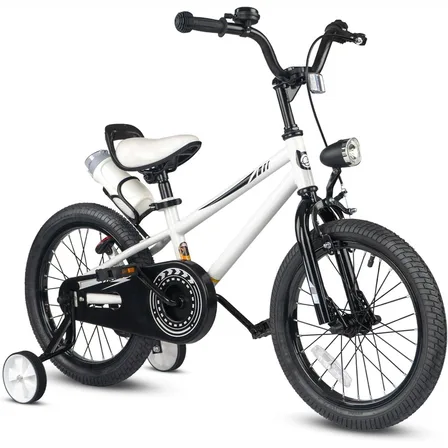
XJD Kids' Training Wheel Bike for Boys & Girls, 12/14/16 Inch – White
The XJD kids' training wheel bike in White is made for riders ages 3–8 (roughly …$169
$199 -
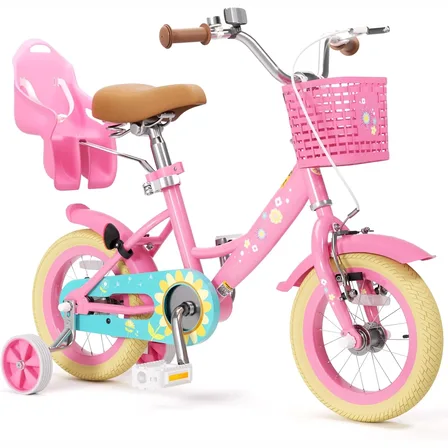
Flower Pink XJD Girls Bike with Doll Seat & Basket
The XJD Flower Pink girls' bike is made for riders 71–122 cm tall (roughly ages …$69.99