

What age can you put baby in bike seat
You can put a baby in a bike seat only when the child meets every developmental, fit and weight requirement in that seat’s manual—not at a universal age.
Why age alone cannot decide
Babies develop at different rates, and bike seats are not all designed to the same limits. Before riding, compare your child with the exact seat manufacturer’s instructions. The manual should govern minimum developmental requirements, permitted child size, load limits, harness adjustment, bicycle compatibility and installation.
If the manual is missing, unclear or conflicts with the seat’s labels, do not guess. Contact the manufacturer or ask a qualified bicycle mechanic to identify the model and confirm whether the seat and bicycle can be used together. A catalog age label or another family’s experience is not a substitute for those instructions.
What to measure and check
Use a current measurement rather than an estimate from a previous appointment. Record the child’s weight and any other measurement required by the seat manual, then compare each figure with the stated limits. A child must satisfy all requirements simultaneously; meeting only one is not enough.
- Development: Confirm every posture and support requirement stated by the manufacturer.
- Child fit: Check that the harness, foot supports and other restraints adjust exactly as the manual describes.
- Seat limits: Verify the child is within the stated minimums and maximums.
- Bicycle compatibility: Confirm that the bicycle, frame or rack and mounting location are approved for that seat.
- Installation: Follow the exact product manual for hardware, assembly, maintenance and torque requirements.
If the child cannot maintain the position required by the manual, does not fit the restraint system, or exceeds any stated limit, the answer is not yet—or no longer—for that seat.
Check the complete riding setup
A correctly sized child seat can still be unsuitable if it is mounted to an incompatible bicycle or installed incorrectly. Inspect the attachment points and all required restraints before every ride as directed by the manual. If any component is damaged, loose, missing or difficult to identify, pause and have the setup checked by a qualified bicycle mechanic.
The adult rider also needs to control the bicycle confidently with the added passenger and changed balance. Practice the handling described or permitted by the manufacturer before carrying the child. Never improvise a mount, substitute hardware or invent a tightening procedure.
The child must wear a properly fitting bicycle helmet. It should sit level, and its straps should be adjusted according to the helmet manufacturer’s instructions. Recheck the fit rather than relying only on the helmet’s printed size.
When the supplied kids bike is relevant
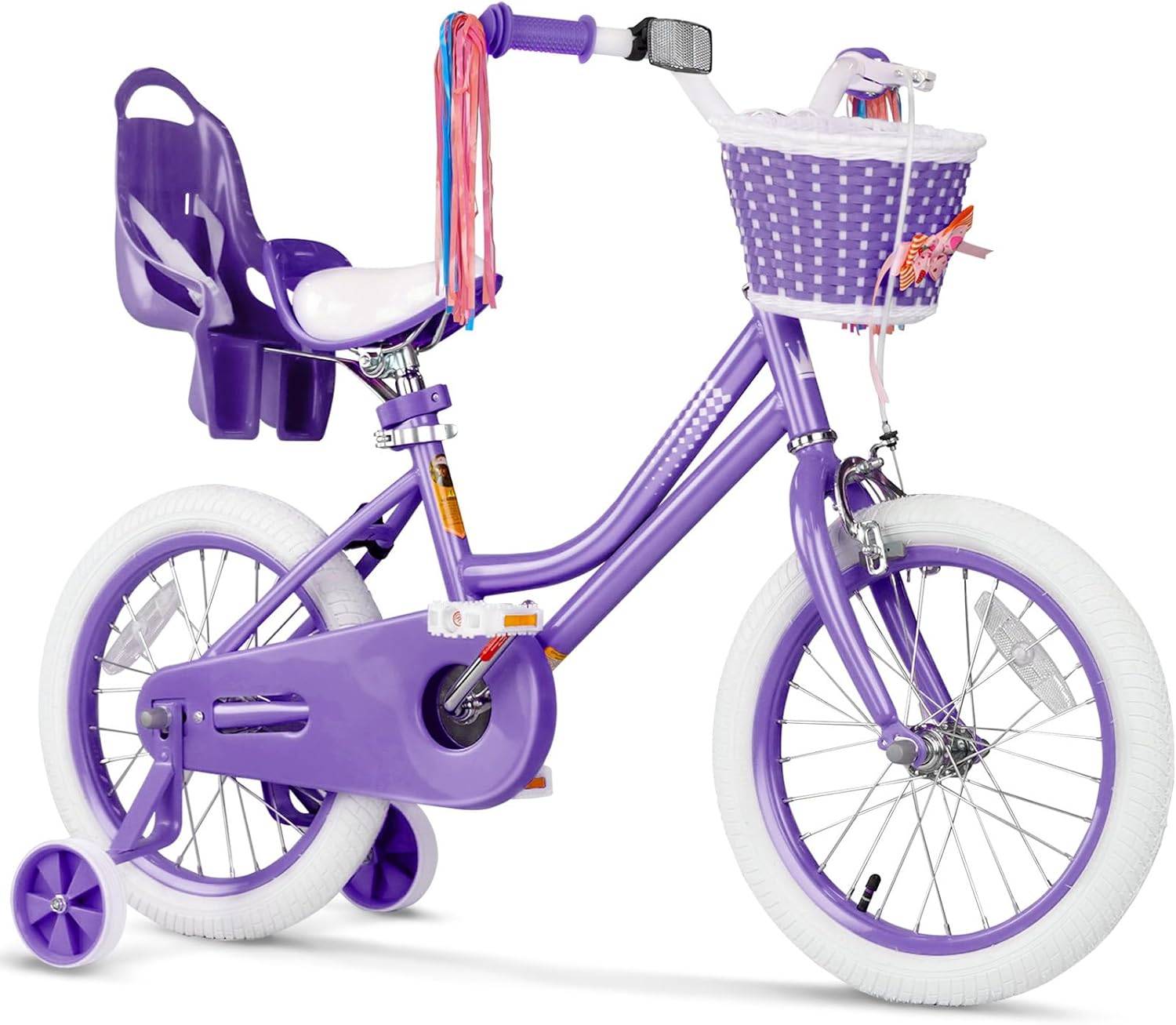
The supplied catalog item is not a baby passenger seat. The XJD Girls Bike for Kids Ages 3-8, 12/14/16 Inch with Training Wheels – Purple is a training-wheel bicycle offered in 12 Inch, 14 Inch and 16 Inch labels. It becomes relevant when comparing a child’s later transition to riding a bicycle, not when deciding whether a baby can ride as a passenger.
These particular catalog options help answer the title only by separating two decisions: eligibility for a baby seat must come from that seat’s manual, while readiness for an independent kids bike requires the rider’s measurements and an individual fit check.
Compare wheel sizes only for the later transition
For the supplied bicycle, use the XBikes starting points below. The age wording in its exact product title is a catalog label, not evidence that the bicycle fits a particular child.
| Wheel label | Starting age | Rider height |
|---|---|---|
| 12 Inch | 3–4 | 34–40 in / 86–102 cm |
| 14 Inch | 3–6 | 37–45 in / 94–114 cm |
| 16 Inch | 4–7 | 40–48 in / 102–122 cm |
Measure the child’s standing height, then have the child try the bicycle. Check inseam and stand-over clearance, reach to the controls, ability to operate the brakes and present confidence. Do not buy an oversized bicycle merely to allow room for growth. These checks take priority over age, and the listed sizes do not make this product a substitute for a passenger seat.
Make the decision now
- Find the exact child-seat model and its current manual.
- Measure the child and compare every developmental and size requirement.
- Confirm bicycle compatibility, installation, restraint fit and helmet fit.
- Use a qualified bicycle mechanic if the model, mount or instructions cannot be verified.
Put the baby in the bike seat only if every one of those checks passes today. Otherwise, wait or choose a manufacturer-approved setup that fits the child and bicycle; consider the supplied training-wheel bike only later, when the child is ready to ride and passes an individual bicycle fit check.
Bikes for your next adventure
-

Kids Bike Helmet by XJD for Boys & Girls – Black, Blue, Green, Pink, Purple
The XJD Kids Bike Helmet covers a wide 2-to-8-year age range thanks to two head-…$59.99
-
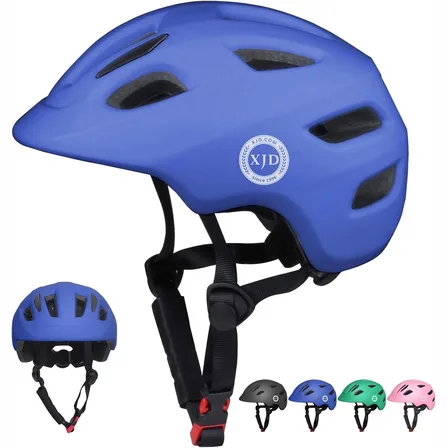
Blue XJD Kids' Bike Helmet, Adjustable Fit – Sizes XS & S
The Blue XJD Kids' Bike Helmet is a lightweight, adjustable helmet for toddlers …$20.39
-

Kids Bike Helmet by XJD for Girls – Pink
The XJD Kids Bike Helmet in Pink is a lightweight multi-sport helmet for girls r…$59.99
$99