

What age child can go in a bike trailer
Most children can use a bike trailer from about 12 months, but only when they can sit unsupported, control their head and wear a helmet correctly.
Age is only the first check
Do not put a baby in a bike trailer merely because they have reached a particular birthday. The child must remain upright without support and keep their head steady while wearing a properly fitted bicycle helmet. A helmet adds weight, so observe whether the child can still control their head comfortably.
The trailer’s exact manual takes priority. Confirm its minimum age, child-size requirements, permitted seating arrangement and load limit. Requirements vary, and a special infant insert does not automatically make cycling appropriate. If the manual does not clearly permit your child’s age and stage, wait or contact the manufacturer. Ask the child’s healthcare professional when development, prematurity or a medical condition makes readiness uncertain.
Measure and compare before the first ride
Record the child’s current height and weight, then compare both with the limits in the exact trailer manual. Also check the seated space: the helmet must not be forced forward by the seat or roof, and the child must fit within the harness without altering it.
- Posture: Can the child sit upright for the whole outing without slumping?
- Head control: Can they keep their helmeted head stable when gently moved?
- Fit: Does the supplied harness sit in the positions specified by the manufacturer?
- Capacity: Are the child, any second passenger and carried items within the stated limits?
- Compatibility: Is the trailer approved for the towing bicycle and its attachment point?
Do not guess about attachment, assembly, maintenance, tire pressure or fastener torque. Follow the exact manuals for both bicycle and trailer, or have a qualified bicycle mechanic inspect the setup.
Prepare the child and trailer
A bicycle helmet should fit properly, sit level and have its straps adjusted according to the helmet manufacturer’s instructions. Secure the child using every restraint required by the trailer manual, and keep loose clothing, toys and straps away from wheels and moving parts.
Before carrying the child, inspect the hitch, safety retention device, tires, wheels, frame, cover and harness as directed by the manual. Make a brief empty practice ride to learn the trailer’s extra width, turning path and stopping behavior. For the first occupied outing, choose a short, smooth route away from traffic and watch for discomfort, slumping or distress. Stop immediately if the child cannot maintain a stable position.
Why the listed kids’ bikes are different
A trailer passenger and a child riding independently have different fit decisions. The supplied catalog contains bicycles rather than trailers, so neither product establishes when a child is ready to ride as a passenger. They become relevant later, when the child is developing the coordination and confidence to control a bicycle independently.
The Black XJD Kids' BMX Bicycle with Training Wheels and the Pink Girls' 12/14/16" Bike by XJD – Basket & Doll Seat each offer 12 Inch, 14 Inch and 16 Inch SKU labels. These are useful comparison points for a child moving from passenger to rider, but they are not trailer accessories and cannot replace a trailer or its readiness checks.
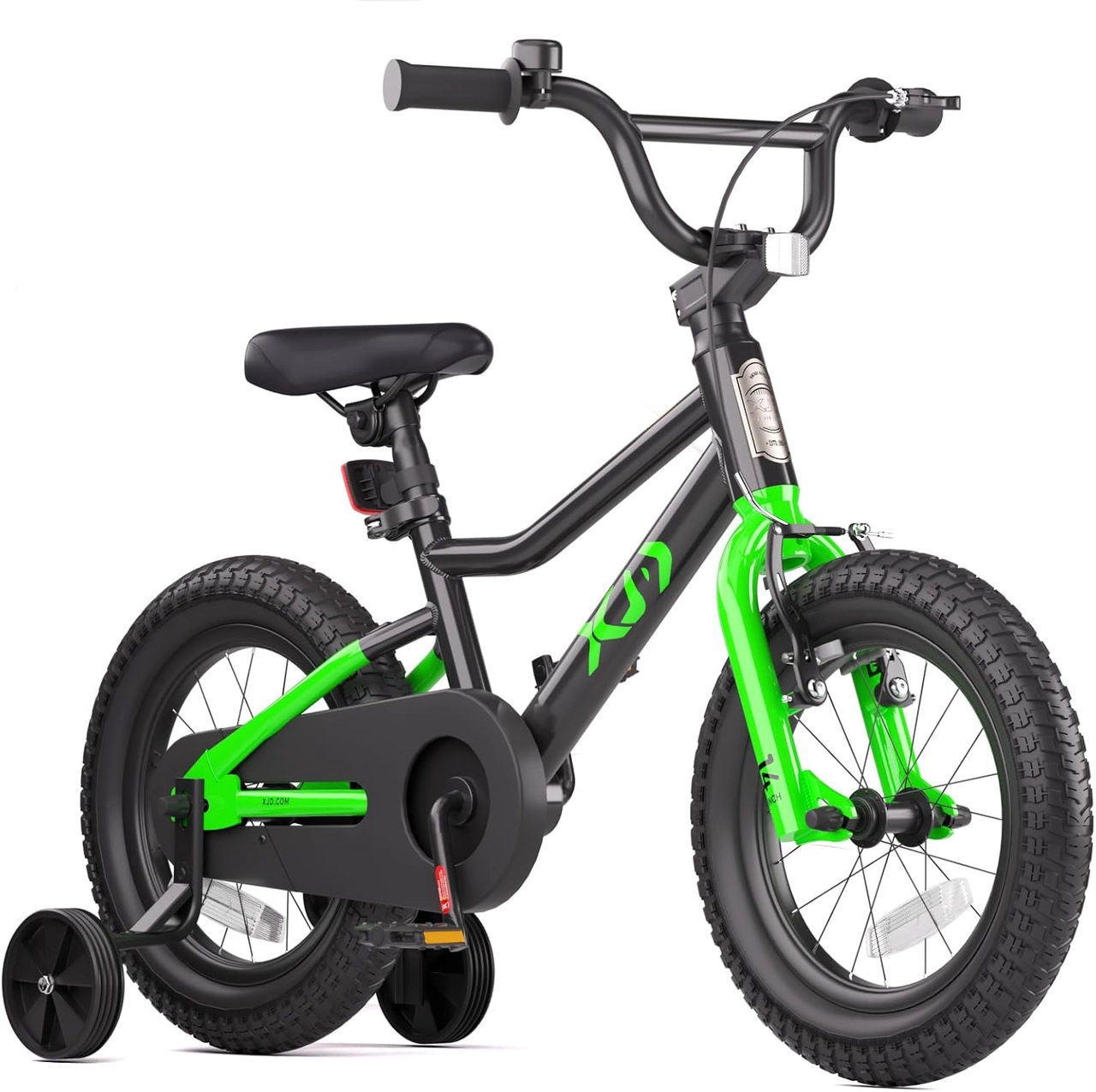 Black XJD Kids' BMX Bicycle with Training Wheels
A kids’ BMX bicycle offered in 12 Inch, 14 Inch and 16 Inch labels. It is relevant when comparing a later move to independent riding, not for determining bike-trailer readiness.
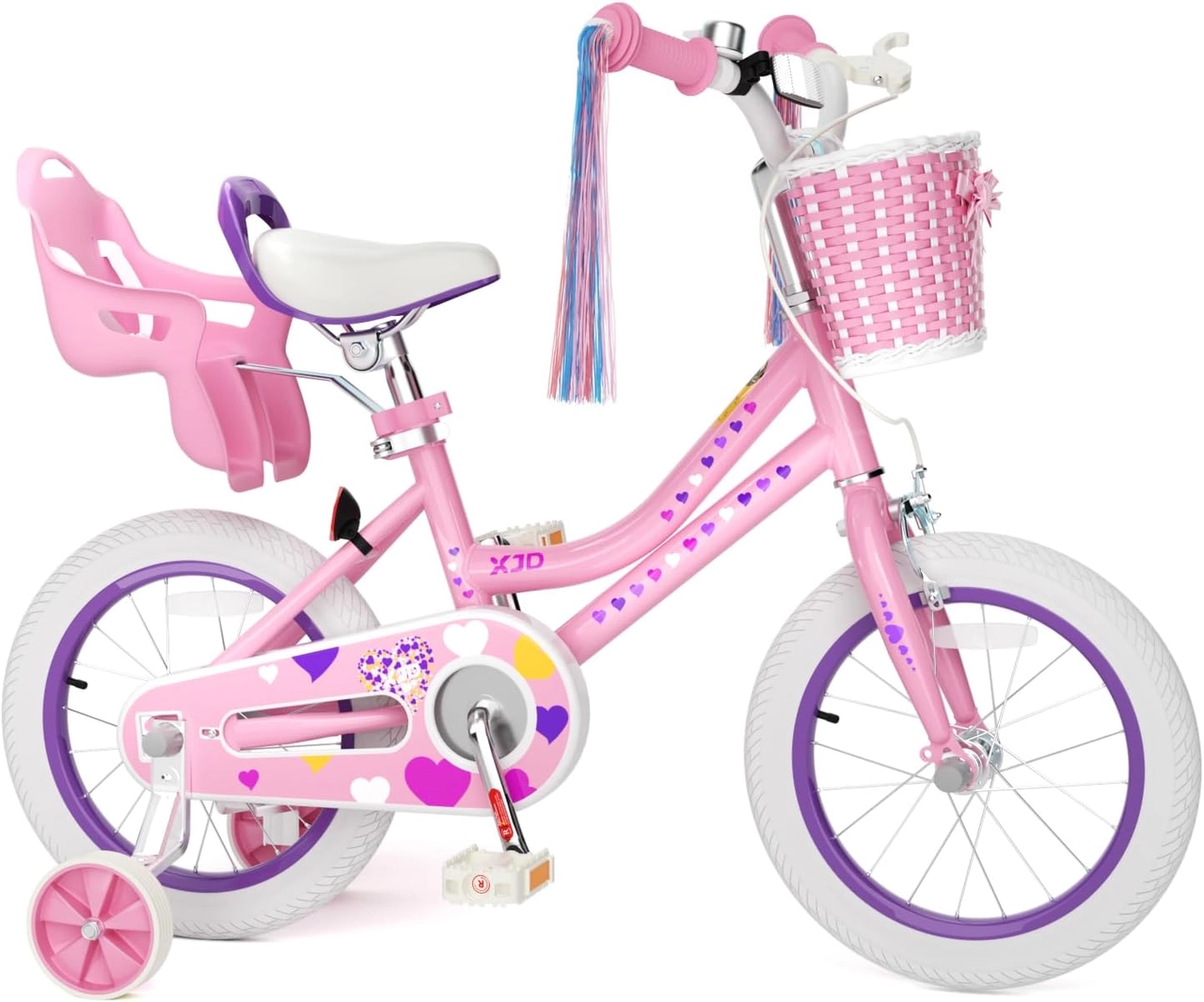 Pink Girls' 12/14/16" Bike by XJD – Basket & Doll Seat
A training-wheel bicycle offered in 12 Inch, 14 Inch and 16 Inch labels. Use the child’s measurements and an individual fit check when considering it; it is not a trailer or trailer accessory.
When those bicycle sizes may become relevant
XBikes uses the following starting points for bicycle wheel sizing. They do not determine trailer readiness and are not a substitute for trying the bicycle.
| Wheel label | Starting age | Rider height |
|---|---|---|
| 12 Inch | 3–4 | 34–40 in / 86–102 cm |
| 14 Inch | 3–6 | 37–45 in / 94–114 cm |
| 16 Inch | 4–7 | 40–48 in / 102–122 cm |
For either listed bicycle, start with measured height rather than age. Then have the child try the exact size and check inseam clearance, stand-over, reach, brake control and current confidence. Do not buy an oversized bicycle simply to allow room for growth. The child should be able to mount, stop and control it now.
Make the decision
Use a trailer only after all three conditions agree: the child has stable unsupported sitting and helmeted head control, their measurements meet the exact trailer manual, and the complete bicycle-and-trailer setup is correctly assembled and compatible. If any condition is unclear, postpone the ride and consult the manufacturer, a qualified bicycle mechanic or the child’s healthcare professional as appropriate. Consider the two listed 12/14/16-inch bicycles only when choosing a separately fitted first bicycle—not as evidence that a younger child is ready for a bike trailer.
Bikes for your next adventure
-

Kids Bike Helmet by XJD for Girls – Pink
The XJD Kids Bike Helmet in Pink is a lightweight multi-sport helmet for girls r…$59.99
$99 -

Blue XJD Kids Bike Helmet for Boys & Girls
The Blue XJD Kids Bike Helmet is a lightweight, adjustable multi-sport helmet fo…$59.99
$99 -
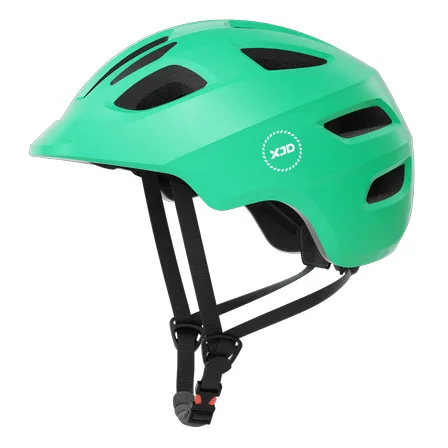
Green XJD Kids Bike Helmet for Boys & Girls
The Green XJD Kids Bike Helmet is a lightweight multi-sport helmet for toddlers …$59.99
$99