

What age does a kid learn to ride a bike
Most children learn to ride a bike between ages 3 and 8, but there is no single correct age. Start when your child is willing, can follow simple directions and fits a bike they can control.
Readiness matters more than a birthday
A child is ready to practise when they can walk or run steadily, steer with purpose and stay interested after a small wobble. They should also understand instructions such as “stop,” “slow down” and “look ahead.” Confidence may arrive gradually; reluctance is a reason to pause, not to move to a larger bike.
Age can narrow the search, but it cannot confirm fit. Measure the child’s standing height and inseam, then have them try the bicycle. The American Academy of Pediatrics advises against buying an oversized bike for a child to grow into. Check stand-over clearance, reach, control and access to the brakes on the actual bike.
Use height to choose a starting wheel size
These XBikes ranges are starting points only. Where ranges overlap, compare the child on both sizes rather than automatically choosing the larger wheel.
| Wheel size | Age starting point | Rider height |
|---|---|---|
| 12 Inch | 3–4 | 34–40 in / 86–102 cm |
| 14 Inch | 3–6 | 37–45 in / 94–114 cm |
| 16 Inch | 4–7 | 40–48 in / 102–122 cm |
| 18 Inch | 5–9 | 43–52 in / 109–132 cm |
| 20 Inch | 7–12 | 48–60 in / 122–152 cm |
| 24 Inch | 10–14 | 54–64 in / 137–163 cm |
| 26 Inch | Youth and adults | Over 60 in / 153 cm |
To measure height, have the child stand straight without shoes against a wall. For inseam, measure from the floor to the crotch while they stand with feet slightly apart. Use those measurements to select bikes to try; do not infer fit from the wheel label alone.
What to check on the actual bicycle
A promising size still needs an individual fit check. Ask the child to stand over the bike, sit in the riding position and place their hands naturally on the controls. Their body should not look stretched, cramped or forced into an awkward posture.
- Stand-over: The child must be able to straddle the bicycle comfortably rather than being held up by the frame.
- Reach: They should steer without locking their elbows or leaning excessively forward.
- Brake control: They must be able to reach and operate the fitted brakes reliably with their hands in a normal riding position.
- Confidence: They should be able to start, steer, slow and stop without the bike feeling intimidating.
If any of these checks fail, compare another size or model. For assembly, adjustment, maintenance, load limits, compatibility and torque, follow the exact product manual or ask a qualified bicycle mechanic.
How the supplied 24- and 26-inch bikes relate
The catalog options supplied here help answer the age question by showing the larger end of the sizing progression. They are relevant only after measurement: 24-inch wheels are a starting point for ages 10–14 and heights of 54–64 inches, while 26-inch wheels begin with youth and adults over 60 inches. They are not substitutes for the smaller sizes commonly considered by beginning riders.
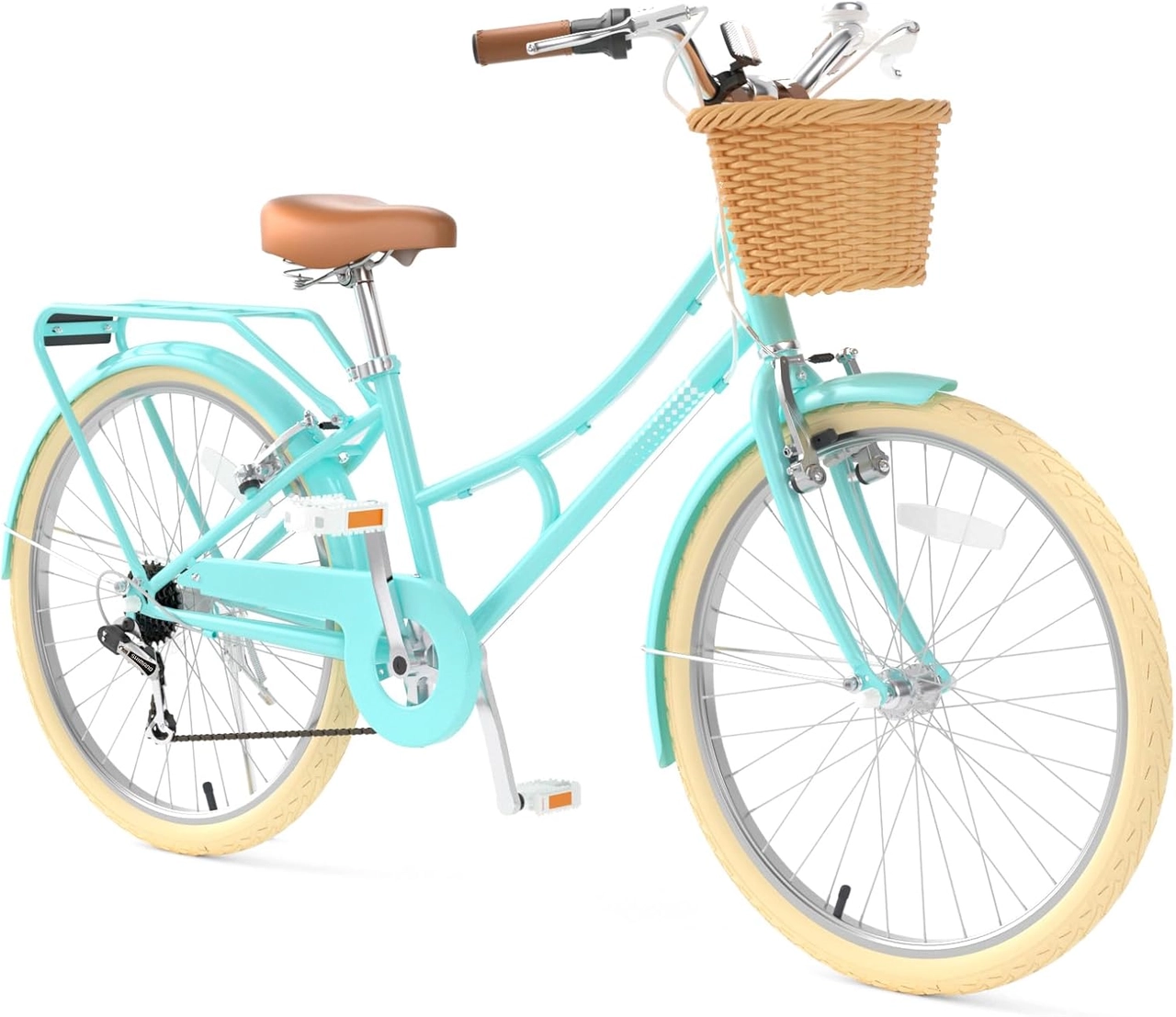 XJD 24-Inch Green Beach Cruiser Bike with U-Brake
A beach cruiser listing with Green / 24 Inch, Pink / 24 Inch and Pink / 26 Inch SKU labels, relevant as a measured-fit comparison for the XBikes 24- and 26-inch starting points.
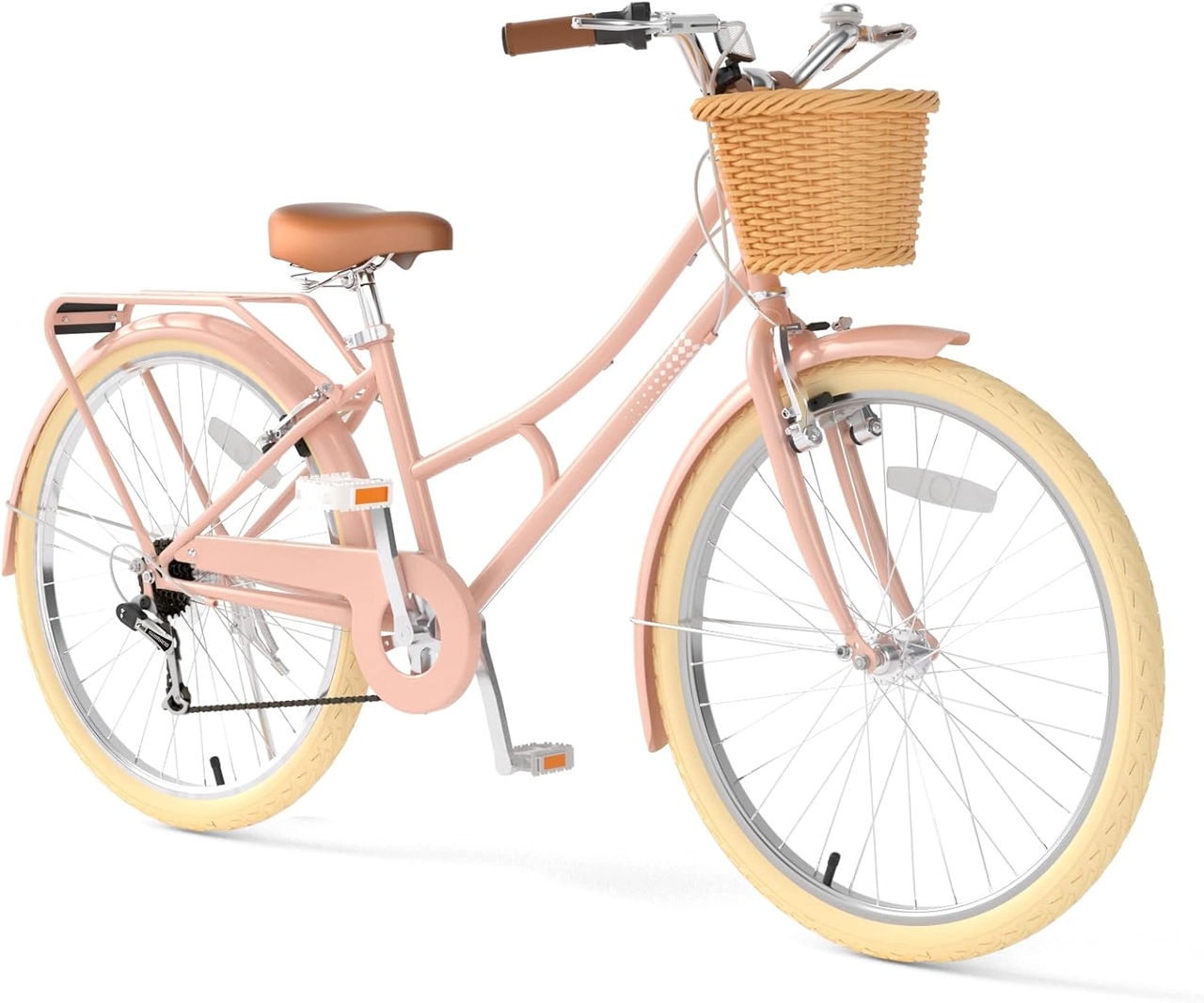 Pink XJD Beach Cruiser Bike, 24"/26", U-Brake
This beach cruiser lists 24 Inch and 26 Inch options, making it relevant for comparing taller riders against the supplied height ranges, subject to individual reach, stand-over, brake-control and confidence checks.
The XJD 24-Inch Green Beach Cruiser Bike with U-Brake has listed Green / 24 Inch, Pink / 24 Inch and Pink / 26 Inch SKU labels. It provides both 24- and 26-inch comparison points within one catalog listing.
The Pink XJD Beach Cruiser Bike, 24"/26", U-Brake lists 24 Inch and 26 Inch options. Compare the relevant option using measured height, inseam, reach, brake control and confidence. The wheel-size label does not establish fit by itself.
Neither product is a suitable recommendation solely because a child has learned, or is learning, to ride. Based on the XBikes starting points, these options concern taller riders; a younger or shorter beginner may need a smaller wheel size that is not represented among the supplied products.
Make the first practice sessions manageable
Choose a flat, open area away from traffic and obstacles. Begin with short sessions focused on looking ahead, steering, slowing and stopping. Stay close enough to help, but avoid pushing the child past fatigue or frustration. Progress can be uneven, and ending after a small success often makes the next session easier.
A bicycle helmet is essential. The U.S. Consumer Product Safety Commission says it must fit properly, sit level and have its straps used according to the helmet manufacturer’s instructions. Recheck the fit whenever the child rides.
What to do next
- Measure the child’s height and inseam without shoes.
- Use the table to identify one or two candidate wheel sizes.
- Have the child try each candidate and compare stand-over, reach, brake control and confidence.
- Choose the size they can control now, even if a larger bike appears to offer more growing room.
The answer is therefore not a fixed birthday: begin when the child is willing and coordinated, then let measurements and an in-person control check decide the bike—not age alone.
Bikes for your next adventure
-

26-Inch XJD Beach Cruiser Bike for Girls – Purple, V-Brake
This XJD 26-inch purple beach cruiser is sized for big kids and teens — suggeste…$218.49
$229.99 -

Blue XJD Girls Bike with Training Wheels – 12/14/16 Inch
If you're shopping for a first pedal bike for a daughter roughly 3 to 8 years ol…$149
$169 -

XJD Kids Bike for Girls – Pink, 12/14/16/20 Inch with Training Wheels
The XJD Kids Bike for Girls in Pink is a training-wheel bike built to carry your…$139
$159