

What age does a child learn to ride a bike
There is no single correct age for learning to ride a bike. Start when your child is willing, can follow simple instructions and can control a correctly fitted bicycle; use measured height and an individual fit check instead of choosing by birthday alone.
Age is a starting point, not the readiness test
Children develop balance, coordination and confidence at different rates. A younger child may be eager to practise, while an older child may need more time or a quieter setting. Progress should be based on control rather than pressure to meet an age milestone.
Before beginning, check whether the child can sit securely, steer deliberately, stop when asked and remain interested after a small mistake. If the child cannot comfortably control the bicycle or is frightened by its size, pause and reassess the fit. Do not buy an oversized bicycle for future growth.
Measure before choosing a wheel size
Measure the child’s height without shoes, standing straight against a wall. Also measure inseam from the floor to the crotch. Compare those measurements with the bicycle’s stand-over clearance and adjustment range, then have the child try the actual bicycle whenever possible.
The following XBikes ranges are starting points only. Overlapping ranges are normal because height does not reveal leg length, arm length, reach or confidence.
| Wheel size | Starting age | Rider height |
|---|---|---|
| 12 Inch | 3–4 | 34–40 in / 86–102 cm |
| 14 Inch | 3–6 | 37–45 in / 94–114 cm |
| 16 Inch | 4–7 | 40–48 in / 102–122 cm |
| 18 Inch | 5–9 | 43–52 in / 109–132 cm |
| 20 Inch | 7–12 | 48–60 in / 122–152 cm |
| 24 Inch | 10–14 | 54–64 in / 137–163 cm |
| 26 Inch | Youth and adults | Over 60 in / 153 cm |
If age and measured height point to different rows, begin with height and verify the fit in person. Never treat two wheel sizes as equivalent merely because their ranges overlap.
Perform a practical fit and control check
Have the child try the bicycle in ordinary riding clothes and suitable closed shoes. Check these points before deciding:
- Stand-over: The child must be able to straddle the bicycle without the frame preventing a stable stance.
- Starting position: The child should be able to get settled and begin moving without the bicycle pulling them off balance.
- Reach: The handlebars should be reachable without an extreme stretch, locked elbows or loss of steering control.
- Brakes: The child must be able to reach and operate the fitted brake controls reliably.
- Confidence: The bicycle should feel manageable while starting, steering, slowing and stopping.
A child who meets an age or height range but cannot pass these checks is not ready for that particular bicycle. Try an appropriate alternative size or ask a qualified bicycle mechanic to assess the fit.
How the supplied catalog option helps with comparison
The 26-Inch XJD Beach Cruiser Bike for Girls – Purple, V-Brake provides concrete 20-, 24- and 26-inch catalog options for comparing a taller child’s measured height with nearby wheel-size starting points. Its available labels include Mint Green in 20, 24 and 26 Inch; Pink in 20, 24 and 26 Inch; and Purple in 26 Inch. These are distinct sizes, not interchangeable fits, and the exact title identifies the Purple 26-Inch version with a V-Brake.
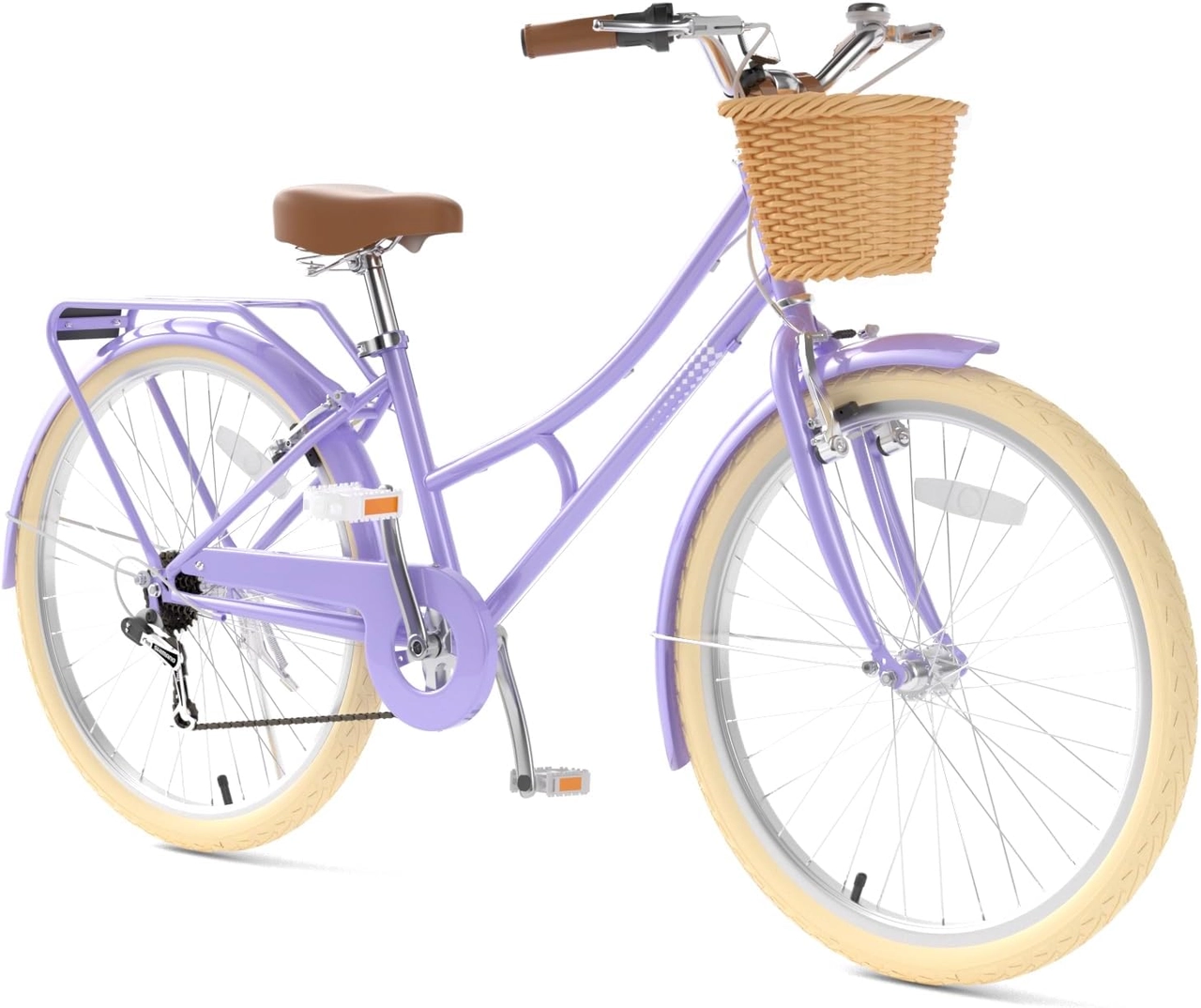
This product is relevant only when the child’s measurements and hands-on control support one of those listed sizes. Its 20-inch labels begin at 48 inches / 122 cm, its 24-inch labels at 54 inches / 137 cm and its 26-inch labels above 60 inches / 153 cm under the supplied starting points. It is not a suitable substitute for a needed 12-, 14-, 16- or 18-inch bicycle.
Make the first practice session manageable
Choose a flat, open area away from traffic and obstacles. Begin with mounting, looking ahead, steering and controlled stopping before expecting continuous riding. Keep attempts short enough that tiredness does not replace useful practice, and stop if fear or poor control increases.
A properly fitting bicycle helmet is essential. It should fit correctly, sit level and have its straps adjusted according to the helmet manufacturer’s instructions. Follow the exact bicycle manual for assembly, maintenance, adjustments and any limits not stated here; use a qualified bicycle mechanic when uncertain.
Decide what to do next
Measure height and inseam today, select the matching wheel-size starting point, and arrange an actual fit check. Proceed with learning only when your child can stand over, reach, steer and brake confidently; otherwise choose a more suitable size or wait and try again without treating age as a deadline.
Bikes for your next adventure
-

Light Purple XJD Toddler Bike Helmet, Adjustable, Size XS (46–51 cm)
This Light Purple XJD toddler bike helmet is made for the smallest riders — the …$20.39
-
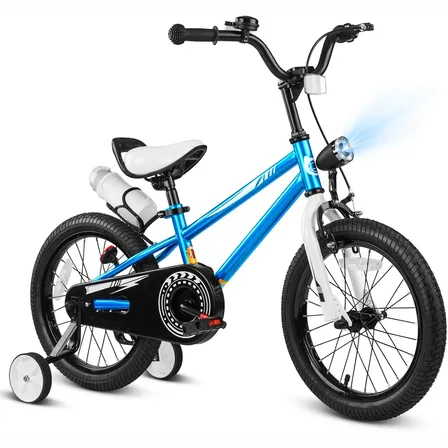
XJD Boys 12/14/16" Training Wheel Bike – Blue
The XJD Boys Bike in Blue is a training wheel bike for riders 71–122 cm tall—rou…$169
$199 -
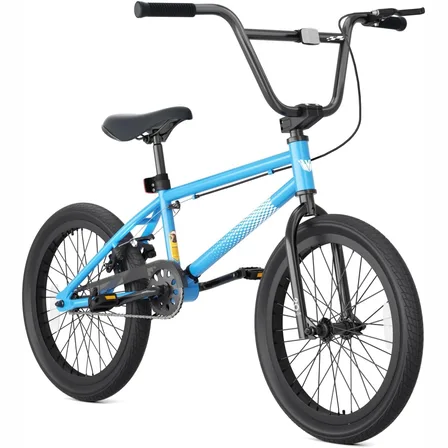
Blue XJD Freestyle BMX Bike, 20-Inch – No Pegs
The XJD 20-Inch Blue Freestyle BMX is an entry-level BMX bike for boys and girls…$189.99