

What age for 12 inch bike
A 12-inch bike is generally for ages 3–4 and riders 34–40 inches (86–102 cm) tall. Measure the child and confirm individual fit before buying.
Age is only the starting point
The XBikes starting range answers the age question, but a third or fourth birthday does not establish fit. Children of the same age can differ considerably in height, leg length, reach and confidence. Prioritize the rider’s measured height, inseam, ability to reach the controls and present riding ability.
Do not choose an oversized bicycle solely to leave room for growth. A bike that is too large can make starting, stopping and steering harder. The child should try the exact bicycle whenever possible rather than relying only on the wheel-size label.
What to measure before choosing
- Standing height: Measure without shoes, with the child standing straight against a wall. Compare the result with the 34–40 inch (86–102 cm) starting range for a 12-inch bike.
- Inseam: Measure from the floor to the crotch while the child stands upright. Compare this measurement with the stand-over space and usable seat adjustment on the exact bicycle; wheel size alone does not establish clearance.
- Reach: During a trial, check that the child can hold the handlebar and steer without stretching, locking the elbows or leaning excessively forward.
- Control access: Confirm that the child can comfortably operate the bicycle’s actual controls, including reaching and using its brakes where fitted.
- Confidence: Notice whether the child can mount, balance, start, turn and stop without being overwhelmed by the bicycle’s size.
Use the exact product manual for setup, adjustment limits, assembly, maintenance, compatibility and torque instructions. If anything is uncertain, use a qualified bicycle mechanic.
How 12, 14 and 16 inches compare
| Wheel size | XBikes age starting point | Rider-height starting point |
|---|---|---|
| 12 Inch | Ages 3–4 | 34–40 in / 86–102 cm |
| 14 Inch | Ages 3–6 | 37–45 in / 94–114 cm |
| 16 Inch | Ages 4–7 | 40–48 in / 102–122 cm |
These ranges overlap, so age cannot settle a choice between adjacent sizes. For example, a child aged three and 38 inches tall falls within both the 12-inch and 14-inch starting ranges. The correct next step is to compare stand-over clearance, reach, control access and confidence on the actual models.
A rider below or above the stated 12-inch height range should not be moved automatically to another size. Recheck the measurement and evaluate the complete fit. Bike geometry and adjustment details must come from the exact product information or manual, not assumptions based on wheel diameter.
Relevant XBikes catalog options
The Purple XJD Girls' Bike with Doll Seat & Basket and the Black XJD Kids' BMX Bicycle with Training Wheels both offer catalog SKU labels of 12 Inch, 14 Inch and 16 Inch. That makes their 12-inch variants directly relevant to this question, while their adjacent sizes provide useful comparison points when the child falls in an overlapping height range. Their catalog categories differ: the purple model is a Training Wheel Bike, while the black model is a Kids' BMX Bike. Those labels describe the listings; they do not prove individual fit.
These particular options help because each includes the requested 12 Inch SKU label and also provides 14 Inch and 16 Inch variants for a size comparison based on the same XBikes starting ranges.
 Purple XJD Girls' Bike with Doll Seat & Basket
Available in 12 Inch, 14 Inch and 16 Inch SKU labels. Its 12-inch variant is directly relevant; compare the rider’s measured fit rather than relying on its Training Wheel Bikes category.
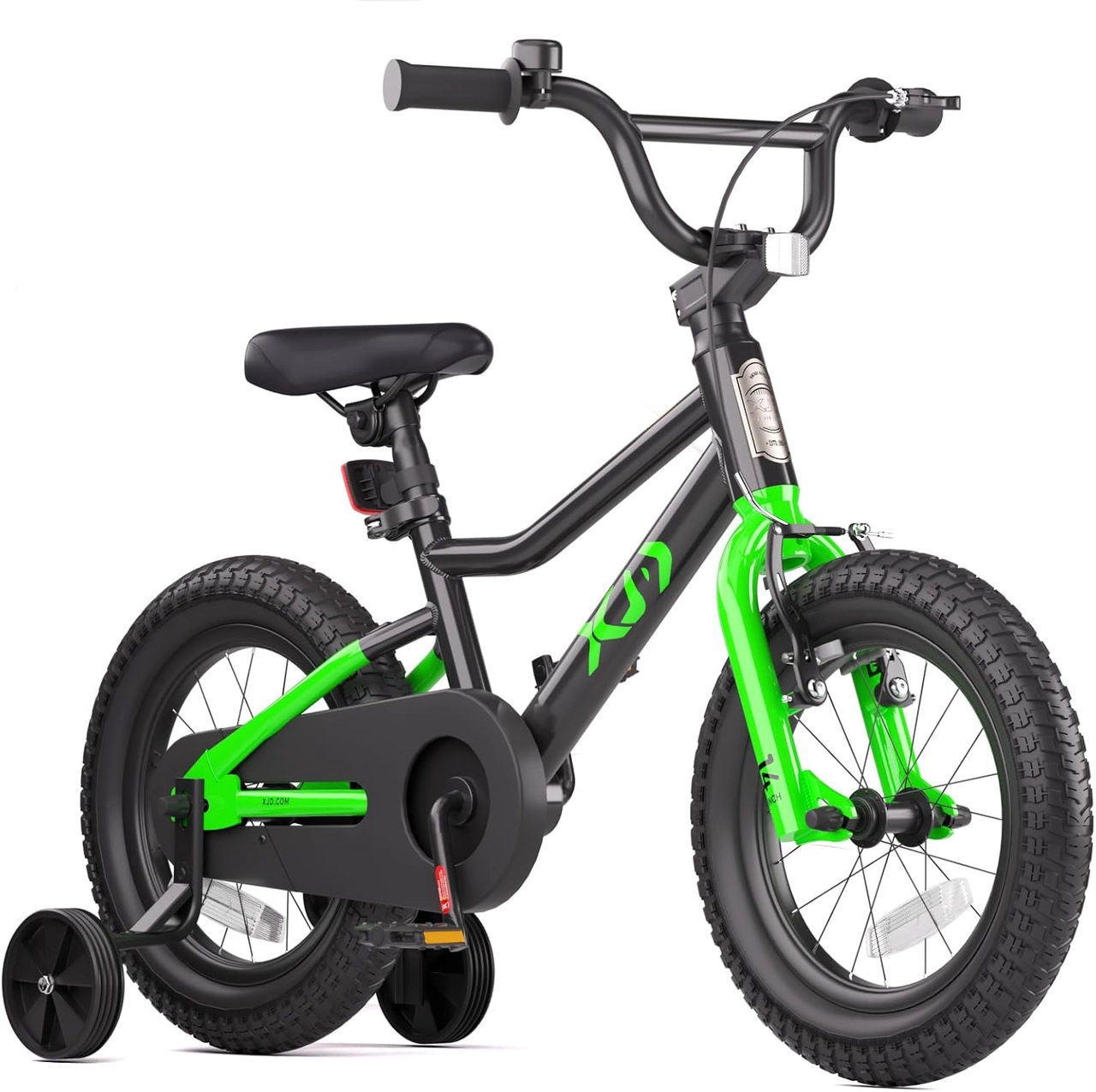 Black XJD Kids' BMX Bicycle with Training Wheels
This Kids' BMX Bikes listing offers 12 Inch, 14 Inch and 16 Inch SKU labels. Consider the 12-inch variant for the requested size, subject to an individual height, reach and control check.
Compare only the exact selected variant. Do not infer dimensions, brake design, weight, materials, load limits, assembly details or compatibility from the titles or categories; consult that product’s manual or a qualified bicycle mechanic for information not supplied here.
Perform the fit check
- Have the child wear their usual riding shoes and try the exact bicycle.
- Check that they can stand over it with appropriate clearance rather than being forced against the frame.
- Confirm that mounting and dismounting are controlled and comfortable.
- Watch for relaxed steering without an excessive reach to the handlebar.
- Make sure the child can reach and operate the brakes and other controls on that bicycle.
- Ask the child to demonstrate a controlled start, turn and stop in a suitable supervised area.
If the rider cannot manage these checks, adjustment may help only within the limits stated in the product manual. Otherwise, compare another size instead of expecting the child to grow into a bicycle they cannot currently control.
Helmet and final decision
A bicycle helmet must fit properly, sit level and have its straps used according to the helmet manufacturer’s instructions. A helmet does not correct a poor bicycle fit, so check both separately.
Choose a 12-inch bike when the child is around ages 3–4, measures 34–40 inches (86–102 cm), and can comfortably stand over, reach, steer and brake on the exact model. If any of those practical checks fail, pause the purchase and trial an adjacent size rather than deciding by age alone.
Bikes for your next adventure
-

Pink Girls' 12/14/16" Bike by XJD – Basket & Doll Seat
The XJD Pink Girls' Bike with Basket & Doll Seat is made for riders 71–122 cm ta…$75.99
$99.99 -
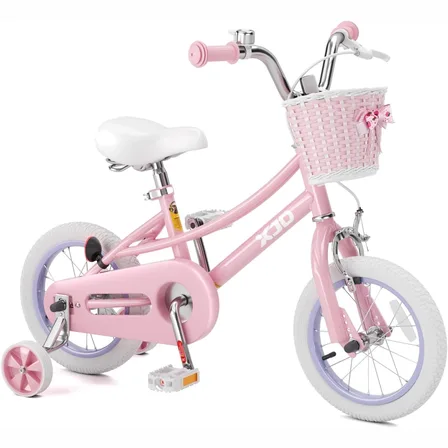
Pink 12/14/16/20" XJD Girls Bike with Training Wheels & Basket
The Pink XJD Girls Bike with Training Wheels & Basket is a first-bike pick f…$65.99
$75.99 -

XJD Boys & Girls BMX Bike with Training Wheels, 12/14/16" – Blue
The XJD Boys & Girls BMX Bike in Blue is a first pedal bike for kids roughly age…$99.99
$119.99