

What age is a 20 inch bike for
A 20-inch bike is generally for children aged 7–12 who are 48–60 inches (122–152 cm) tall, but measured fit and control matter more than age.
Start with height, not the birthday
The XBikes starting range for a 20-inch bike is ages 7–12 and a rider height of 48–60 inches (122–152 cm). That range answers the age question, but it is not a guarantee that every child within it will fit every 20-inch bicycle.
Measure the child’s height without shoes, standing straight against a wall. Then measure inseam from the floor to the top of the inside leg. Compare both measurements with the sizing information for the exact bicycle under consideration. Geometry can vary even when two bikes have the same wheel diameter.
A child near the lower or upper edge of the height range deserves an especially careful fit check. Do not move up to a larger bicycle simply because it may last longer as the child grows.
Check the child on the actual bike
Have the rider try the bicycle whenever possible. The child should be able to stand over it with usable clearance, get on and off without struggling, and sit in a position that permits comfortable steering. Follow the exact product manual when adjusting the seat or handlebars; if the required adjustment is unclear, use a qualified bicycle mechanic.
Ask the child to hold the grips and turn the handlebar in both directions. Their arms should not be painfully stretched or crowded. They must also be able to reach and operate the bike’s brakes confidently. A bicycle is too large if the child cannot control it reliably, even if age or height falls within the starting range.
A quick 20-inch fit decision
| Question | What to do |
|---|---|
| Is the rider 48–60 inches (122–152 cm) tall? | Treat a 20-inch bike as a starting candidate and continue the fit check. |
| Is the rider outside that height range? | Compare another wheel size rather than deciding from age alone. |
| Can the child stand over, mount and steer comfortably? | If not, reject that particular bike or size. |
| Can the child reach and operate the brakes? | If not, the fit is unsuitable regardless of the age label. |
| Does the child appear tense or unable to control the bike? | Choose a more manageable fit that matches current confidence. |
How nearby wheel sizes compare
If 20 inches seems borderline, use the adjacent XBikes ranges to guide the next comparison. An 18-inch bike starts at ages 5–9 and 43–52 inches (109–132 cm). A 24-inch bike starts at ages 10–14 and 54–64 inches (137–163 cm). These ranges overlap because children of the same age can differ substantially in height, proportions, reach and skill.
An 18-inch bicycle is not automatically right for a cautious rider, and a 24-inch bicycle is not automatically right for an older child. The child still needs to demonstrate stand-over clearance, comfortable reach, brake operation and confident control on the exact bike.
What the supplied XBikes options show
The catalog options below are relevant because they let you compare training-wheel bikes across several labeled wheel sizes, including two products with an available 20-inch label. Their listings do not replace an individual fit check, and the supplied facts do not establish brake type, weight, materials or age suitability.
 XJD Girls' Bike with Training Wheels, 12/14/16/20 Inch – Purple
A Training Wheel Bike with available 12-inch, 14-inch, 16-inch and 20-inch labels. Its 20-inch option is relevant for comparison after checking the rider’s measured height and individual fit.
 XJD Kids Bike for Girls – Pink, 12/14/16/20 Inch with Training Wheels
This Training Wheel Bike has available 12-inch, 14-inch, 16-inch and 20-inch labels, making its 20-inch option relevant when the child meets the starting height range and passes a fit check.
 XJD Light Purple Girls Bike with Basket, Training Wheels, 12/14/16/20 Inch
Although its exact catalog title mentions 20 Inch, the supplied available labels are 12 Inch, 14 Inch and 16 Inch. It is a smaller-size comparison point, not an available 20-inch substitute.
XJD Girls' Bike with Training Wheels, 12/14/16/20 Inch – Purple is listed in the Training Wheel Bikes category with available 12-inch, 14-inch, 16-inch and 20-inch labels. Its 20-inch option is relevant when the rider falls near the 20-inch starting range and passes the physical checks.
XJD Kids Bike for Girls – Pink, 12/14/16/20 Inch with Training Wheels is also a Training Wheel Bike with available 12-inch, 14-inch, 16-inch and 20-inch labels. Compare the exact 20-inch configuration against the child’s measurements, reach, braking ability and confidence.
XJD Light Purple Girls Bike with Basket, Training Wheels, 12/14/16/20 Inch includes “20 Inch” in its exact catalog title, but the supplied available SKU labels are only 12 Inch, 14 Inch and 16 Inch. It is therefore useful as a smaller-size comparison point, not as an available 20-inch substitute based on the provided facts.
Before the first ride
Once the size is chosen, follow the exact product manual for assembly, maintenance, compatibility and adjustments. Use a qualified bicycle mechanic when assembly or safe operation is uncertain; no torque values or product-specific procedures should be guessed.
A bicycle helmet must fit properly, sit level on the head and use its straps according to the helmet manufacturer’s instructions. The helmet does not correct a poor bicycle fit, so check both independently.
For a child asking about a 20-inch bike, measure height and inseam now, shortlist 20-inch models only if the 48–60-inch range is appropriate, and approve the final choice only after the child can stand over, reach, brake and steer with confidence.
Bikes for your next adventure
-
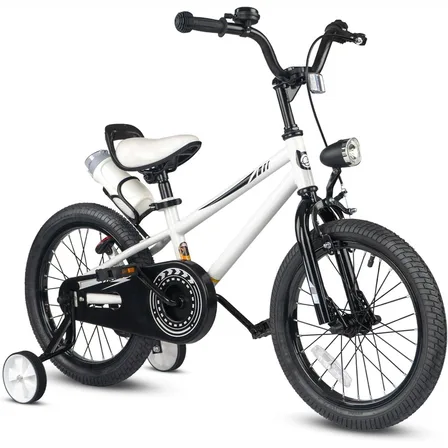
XJD Kids' Training Wheel Bike for Boys & Girls, 12/14/16 Inch – White
The XJD kids' training wheel bike in White is made for riders ages 3–8 (roughly …$169
$199 -
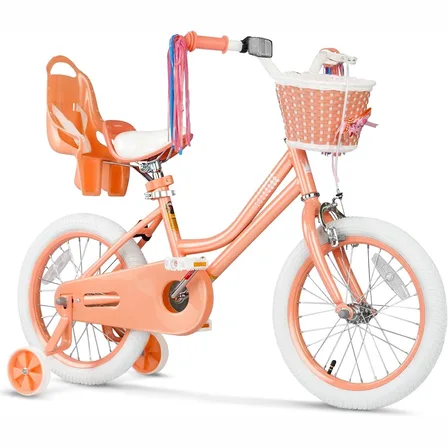
Girls 12/14/16 Inch Kids Bike by XJD with Training Wheels – Peach
The XJD Girls Bike in Peach is a training-wheel bike built for girls roughly 3 t…$149
$169 -
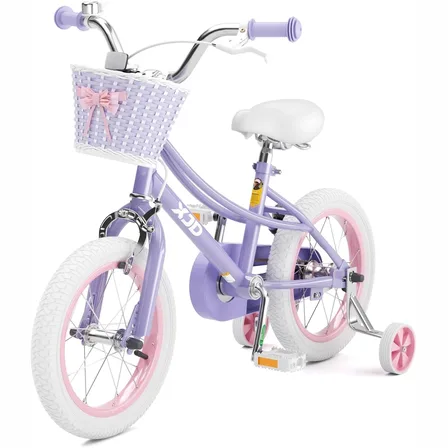
Girls' Training Wheel Bike by XJD with Basket – Purple
If you're shopping for a first bike for a girl roughly 3 to 12 years old (91–152…$75.99