

What age for a 16 inch bike
A 16-inch bike is a starting point for children ages 4–7 who are 40–48 inches (102–122 cm) tall, but measured fit and control matter more than age.
Start with height, not the birthday
The age range is useful for narrowing the search, not for deciding the fit. Children of the same age can differ substantially in height, proportions, coordination and confidence. Measure the child without shoes, standing straight against a wall, and record the height. If it falls within 40–48 inches (102–122 cm), a 16-inch bike is a sensible size to try.
Also measure inseam from the floor to the crotch while the child stands naturally. There is no single inseam number supplied here that guarantees a fit, so use that measurement when checking the bicycle’s stand-over clearance and saddle adjustment. Do not choose a larger bike merely to leave room for growth.
Compare the child with the XBikes starting points
| Wheel size | Starting age | Starting rider height | What it means |
|---|---|---|---|
| 14 Inch | 3–6 | 37–45 in / 94–114 cm | Worth comparing near the shorter end of the 16-inch range. |
| 16 Inch | 4–7 | 40–48 in / 102–122 cm | The requested size and initial range to try. |
| 20 Inch | 7–12 | 48–60 in / 122–152 cm | A later starting point, not an equal substitute for a 16-inch bike. |
Overlap is intentional: height only identifies candidates. A child near 40 inches may need to compare 14- and 16-inch models, while a child approaching 48 inches may be nearing a 20-inch starting point. The correct choice is the bike the child can stand over, reach and control now.
Perform a hands-on 16-inch bike fit check
Have the child try the exact bicycle before deciding whenever possible. Shoes and ordinary riding clothes should be worn during the check. Then look for all of the following:
- Stand-over: The child can straddle the bicycle securely rather than being forced onto tiptoes or against the frame.
- Starting and stopping: The child can get on, set off and stop without the bicycle overwhelming them.
- Reach: The handlebar can be reached with comfortable arms and without excessive stretching or leaning.
- Steering: The child can turn the handlebar and keep the bicycle balanced and directed.
- Brake control: The child can reach and operate the provided braking controls confidently.
- Confidence: The size matches the child’s present ability, not an ability they may develop later.
If any of these checks fail, compare another size or model even when the child’s age and height appear to match the chart.
How the available 16-inch catalog options relate
All three supplied catalog products include a 16 Inch SKU label, so they are relevant models to compare after the child falls within the starting range. Their neighboring size labels also make them useful when the child is near a boundary, although each size still requires its own fit check.
 Black XJD Kids' BMX Bicycle with Training Wheels
A direct 16-inch comparison option with training wheels, categorized as a Kids' BMX Bike. The catalog also lists 12 Inch and 14 Inch sizes for children who need a smaller fit check.
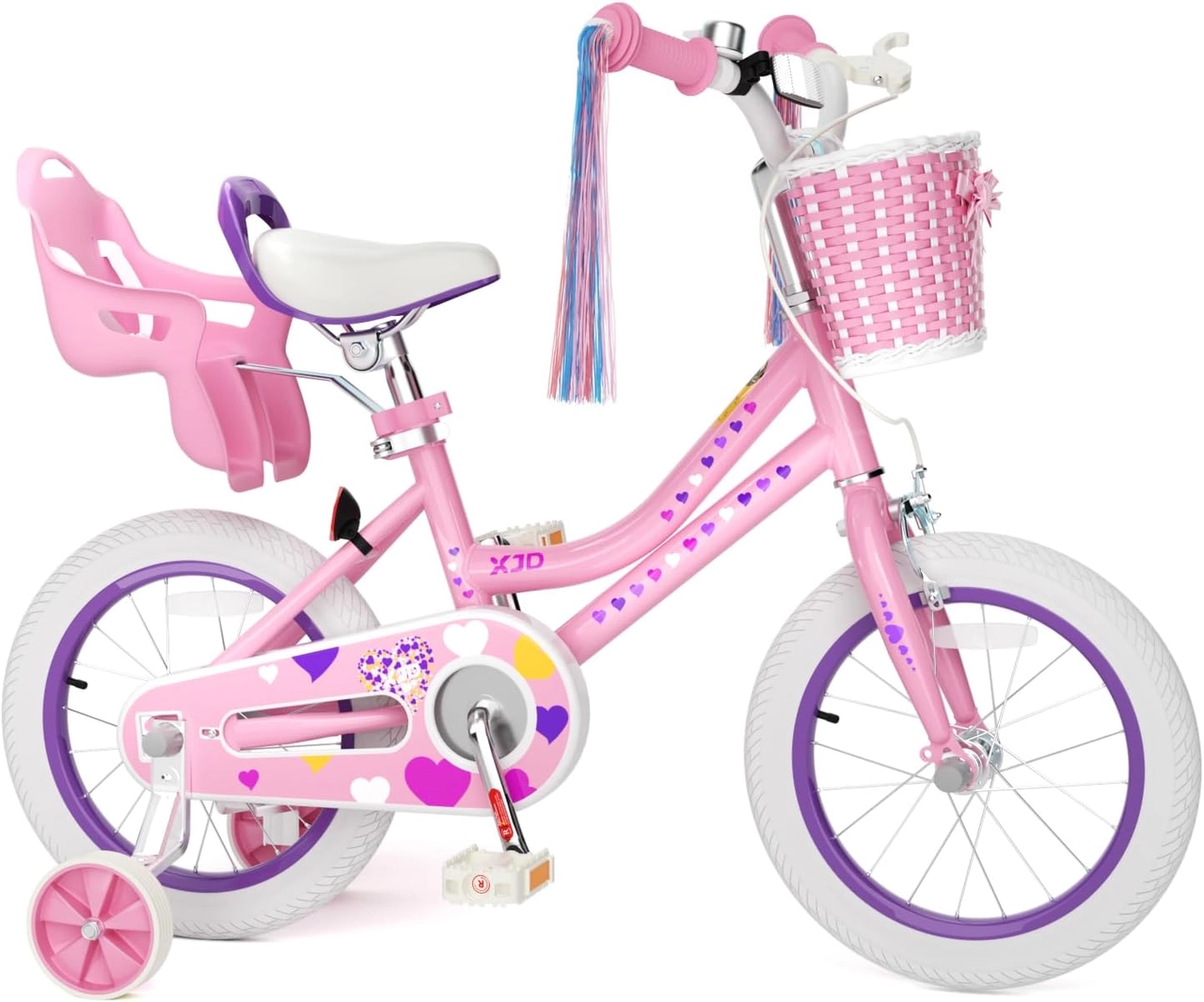 Pink Girls' 12/14/16" Bike by XJD – Basket & Doll Seat
A Training Wheel Bike offered with 12 Inch, 14 Inch and 16 Inch labels. Its basket and doll seat are catalog features, but fit still depends on the rider’s measurements and control.
 Pink 12/14/16/20" XJD Girls Bike with Training Wheels & Basket
A Training Wheel Bike with 12 Inch, 14 Inch, 16 Inch and 20 Inch labels. It supports adjacent-size comparison, but the 20-inch label is not a substitute for a properly fitted 16-inch bike.
Black XJD Kids' BMX Bicycle with Training Wheels is categorized as a Kids' BMX Bike and has 12 Inch, 14 Inch and 16 Inch labels. It provides a direct 16-inch option and smaller labeled sizes for comparison.
Pink Girls' 12/14/16" Bike by XJD – Basket & Doll Seat is categorized as a Training Wheel Bike and is labeled in 12 Inch, 14 Inch and 16 Inch sizes. Its catalog title identifies a basket and doll seat; those details do not determine fit.
Pink 12/14/16/20" XJD Girls Bike with Training Wheels & Basket is also categorized as a Training Wheel Bike. Its labels cover 12 Inch, 14 Inch, 16 Inch and 20 Inch, allowing comparison on both sides of the requested size. The 20-inch version is not equivalent to the 16-inch version.
These labels establish available size choices only. They do not establish dimensions beyond wheel size, live availability, brake type, weight, load limits or compatibility.
Check setup and safety before riding
Follow the exact product manual for assembly, adjustment, maintenance, load limits, compatibility and torque. If the instructions are missing or the setup is uncertain, use a qualified bicycle mechanic rather than inventing a procedure.
A bicycle helmet must fit properly, sit level and have its straps adjusted according to the helmet manufacturer’s instructions. Practice starting, steering, braking and stopping in a suitable controlled area while the child becomes familiar with the bicycle.
Make the 16-inch decision
Measure height and inseam, shortlist 16-inch bikes when height is 40–48 inches (102–122 cm), and have the child try the exact model. Choose it only if stand-over, reach, steering, braking and confidence all work now; otherwise compare the adjacent size that fits the child today.
Bikes for your next adventure
-

XJD Pink Beach Cruiser for Girls – Rear Rack & V-Brake
The XJD Pink Beach Cruiser for girls is the step-up bike for riders who've outgr…$179.99
$209.99 -
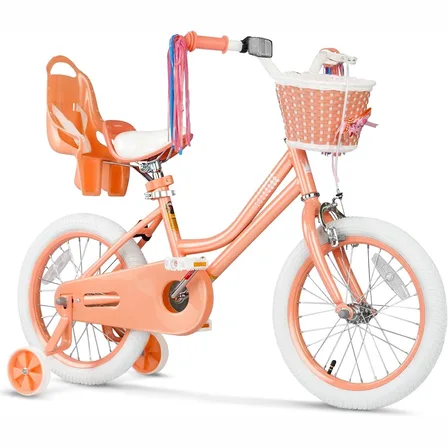
Girls 12/14/16 Inch Kids Bike by XJD with Training Wheels – Peach
The XJD Girls Bike in Peach is a training-wheel bike built for girls roughly 3 t…$149
$169 -
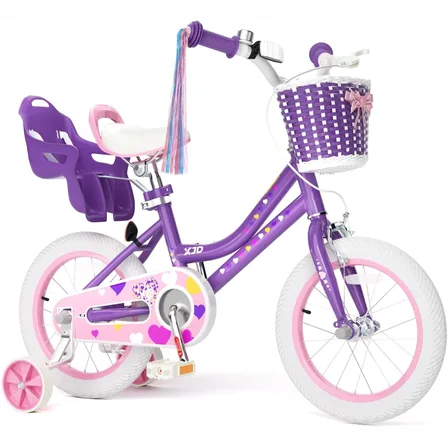
XJD Light Purple Girls Bike with Basket, Training Wheels, 12/14/16/20 Inch
The XJD Girls Bike with Basket in Light Purple is a single-speed training-wheel …$99.99
$119.99