

What age group is 16 inch bike for
A 16-inch bike is generally for children ages 4–7 and 40–48 inches (102–122 cm) tall. Height and an individual fit check matter more than age.
Start with height, not the birthday
The age range is a useful starting point, but children of the same age can differ greatly in height, proportions and riding ability. Measure the child without shoes, standing straight against a wall, and compare that height with the XBikes 16-inch range of 40–48 inches (102–122 cm).
Also measure inseam: have the child stand with feet slightly apart and measure from the floor to the crotch. This number is not used to choose a size by itself. It helps you check whether the child can stand over the actual bicycle comfortably.
If the child is outside the 16-inch height range, compare the adjacent starting points rather than relying on age. A 14-inch bike corresponds to ages 3–6 and heights of 37–45 inches (94–114 cm); an 18-inch bike corresponds to ages 5–9 and heights of 43–52 inches (109–132 cm). Overlap is normal, so the test ride should decide between sizes.
Check the actual 16-inch bike
Have the child try the assembled bicycle while wearing the shoes normally used for riding. The child should be able to stand over it without the frame pressing into the body, get on and off without struggling, and sit in a position that does not require stretching excessively toward the handlebar.
Next, ask the child to hold the grips, steer in both directions and operate the brakes. Their hands must reach and control the brake levers provided on the bicycle. Check that they can start, stop and put a foot down in a controlled way. Follow the exact product manual for adjustments or assembly details; use a qualified bicycle mechanic when the correct setup is uncertain.
Confidence can change the size decision
A confident rider near an overlap between wheel sizes may control one bike more naturally than another. A beginner may need easier mounting, stopping and foot placement. Wheel diameter alone does not establish fit because frame shape, saddle position and reach must be assessed on the actual bicycle.
Do not choose an oversized bike simply to leave room for growth. The American Academy of Pediatrics advises having the child try the bicycle and checking stand-over clearance, control and brake reach. If the child looks tense, cannot stop predictably or must stretch to steer, the bike is not a suitable current fit even if age and height appear to match.
How the supplied XBikes options relate
The Flower Pink XJD Girls Bike with Doll Seat & Basket and the Purple XJD Girls' Bike with Doll Seat & Basket are both cataloged as Training Wheel Bikes. Each has 12 Inch, 14 Inch and 16 Inch SKU labels, so each offers the requested 16-inch size as well as smaller-size comparison choices. Their listed doll seat and basket distinguish the catalog titles, but neither feature determines rider fit.
These particular catalog options are relevant because parents can compare the available 12-, 14- and 16-inch labels while applying the same height-first fitting process. Select the exact 16 Inch SKU only when the child's measurements and control check support it; do not infer specifications that are not supplied.
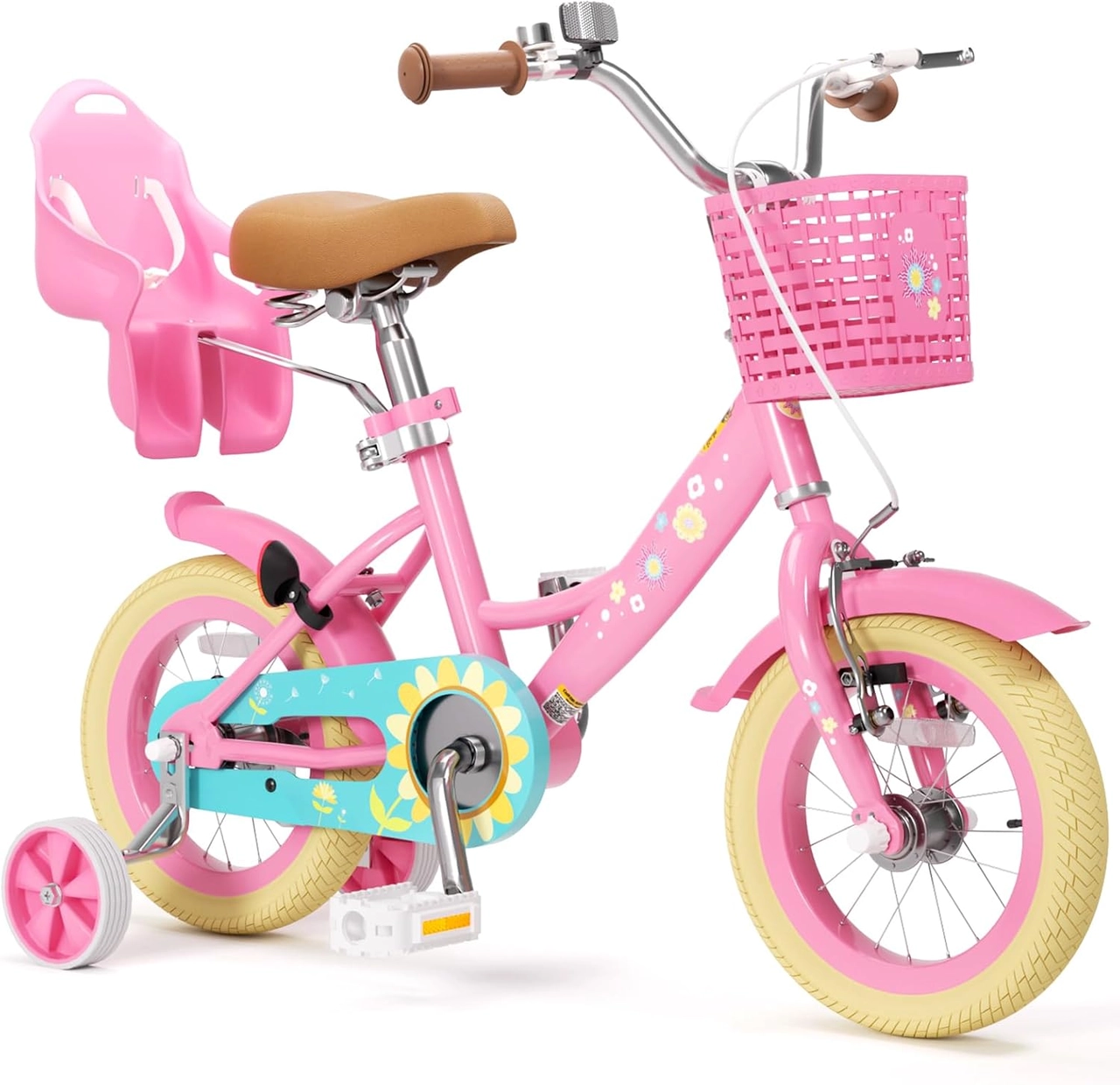 Flower Pink XJD Girls Bike with Doll Seat & Basket
This Training Wheel Bike has 12 Inch, 14 Inch and 16 Inch SKU labels. Its 16 Inch option is relevant when the rider meets the XBikes height starting point and passes an individual fit and control check.
 Purple XJD Girls' Bike with Doll Seat & Basket
This Training Wheel Bike is offered with 12 Inch, 14 Inch and 16 Inch SKU labels. Compare its exact 16 Inch option against the child's measured height, stand-over, reach, brake control and confidence.
For either product, confirm the selected SKU label before ordering. The presence of smaller sizes does not make them equivalent to a 16-inch bike: XBikes places 12 Inch at ages 3–4 and 34–40 inches (86–102 cm), and 14 Inch at ages 3–6 and 37–45 inches (94–114 cm). Use the exact product manual or a qualified bicycle mechanic for assembly, maintenance, compatibility and adjustment procedures.
Complete a short fit-and-safety check
- Measure: Record the child's standing height and inseam rather than estimating either one.
- Compare: Use ages 4–7 and 40–48 inches (102–122 cm) only as the 16-inch starting range.
- Try: Check stand-over room, mounting, reach, steering and the ability to place a foot down.
- Control: Confirm that the child can reach and operate the brakes and can start and stop calmly.
- Protect: Use a properly fitting bicycle helmet. The U.S. Consumer Product Safety Commission advises that it sit level and that its straps be used according to the helmet manufacturer's instructions.
Make the 16-inch decision
Choose a 16-inch bike when the child is around 40–48 inches tall and can comfortably stand over, reach, steer and brake on the actual bicycle. If those checks fail, compare the appropriate adjacent size and try again. For the two supplied XBikes models, choose the 16 Inch SKU only after that individual fit check—not merely because the child is between 4 and 7.
Bikes for your next adventure
-
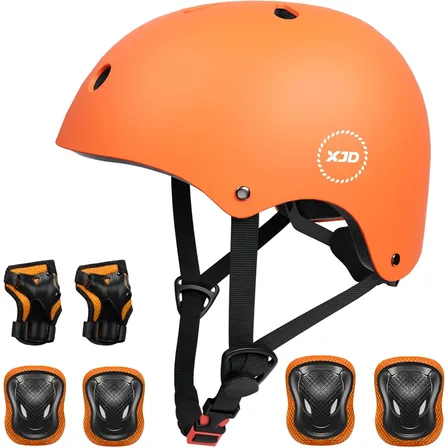
Orange Kids Helmet & Pad Set by XJD – Sizes S & M
The Orange XJD Kids Helmet & Pad Set is built for children around 3 to 8 years o…$24.64
-

Kids Bike Helmet by XJD for Boys & Girls – Black, Blue, Green, Pink, Purple
The XJD Kids Bike Helmet covers a wide 2-to-8-year age range thanks to two head-…$59.99
-

Kids Bike Helmet by XJD for Girls – Pink
The XJD Kids Bike Helmet in Pink is a lightweight multi-sport helmet for girls r…$59.99
$99