

What age group is a 16 inch bike
A 16-inch bike is generally for children ages 4–7 who are 40–48 inches (102–122 cm) tall. Height and an individual fit check matter more than age.
Start with height, not the birthday
The age range is a starting point, not a guarantee. Children of the same age can differ in height, leg length, reach and riding confidence. Measure the child before choosing a wheel size, then have them try the actual bicycle.
Measure standing height without shoes, with the child upright against a wall. Also measure inseam from the floor to the crotch while the child stands naturally. Compare height with the XBikes starting point above; use the inseam during the hands-on stand-over and mounting check.
Do not move up to a larger bicycle merely to leave room for growth. An oversized bike can make starting, stopping and controlling the bicycle harder.
How 16 inches compares with nearby sizes
| Wheel size | Starting age | Rider height |
|---|---|---|
| 14 Inch | Ages 3–6 | 37–45 in / 94–114 cm |
| 16 Inch | Ages 4–7 | 40–48 in / 102–122 cm |
| 18 Inch | Ages 5–9 | 43–52 in / 109–132 cm |
The ranges overlap because age and height do not determine fit by themselves. A child near a boundary should try the relevant sizes rather than automatically choosing the larger one. A 14-inch or 18-inch bicycle is not equivalent to a 16-inch bicycle.
What to check on the actual bike
With an adult steadying the bicycle, ask the child to stand over it and then sit in a normal riding position. The child should be able to mount and dismount without struggling, maintain control and reach the handlebars comfortably.
- Stand-over: Check that the child can stand over the bicycle without the frame preventing a controlled stop or dismount.
- Reach: The child should hold the handlebars without an uncomfortable stretch or a cramped posture.
- Brake control: Confirm that the child can reach and operate the bicycle's braking controls confidently.
- Confidence: Watch for controlled starting, steering and stopping rather than judging fit from appearance alone.
If any control cannot be reached or operated properly, that particular bicycle is not a suitable fit as presented. Consult its exact product manual about permitted adjustments, or ask a qualified bicycle mechanic; do not improvise assembly or adjustment procedures.
Which XBikes products are relevant?
These catalog options help answer the question because each is offered with a 16 Inch SKU label, as well as 12 Inch and 14 Inch labels for comparison. Select the exact size deliberately, because the shared product page or title alone does not establish which variant fits a child.
 Purple XJD Girls' Bike with Doll Seat & Basket
Available in 12 Inch, 14 Inch and 16 Inch labels. Its 16 Inch variant is relevant for comparison when the rider meets the height starting point and passes an individual fit check.
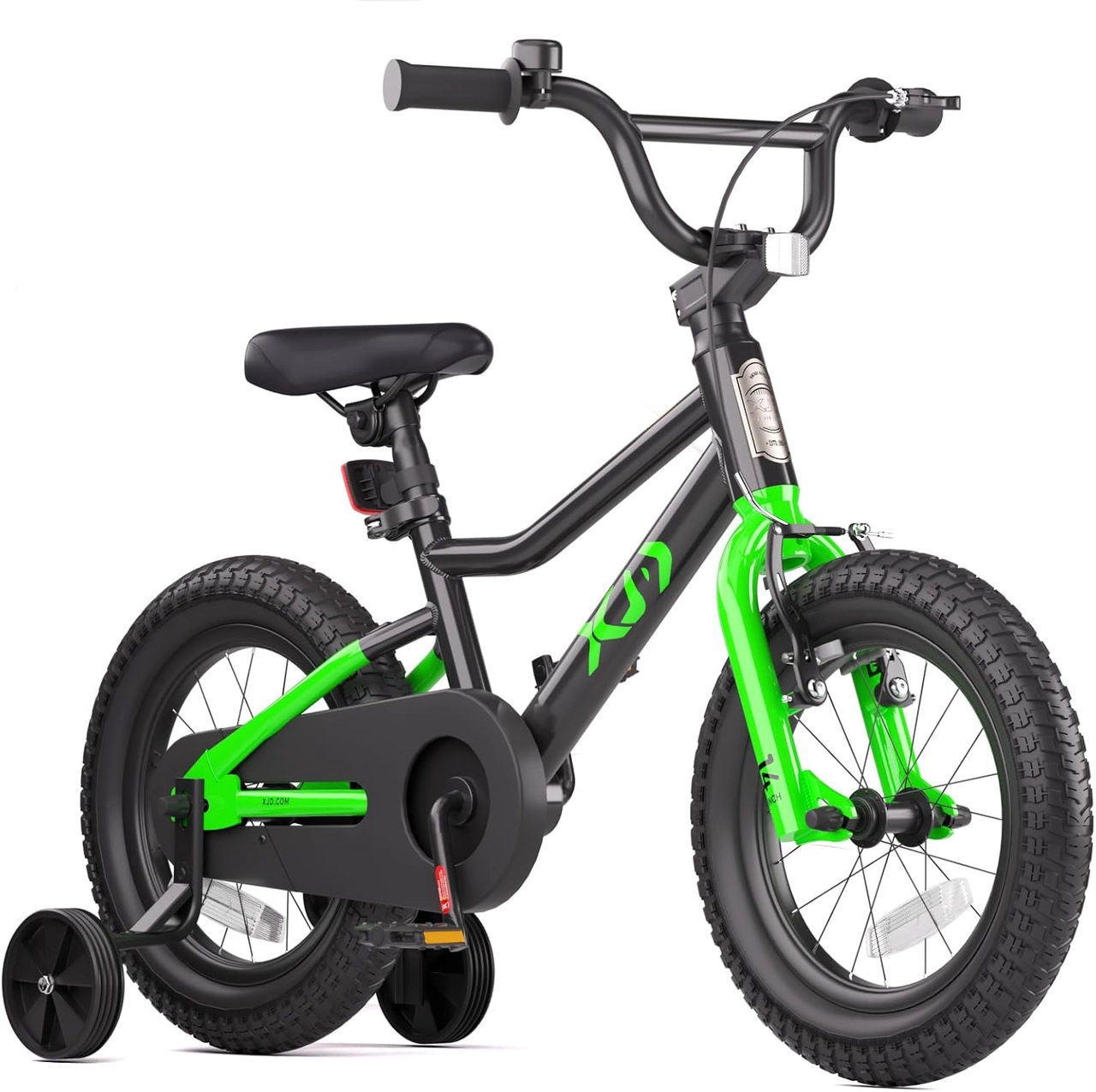 Black XJD Kids' BMX Bicycle with Training Wheels
This Kids' BMX Bike is offered in 12 Inch, 14 Inch and 16 Inch labels. Consider the 16 Inch option only after checking the child's measured height, stand-over, reach and control.
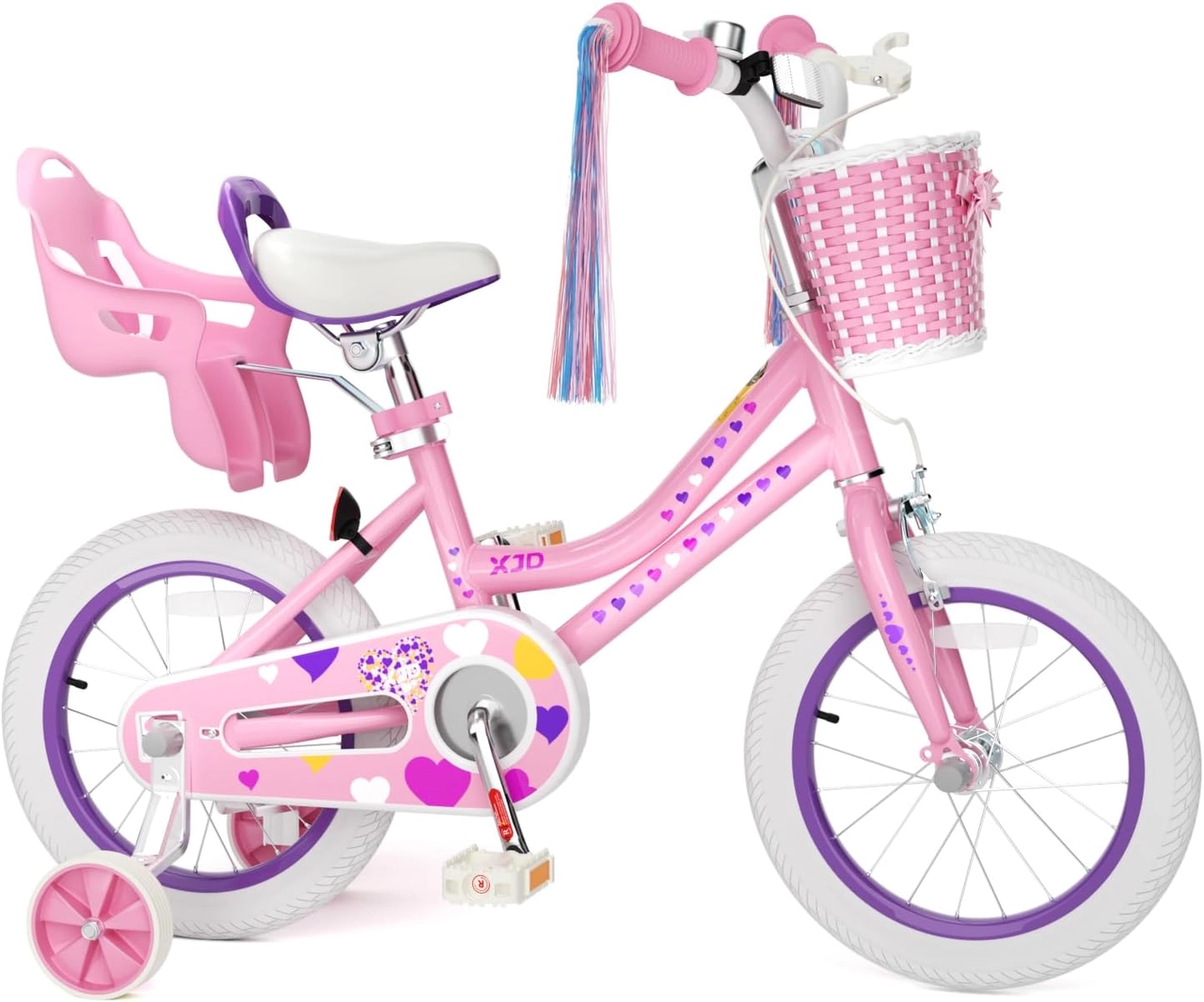 Pink Girls' 12/14/16" Bike by XJD – Basket & Doll Seat
This Training Wheel Bike lists 12 Inch, 14 Inch and 16 Inch options. The size wording in its title is a catalog label, so the 16 Inch variant still requires an individual fit check.
Purple XJD Girls' Bike with Doll Seat & Basket is categorized as a Training Wheel Bike and is available in 12 Inch, 14 Inch and 16 Inch labels. Its 16 Inch option is relevant when the measured rider falls near the 16-inch starting range and passes an individual fit check.
Black XJD Kids' BMX Bicycle with Training Wheels is categorized as a Kids' BMX Bike and likewise lists 12 Inch, 14 Inch and 16 Inch options. The 16 Inch label makes it relevant to this question, but category and styling do not replace checking stand-over, reach, brake control and confidence.
Pink Girls' 12/14/16" Bike by XJD – Basket & Doll Seat is categorized as a Training Wheel Bike and has the same three size labels. Although sizes appear in its exact title, those are catalog labels rather than proof that any particular child fits the bicycle.
The supplied catalog facts do not establish assembly details, maintenance procedures, load limits, brake type or compatibility. Follow the manual for the exact product and SKU, or use a qualified bicycle mechanic, whenever those details affect the decision.
Complete the safety check
A properly fitted bicycle helmet is essential. Following U.S. Consumer Product Safety Commission guidance, place it level on the child's head and adjust its fit and straps according to the helmet manufacturer's instructions.
Recheck bicycle fit as the child grows or if control changes. Training wheels, where identified by the product category or exact title, do not correct a bicycle that is too large, too small or otherwise difficult for the rider to control.
Make the 16-inch decision
Choose a 16-inch bike only when the child is reasonably aligned with the 40–48 inch (102–122 cm) starting range and the actual bicycle passes the stand-over, reach, brake-control and confidence checks. If the measurement sits near an overlap, compare the actual adjacent sizes and choose the one the child can control now—not one intended mainly for future growth.
Bikes for your next adventure
-
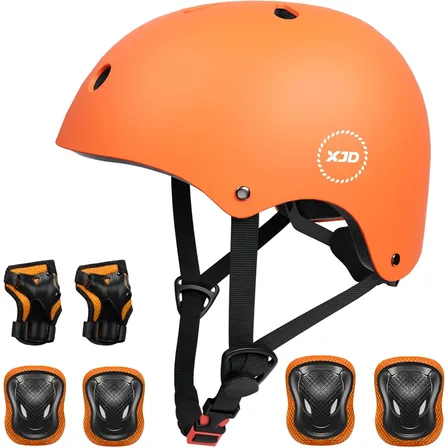
Orange Kids Helmet & Pad Set by XJD – Sizes S & M
The Orange XJD Kids Helmet & Pad Set is built for children around 3 to 8 years o…$24.64
-

Kids Bike Helmet by XJD for Boys & Girls – Black, Blue, Green, Pink, Purple
The XJD Kids Bike Helmet covers a wide 2-to-8-year age range thanks to two head-…$59.99
-

Kids Bike Helmet by XJD for Girls – Pink
The XJD Kids Bike Helmet in Pink is a lightweight multi-sport helmet for girls r…$59.99
$99