

What age is 16 inch bike
A 16-inch bike generally suits children ages 4–7 who are 40–48 inches (102–122 cm) tall. Height and an individual fit check matter more than age.
Is a 16-inch bike the right starting point?
Use age only to begin the search. Two children of the same age can have different leg lengths, reach, coordination and confidence. Measure your child, then have them try the bicycle they will actually ride.
A 16-inch model is worth trying when the rider falls within the XBikes starting range of 40–48 inches (102–122 cm). Being inside that range does not guarantee a good fit, and being near an endpoint is a reason to compare the neighboring wheel size rather than automatically choosing the larger bike.
| Wheel size | Age starting point | Rider-height starting point |
|---|---|---|
| 14 Inch | Ages 3–6 | 37–45 in / 94–114 cm |
| 16 Inch | Ages 4–7 | 40–48 in / 102–122 cm |
| 18 Inch | Ages 5–9 | 43–52 in / 109–132 cm |
What to measure before choosing
First measure the child's current height without shoes. Next measure inseam: with the child standing naturally, measure from the floor to the crotch. Record both measurements rather than relying on clothing size or a remembered figure.
Compare height with the wheel-size starting points above. Inseam is then used during the actual bike check because frame dimensions and saddle adjustment can differ even when two bicycles share a wheel size. Do not infer a suitable saddle setting from wheel diameter alone.
What the child should be able to do
Have the child try the bicycle in a controlled setting with adult supervision. The American Academy of Pediatrics advises trying the bike rather than buying an oversized model for future growth. Check these points on the exact bicycle:
- Stand-over: the child should be able to straddle the bicycle without the frame preventing a stable stance.
- Reach: the handlebars should be reachable without excessive stretching or an awkward riding position.
- Brake control: the child must be able to reach and operate the bicycle's braking controls confidently.
- Overall control: the rider should be able to start, steer, stop and remain composed at their current skill level.
If the child appears cramped, stretched, unable to stand securely or unable to control the brakes, do not approve the bike merely because the age or height range looks correct. Compare another size or model.
How the supplied XBikes option helps
The Black XJD Kids' BMX Bicycle with Training Wheels is listed in Kids' BMX Bikes and has 12 Inch, 14 Inch and 16 Inch SKU labels. Its 16 Inch option makes it directly relevant to this question, while its smaller labeled options can help a parent compare nearby sizes when a child is not yet comfortable on the 16 Inch version. The catalog facts do not establish an individual rider's fit, so the same measurement and trial checks still apply.
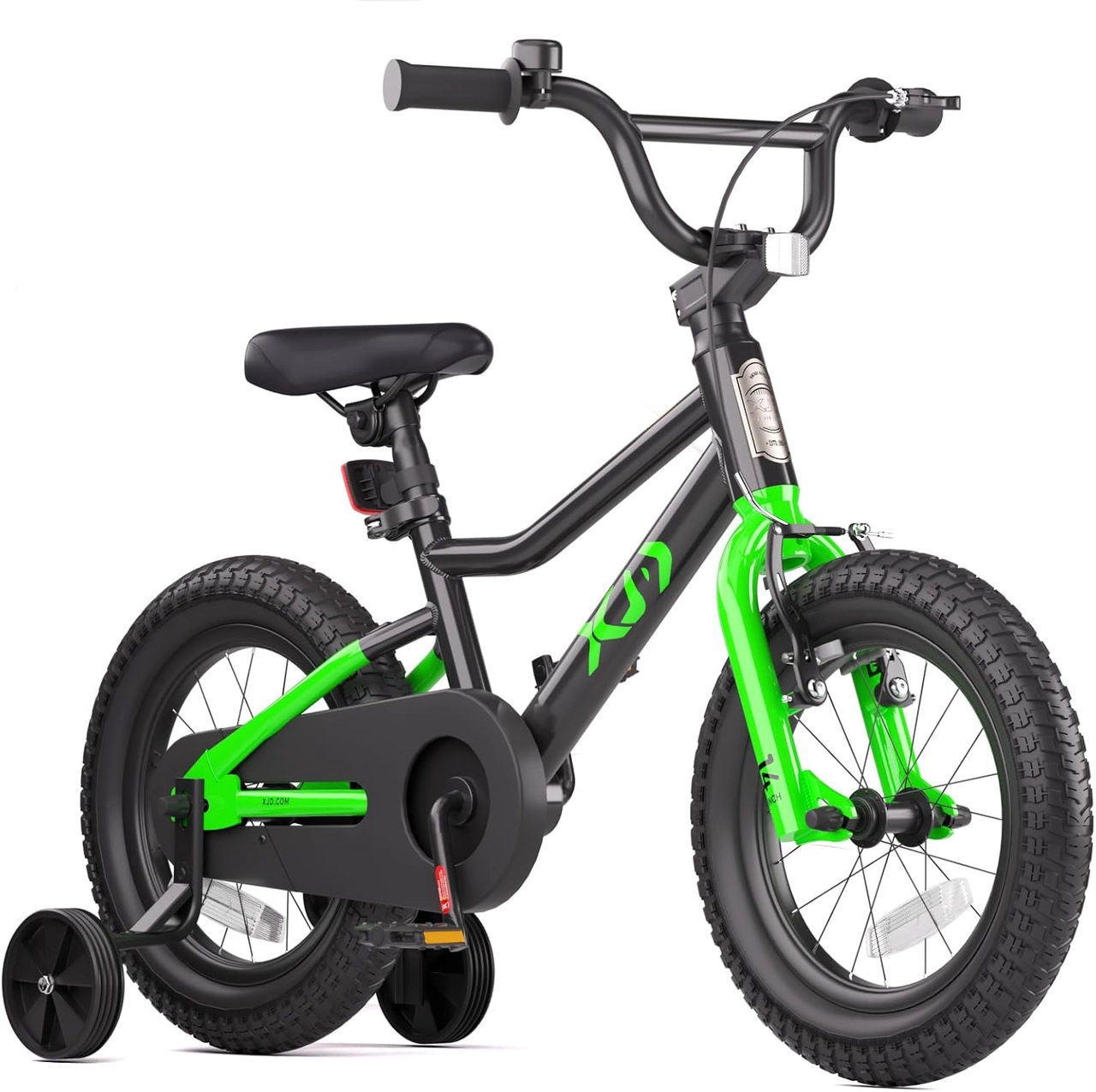
Select the precise size label carefully when viewing the product. A product family containing several wheel-size options does not mean those sizes fit the same child or are interchangeable.
When a different wheel size may be more appropriate
A child within the overlap between the 14-inch and 16-inch starting ranges should try both where practical. Choose according to stand-over room, reach, brake operation and controlled riding—not the desire to extend the time before the next bike.
Likewise, children near the upper end of the 16-inch range may overlap with the 18-inch starting range. That overlap is permission to compare, not a reason to skip the fit check or automatically move up. An oversized bicycle can be harder for a child to control.
If the rider's measurements fall outside the stated 16-inch height range, begin with the XBikes size whose height range includes the child, then verify the exact bicycle in person. Current confidence matters too: a hesitant rider may need a different fit decision from a highly controlled rider with similar measurements.
Complete the safety and setup checks
Use a properly fitting bicycle helmet every time. Following U.S. Consumer Product Safety Commission guidance, position it level and adjust its straps according to the helmet manufacturer's instructions.
For assembly, maintenance, load limits, compatibility and torque requirements, follow the manual for the exact product. If the instructions are missing or the setup is uncertain, use a qualified bicycle mechanic rather than guessing.
Decision: consider a 16-inch bike for a 4–7-year-old measuring 40–48 inches (102–122 cm), but buy it only after the child demonstrates suitable stand-over, reach, brake control and confident handling on that exact bicycle.
Bikes for your next adventure
-
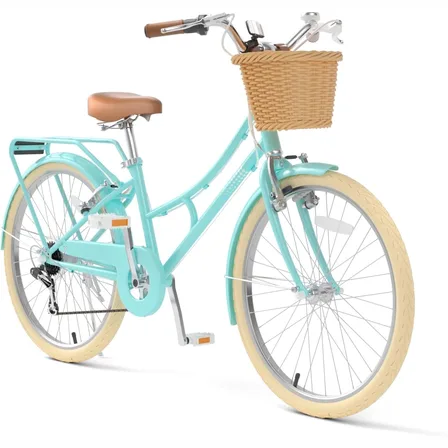
XJD Kids Beach Cruiser Bicycle, Rear Rack & V-Brakes, Mint Green
The XJD Beach Cruiser in Mint Green is a geared, multi-speed cruiser bike for ol…$179.99
$209.99 -
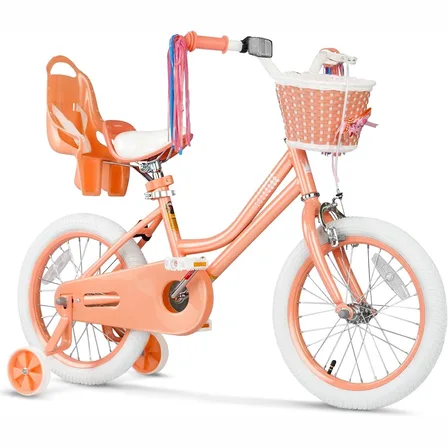
Girls 12/14/16 Inch Kids Bike by XJD with Training Wheels – Peach
The XJD Girls Bike in Peach is a training-wheel bike built for girls roughly 3 t…$149
$169 -
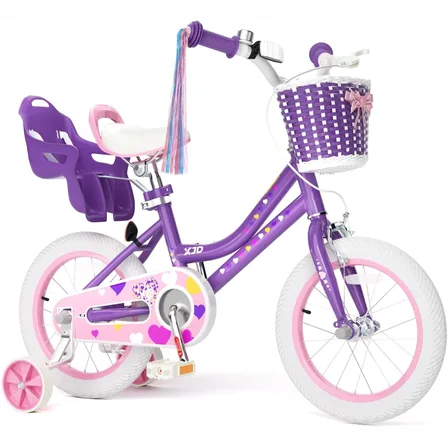
XJD Light Purple Girls Bike with Basket, Training Wheels, 12/14/16/20 Inch
The XJD Girls Bike with Basket in Light Purple is a single-speed training-wheel …$99.99
$119.99