

What age group is a 26 inch bike for
A 26-inch bike is generally for youth and adults over 60 inches (153 cm) tall. Age alone cannot confirm fit; measure the rider and test the bike.
Who fits a 26-inch bike?
Under the XBikes wheel-size starting points, a 26-inch bike is intended for youth and adults whose height is over 60 inches (153 cm). There is no fixed age range for this size because riders of the same age can differ substantially in height, leg length, reach and confidence.
Treat that height threshold as a screening point, not a guarantee. A rider who is just over it may still find a particular frame too tall or too long. Conversely, choosing a 26-inch bike only because a child will eventually grow into it can make starting, stopping and steering harder now. The American Academy of Pediatrics recommends having the child try the bicycle instead of buying an oversized bike for growth.
Measure before comparing bikes
First measure the rider’s current height without shoes. Then measure the inseam from the floor to the crotch while the rider stands upright. Height tells you whether 26 inches is a sensible size to try; inseam helps you judge whether the rider can stand over the actual frame.
Wheel size does not specify every frame dimension, so compare those measurements with the sizing information for the exact bicycle. If the manual does not provide the necessary dimensions or adjustment instructions, ask a qualified bicycle mechanic to assess the fit.
Use this nearby-size comparison to avoid choosing from age alone:
| Wheel size | XBikes starting point | What it means |
|---|---|---|
| 20 Inch | Ages 7–12; 48–60 in / 122–152 cm | A smaller starting range, requiring its own fit check |
| 24 Inch | Ages 10–14; 54–64 in / 137–163 cm | Overlaps the transition toward larger youth bikes |
| 26 Inch | Youth and adults over 60 in / 153 cm | The requested size, still subject to an individual test |
What to check during a test ride
Have the rider wear the shoes normally used for cycling and try the exact bike in a controlled area. Check more than whether the seat can be lowered.
- Stand-over: The rider should be able to straddle the frame without being forced onto tiptoes or against the frame.
- Starting and stopping: The rider should mount, begin moving and come to a controlled stop without struggling against the bike’s size.
- Reach: The handlebars should be reachable without excessive stretching, locked elbows or a strained posture.
- Brake control: The rider must comfortably reach and operate the brake controls while maintaining a secure grip.
- Confidence: Steering, turning and stopping should look deliberate rather than hesitant or unstable.
If any of these checks fail, do not assume practice will correct an unsuitable fit. Compare the exact 24-inch and 26-inch versions where available, or have a qualified bicycle mechanic help distinguish a sizing problem from an adjustment issue. Follow the exact product manual for assembly and adjustments.
How the supplied 26-inch options are relevant
Both supplied catalog models include an exact 26-inch SKU, so they are relevant options to inspect after the rider clears the height starting point. Their additional wheel-size labels also make them useful for comparing adjacent sizes without treating those sizes as equivalent.
 Pink XJD Beach Cruiser Bike, 24"/26", U-Brake
Available in 24-inch and 26-inch SKUs, this beach cruiser provides an adjacent-size comparison. The supplied title identifies a U-brake, but actual fit still depends on the rider’s measurements and control check.
 XJD Kids Beach Cruiser Bicycle, Rear Rack & V-Brakes, Mint Green
With 20-inch, 24-inch and 26-inch SKUs, this mint green beach cruiser supports comparison across several size labels. The title specifies a rear rack and V-brakes; “Kids” is not individual fit evidence.
The Pink XJD Beach Cruiser Bike, 24"/26", U-Brake is offered with 24-inch and 26-inch labels. Its two sizes allow a direct comparison around the transition, while the U-brake detail identifies the supplied brake configuration. The title and wheel label do not prove that either size fits a particular rider.
The XJD Kids Beach Cruiser Bicycle, Rear Rack & V-Brakes, Mint Green is offered in 20-inch, 24-inch and 26-inch labels. That broader size sequence can help a family compare options when the rider is near a boundary. Its title supplies the rear-rack and V-brake details, but the word “Kids” is a catalog label rather than age-based fit evidence.
For either bicycle, confirm the selected SKU is 26 Inch when that is the intended size. Use the exact product manual or a qualified bicycle mechanic for assembly, maintenance, compatibility, load limits and any adjustment or torque information not given here.
Safety and the final decision
A correctly sized bike still requires a properly fitted bicycle helmet. The U.S. Consumer Product Safety Commission advises that the helmet sit level and that its straps be used according to the helmet manufacturer’s instructions.
Choose a 26-inch bike only when the rider is over 60 inches (153 cm) and can pass the stand-over, reach, brake-control and confidence checks on the exact model. If those checks are uncertain, compare the 24-inch version rather than buying the 26-inch size for future growth.
Bikes for your next adventure
-
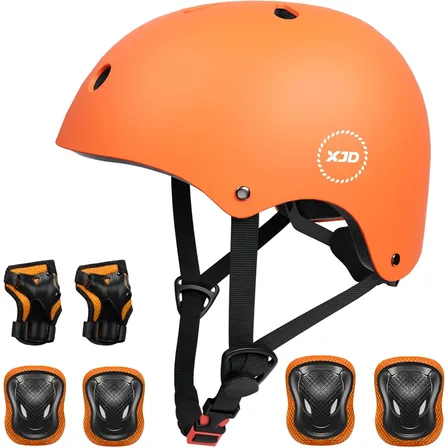
Orange Kids Helmet & Pad Set by XJD – Sizes S & M
The Orange XJD Kids Helmet & Pad Set is built for children around 3 to 8 years o…$24.64
-

Kids Bike Helmet by XJD for Boys & Girls – Black, Blue, Green, Pink, Purple
The XJD Kids Bike Helmet covers a wide 2-to-8-year age range thanks to two head-…$59.99
-

Kids Bike Helmet by XJD for Girls – Pink
The XJD Kids Bike Helmet in Pink is a lightweight multi-sport helmet for girls r…$59.99
$99