

What age group is an 18 inch bike for
An 18-inch bike is generally for children ages 5–9 and 43–52 inches (109–132 cm) tall. Height and an individual fit check matter more than age.
Start with height, not the birthday
The age range is a starting point, not a guarantee. Children of the same age can differ substantially in height, leg length, reach and riding confidence. Measure the child without shoes, standing straight against a wall, and compare the result with the XBikes 18-inch range of 43–52 inches (109–132 cm).
Also measure inseam: have the child stand with feet slightly apart, then measure from the floor to the crotch. A manufacturer’s geometry can vary even when two bikes share the same wheel size, so use that measurement with the exact bike’s stand-over information and manual rather than relying on a universal inseam number.
Check the child on the actual bike
A promising height match still needs an in-person fit check. The American Academy of Pediatrics advises having the child try the bicycle and avoiding an oversized bike bought merely for future growth.
With the child wearing normal riding shoes, check these points:
- Stand-over: The child should be able to straddle the frame with appropriate clearance rather than being pressed against it.
- Starting and stopping: The rider should be able to get on, set off and stop without the bike tipping beyond their control.
- Reach: Hands should reach the handlebar comfortably without an extreme stretch or cramped posture.
- Brake control: The child must be able to reach and operate the fitted braking controls reliably.
- Confidence: Turning, looking ahead and placing a foot down should feel controlled rather than intimidating.
If those checks fail, do not choose the bike simply because the child falls within the stated age range.
Compare 18 inches with nearby wheel sizes
| Wheel size | Starting age | Rider height |
|---|---|---|
| 16 Inch | 4–7 | 40–48 in / 102–122 cm |
| 18 Inch | 5–9 | 43–52 in / 109–132 cm |
| 20 Inch | 7–12 | 48–60 in / 122–152 cm |
The overlapping ranges explain why age alone cannot settle the choice. A smaller, less confident child near 43 inches may need a different fit from a taller, experienced child of the same age. Likewise, an 18-inch bike should not be replaced automatically with a 20-inch model just because the child is expected to grow.
How the supplied XBikes products are relevant
Neither supplied product has an 18-inch option. They are nearest-size comparison points—16 inches below and, in one case, 20 inches above—not substitutes for an 18-inch bike. Their listed sizes can help a parent compare adjacent XBikes starting ranges before arranging an individual fit check.
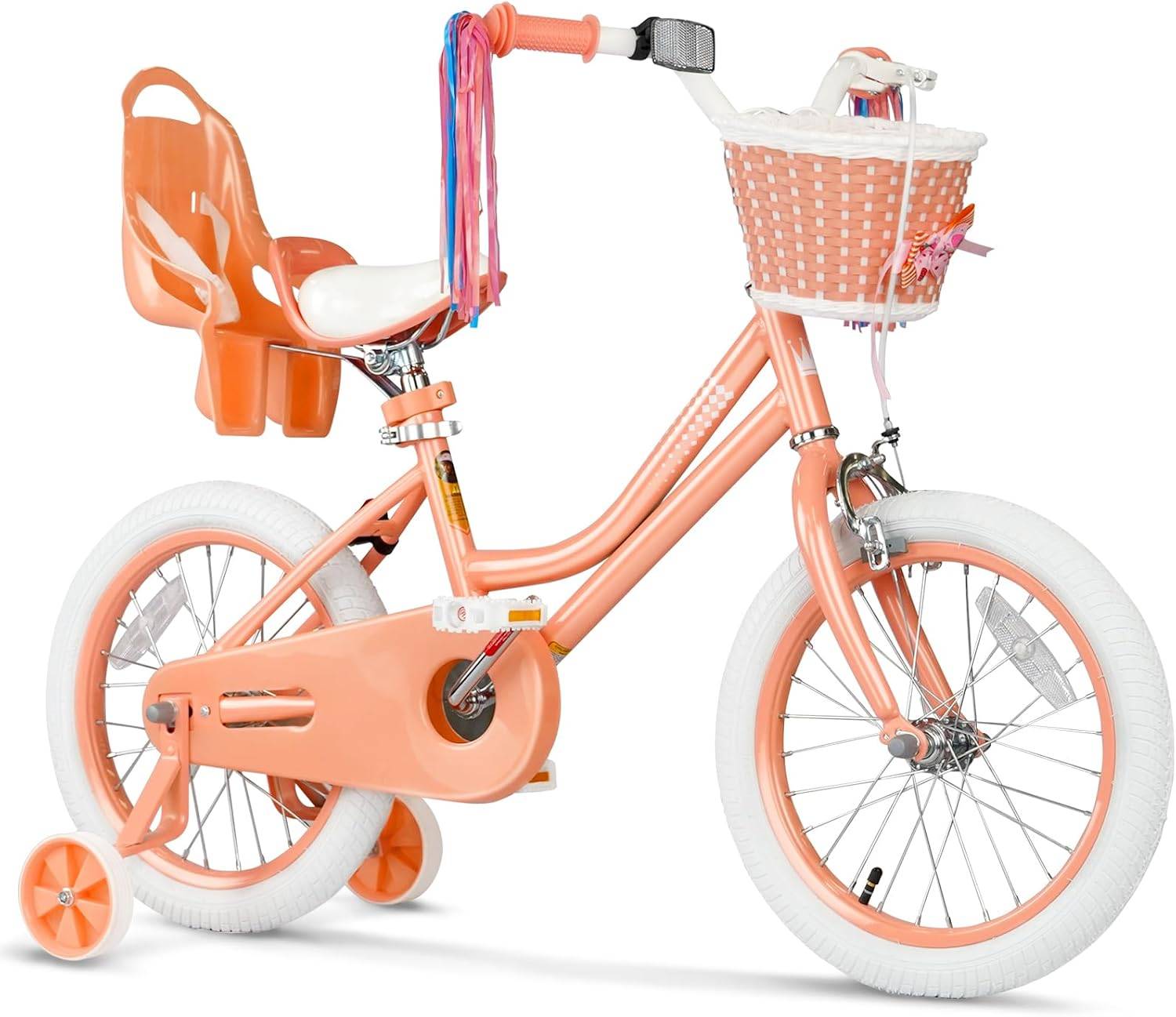 Girls 12/14/16 Inch Kids Bike by XJD with Training Wheels – Peach
Available in 12-, 14- and 16-inch sizes, this model is relevant only as a smaller-wheel comparison; it does not provide the requested 18-inch size.
 XJD Kids Bike for Girls – Pink, 12/14/16/20 Inch with Training Wheels
Its listed 16- and 20-inch options provide comparison points below and above 18 inches, but neither option is equivalent to or a substitute for an 18-inch bike.
Girls 12/14/16 Inch Kids Bike by XJD with Training Wheels – Peach is listed in 12-, 14- and 16-inch sizes. Its 16-inch option corresponds to the XBikes starting range of ages 4–7 and heights 40–48 inches (102–122 cm). Consider it only as a smaller-wheel comparison when the rider’s measurements and control suggest that 18 inches may be too large.
XJD Kids Bike for Girls – Pink, 12/14/16/20 Inch with Training Wheels is listed in 12-, 14-, 16- and 20-inch sizes. It allows comparison on both sides of 18 inches: the 16-inch starting range is ages 4–7 and 40–48 inches (102–122 cm), while the 20-inch range is ages 7–12 and 48–60 inches (122–152 cm). Neither listed size should be treated as equivalent to 18 inches.
For assembly, adjustment, maintenance, compatibility, load limits or torque requirements, follow the manual for the exact product or ask a qualified bicycle mechanic. Do not transfer instructions from one wheel size or model to another.
Make the final 18-inch decision
Choose an 18-inch bike only when the child is broadly within 43–52 inches (109–132 cm) and can pass the stand-over, reach, braking and control checks on that exact bicycle. If the child cannot manage those checks comfortably, compare the actual fit of a smaller option; if the bike feels cramped, compare the actual fit of a larger option without buying oversized for growth.
Complete the decision with a properly fitting bicycle helmet. U.S. Consumer Product Safety Commission guidance says the helmet should sit level and its straps should be used according to the helmet manufacturer’s instructions. Measure the rider now, test the exact bike next, and select 18 inches only if both the size range and real-world control agree.
Bikes for your next adventure
-
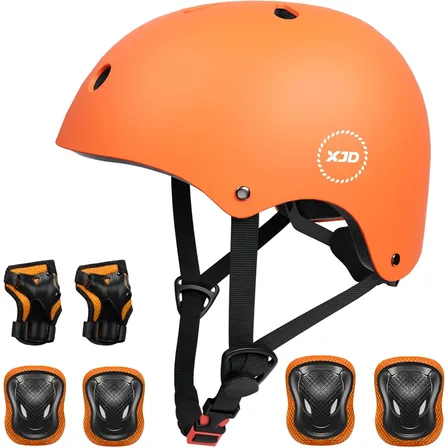
Orange Kids Helmet & Pad Set by XJD – Sizes S & M
The Orange XJD Kids Helmet & Pad Set is built for children around 3 to 8 years o…$24.64
-

Kids Bike Helmet by XJD for Boys & Girls – Black, Blue, Green, Pink, Purple
The XJD Kids Bike Helmet covers a wide 2-to-8-year age range thanks to two head-…$59.99
-

Kids Bike Helmet by XJD for Girls – Pink
The XJD Kids Bike Helmet in Pink is a lightweight multi-sport helmet for girls r…$59.99
$99