

What age is a 12 inch bike for
A 12-inch bike is usually for a child aged 3–4 and 34–40 inches (86–102 cm) tall, but measured fit and control matter more than age.
Start with height, not the birthday
The age range is only a starting point. Measure the child’s height without shoes, then compare it with the XBikes 12-inch range of 34–40 inches (86–102 cm). Children of the same age can have different proportions, reach and confidence, so age alone cannot confirm that a bicycle fits.
Next, measure inseam: have the child stand straight without shoes and measure from the floor to the crotch. There is no universal inseam number here because frame shapes and saddle adjustment differ. Use the measurement when checking the exact bicycle rather than trying to convert it into a wheel size by itself.
Check the child on the actual bike
Have the child try the bicycle before deciding. The American Academy of Pediatrics advises against buying an oversized bike merely for future growth. A bike that is too large can make starting, stopping and steering harder now.
- Stand-over: With the child standing over the frame, check that they can straddle it comfortably rather than being forced onto tiptoes or against the frame.
- Starting and stopping: Ask them to get into position, set off and stop without an adult holding the bike upright.
- Reach: Their hands should reach the handlebar naturally, without a strained forward stretch or locked arms.
- Brake control: Confirm that they can reach and operate the fitted braking controls reliably. Consult the exact product manual for operation and adjustment details.
- Confidence: Watch for calm steering and deliberate stops. Height within the range does not compensate for a lack of control.
When to compare 12, 14 and 16 inches
| Wheel size | Starting age | Rider height |
|---|---|---|
| 12 inch | 3–4 | 34–40 in / 86–102 cm |
| 14 inch | 3–6 | 37–45 in / 94–114 cm |
| 16 inch | 4–7 | 40–48 in / 102–122 cm |
The overlapping ranges are comparison points, not permission to size up automatically. A child near an overlap should try the relevant sizes and use the smallest option that provides appropriate stand-over, reach, brake control and confident handling. A 14-inch or 16-inch bicycle is not equivalent to a 12-inch bicycle.
How the supplied XBikes options help
All three supplied catalog options offer 12 Inch, 14 Inch and 16 Inch SKU labels, so they let a parent compare the requested 12-inch size with adjacent sizes while staying within one product’s listed choices. Select the wheel-size SKU deliberately; the shared product page does not mean every size fits the same child.
XJD Girls BMX Bike 12/14/16 Inch with Training Wheels – Pink Blue and XJD Boys & Girls BMX Bike with Training Wheels, 12/14/16" – Blue are cataloged as Kids’ BMX Bikes. Flower Pink XJD Girls Bike with Doll Seat & Basket is cataloged as a Training Wheel Bike. Each includes a 12 Inch label and is therefore directly relevant to this question; their 14 Inch and 16 Inch choices should only be considered after a separate fit check.
These particular options are useful because each provides the requested 12 Inch SKU alongside 14 Inch and 16 Inch comparison choices, while their catalog titles and categories distinguish the available styles.
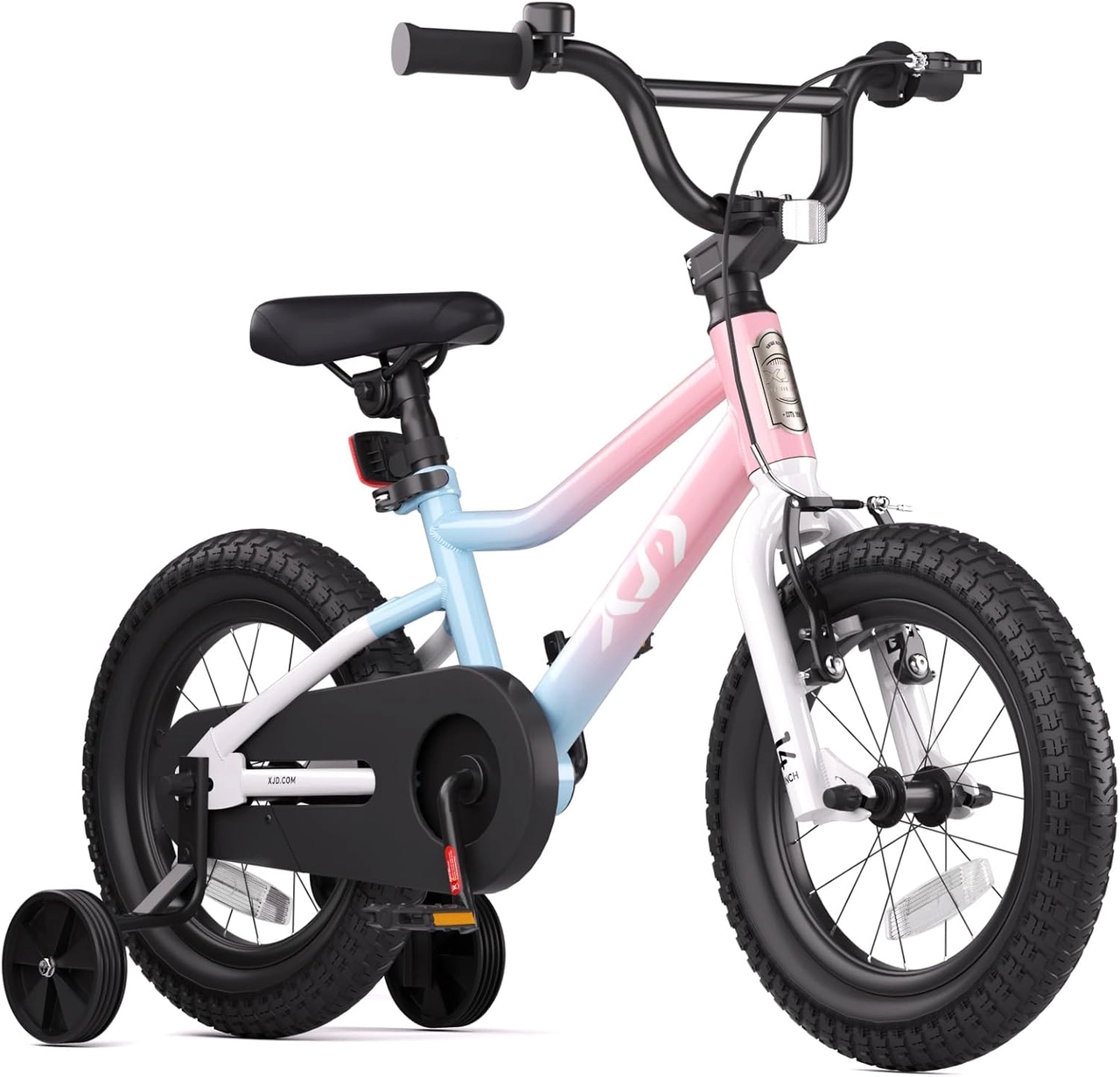 XJD Girls BMX Bike 12/14/16 Inch with Training Wheels – Pink Blue
Available in a 12 Inch SKU relevant to the question, plus 14 Inch and 16 Inch comparison choices. Its supplied catalog category is Kids’ BMX Bikes, and its exact title identifies training wheels.
 XJD Boys & Girls BMX Bike with Training Wheels, 12/14/16" – Blue
Offers 12 Inch, 14 Inch and 16 Inch SKU labels. The 12 Inch choice is directly relevant, while either larger size requires its own fit check. It is cataloged as a Kids’ BMX Bike.
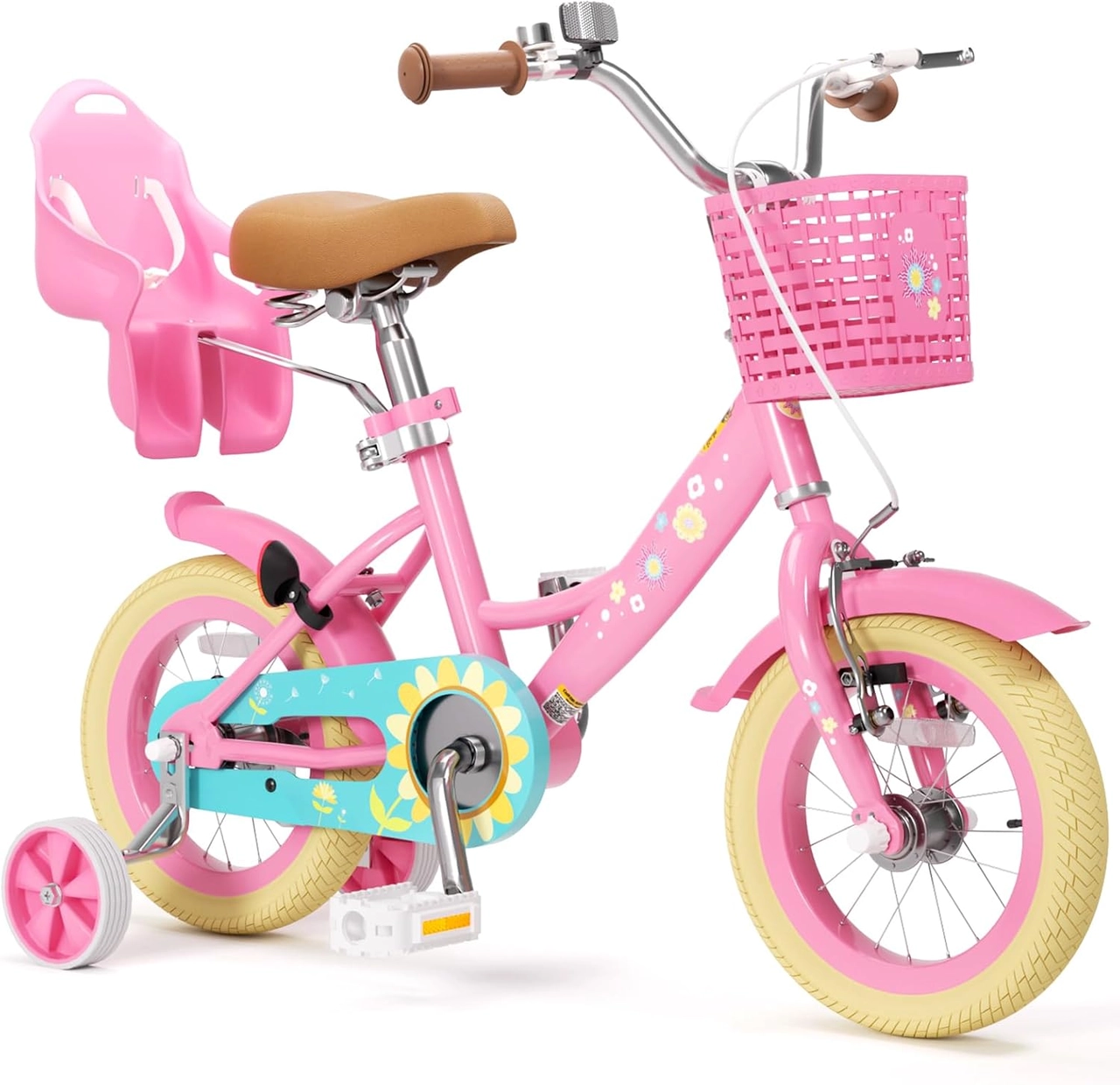 Flower Pink XJD Girls Bike with Doll Seat & Basket
Includes a directly relevant 12 Inch SKU as well as 14 Inch and 16 Inch choices. It is cataloged as a Training Wheel Bike; its title identifies a doll seat and basket.
Training wheels do not determine frame fit
The catalog identifies training wheels in the first two exact titles and places the third bike in the Training Wheel Bikes category. That information may matter when comparing formats, but it does not make an oversized frame suitable. The child must still be able to stand over, reach, steer and use the braking controls confidently.
For assembly, training-wheel setup, maintenance, compatibility, load limits and torque, follow the manual for the exact product and selected SKU. If anything is unclear or the controls cannot be adjusted to suit the rider, use a qualified bicycle mechanic.
Do this before choosing a 12-inch bike
- Measure the child’s standing height and inseam without shoes.
- Use 34–40 inches (86–102 cm) and age 3–4 only as the 12-inch starting point.
- Have the child try the exact 12-inch bicycle and check stand-over, reach, independent starts and stops, brake operation and current confidence.
- Do not choose 14 or 16 inches solely to allow room for growth.
- Add a properly fitting bicycle helmet. The U.S. Consumer Product Safety Commission says it should sit level, fit properly and have its straps used according to the helmet manufacturer’s instructions.
Choose the 12-inch SKU only if the child fits and controls that exact bike now; otherwise, compare another size through a fresh hands-on fit check rather than deciding by age alone.
Bikes for your next adventure
-

XJD Boys & Girls BMX Bike with Training Wheels, 12/14/16" – Blue
The XJD Boys & Girls BMX Bike in Blue is a first pedal bike for kids roughly age…$99.99
$119.99 -
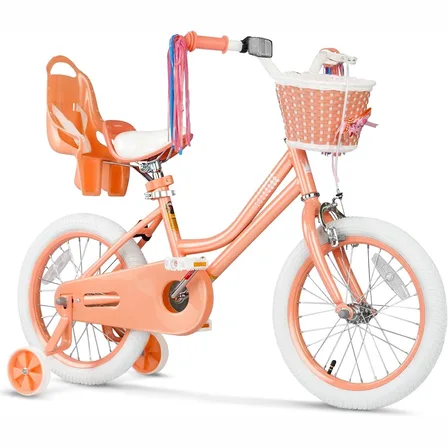
Girls 12/14/16 Inch Kids Bike by XJD with Training Wheels – Peach
The XJD Girls Bike in Peach is a training-wheel bike built for girls roughly 3 t…$149
$169 -
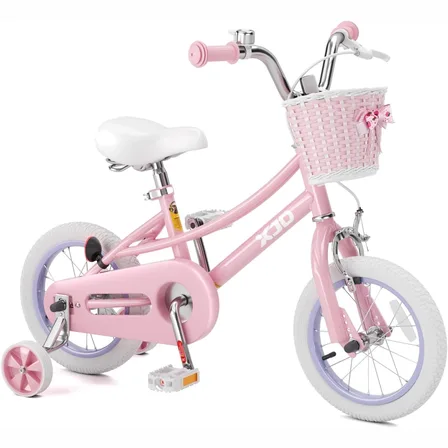
Pink 12/14/16/20" XJD Girls Bike with Training Wheels & Basket
The Pink XJD Girls Bike with Training Wheels & Basket is a first-bike pick f…$65.99
$75.99