

What age is a 13 inch bike frame for
A 13-inch bike frame does not match one exact age. Check whether “13 inch” means frame size or wheel size, then fit the child by height, inseam, reach, brake control and confidence.
Why age alone cannot answer the question
Children of the same age can differ considerably in height, leg length, arm reach and riding ability. A label based only on age can therefore point toward a bike that is awkward or difficult for an individual child to control.
Frame size and wheel size are also different measurements. The XBikes starting points below classify children’s bikes by wheel size, so they cannot convert a 13-inch frame measurement into a dependable age. Confirm what the seller or manufacturer measured before comparing it with a wheel-size chart.
What to measure before choosing
- Measure the child’s standing height without shoes, against a wall.
- Measure inseam from the floor to the crotch, using the same footwear the child will normally wear for riding.
- Confirm the stated bicycle measurement. Ask whether 13 inches refers to the frame or the wheel. If it is a frame measurement, consult that exact bicycle’s geometry and fitting guidance.
- Arrange a real fit check. The child should be able to stand over the bicycle appropriately, reach the handlebar comfortably, steer without stretching and operate the brakes reliably.
Do not choose an oversized bicycle simply to leave room for growth. The child needs manageable control now, particularly when starting, stopping or making a quick correction.
Compare the child with XBikes wheel-size starting points
If “13 inch” was actually intended as a wheel-size description, first verify the marked wheel size. Then use these XBikes ranges only as starting points:
| Wheel size | Starting age | Rider height |
|---|---|---|
| 12 Inch | 3–4 | 34–40 in / 86–102 cm |
| 14 Inch | 3–6 | 37–45 in / 94–114 cm |
| 16 Inch | 4–7 | 40–48 in / 102–122 cm |
| 18 Inch | 5–9 | 43–52 in / 109–132 cm |
| 20 Inch | 7–12 | 48–60 in / 122–152 cm |
| 24 Inch | 10–14 | 54–64 in / 137–163 cm |
| 26 Inch | Youth and adults | Over 60 in / 153 cm |
Overlapping ranges are normal. When age suggests one size but measured height, reach or control suggests another, prioritize the child’s measurements and actual handling. Current confidence matters too: a developing rider must not be forced onto a bicycle that feels difficult to balance or stop.
How to perform the final fit check
Have the child try the fully prepared bicycle under close adult supervision. Check that the stand-over position is appropriate, the handlebar can be reached without an uncomfortable stretch, and turning does not pull the rider out of a stable posture.
The child must also be able to reach and use the fitted braking controls consistently. Ask for a controlled start, straight ride, turn and stop in a traffic-free area. If the child cannot remain composed and in control, do not treat an age chart as permission to proceed.
Seat adjustment and other setup must follow the exact product manual. If the required adjustment, assembly, compatibility or torque information is unclear, use a qualified bicycle mechanic rather than guessing.
How the supplied bikes relate to a 13-inch query
The catalog options help by providing nearby, clearly labeled wheel-size choices for comparison. Neither supplied product lists a 13-inch option, so these are nearest-size comparison points, not substitutes for a requested 13-inch frame or wheel size.
The Blue XJD Girls Bike with Training Wheels – 12/14/16 Inch and the XJD Boys 12/14/16" Training Wheel Bike – Blue are both categorized as Training Wheel Bikes. Each has 12 Inch, 14 Inch and 16 Inch SKU labels. Those labels identify available wheel-size options; they do not establish that either bicycle fits a particular child.
Use the child’s measured height to identify a possible SKU range, then verify inseam clearance, reach, braking and confidence on the exact bicycle. Do not assume the 12 Inch or 14 Inch option is equivalent to 13 inches.
 Blue XJD Girls Bike with Training Wheels – 12/14/16 Inch
A Training Wheel Bikes comparison option with 12 Inch, 14 Inch and 16 Inch SKU labels; it has no exact 13-inch option, so confirm the child’s measurements and fit.
 XJD Boys 12/14/16" Training Wheel Bike – Blue
This Training Wheel Bikes model offers 12 Inch, 14 Inch and 16 Inch SKU labels. Use it only as a nearby size comparison because no supplied 13-inch option is listed.
Make the decision
If 13 inches is a frame size, there is no responsible age answer from the wheel-size chart: obtain the exact model’s geometry, follow its manual and arrange an individual fit check. If it is meant as a wheel size, verify the marking and compare the measured child with the XBikes starting points before trying the bicycle.
Whichever bike fits, add a properly fitting bicycle helmet. It should sit level, and its straps should be used according to the helmet manufacturer’s instructions. Choose only when the child can stand over, reach, steer and brake with control today—not merely because an age label or anticipated growth makes the size appear convenient.
Bikes for your next adventure
-

Blue XJD Kids Bike Helmet for Boys & Girls
The Blue XJD Kids Bike Helmet is a lightweight, adjustable multi-sport helmet fo…$59.99
$99 -
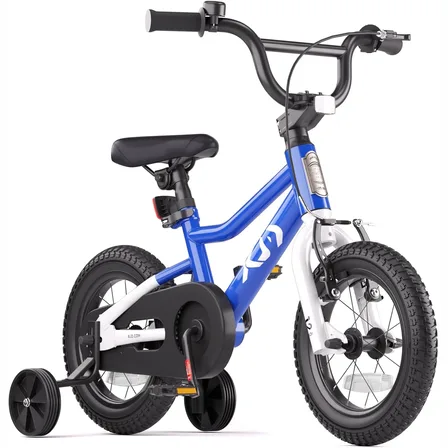
XJD Boys & Girls BMX Bike with Training Wheels, 12/14/16" – Blue
The XJD Boys & Girls BMX Bike in Blue is a first pedal bike for kids roughly age…$99.99
$119.99 -
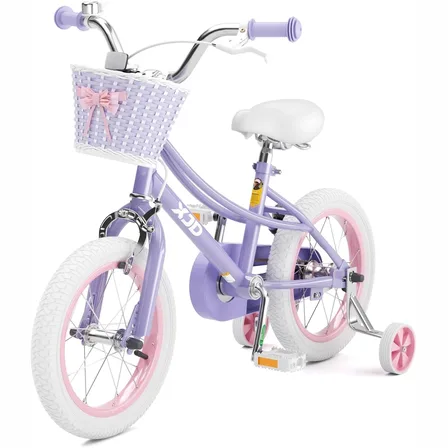
Girls' Training Wheel Bike by XJD with Basket – Purple
If you're shopping for a first bike for a girl roughly 3 to 12 years old (91–152…$75.99