

What age is for a 20 inch bike
A 20-inch bike is a starting point for ages 7–12 and riders 48–60 inches (122–152 cm) tall, but the child must pass an individual fit check.
Start with height, not birthday
The age range answers the title quickly, but age alone cannot confirm fit. Children of the same age can have different leg lengths, reach, coordination and confidence. Measure the child’s standing height without shoes, then compare it with the XBikes 20-inch starting range of 48–60 inches (122–152 cm).
If the child is outside that height range, do not assume a 20-inch bike will work because of age. These nearby XBikes starting points show why: an 18-inch bike corresponds to ages 5–9 and heights of 43–52 inches (109–132 cm), while a 24-inch bike corresponds to ages 10–14 and heights of 54–64 inches (137–163 cm). The ranges overlap, so the final choice depends on the actual bicycle and rider.
Measure the child before comparing bikes
- Standing height: Have the child stand straight against a wall without shoes. Measure from the floor to the top of the head.
- Inseam: Measure from the floor to the crotch while the child stands with feet slightly apart. This helps assess clearance when straddling a particular frame.
- Reach: On the bicycle, check whether the child can hold the handlebar without stretching, locking the elbows or leaning excessively.
- Brake control: Confirm that the child can comfortably reach and operate the fitted brake controls. Do not infer brake fit from wheel size.
- Confidence: Notice whether the child can start, steer, stop and place a foot down without panic or loss of control.
Inseam and reach do not have universal pass-or-fail numbers in the supplied standard. Compare those measurements directly with the exact bicycle, following its product manual or asking a qualified bicycle mechanic when adjustment or compatibility is uncertain.
Make the in-person fit check
Have the child try the bicycle. While straddling it, the child should have suitable clearance and should not be pressed against the frame. Seated, the child needs a controlled riding position, usable steering and accessible brakes. The precise clearance and adjustment requirements should come from the exact product manual.
Do not buy an oversized bike simply to leave room for growth. A bike that is difficult to mount, steer or stop is not made appropriate by the expectation that the child will grow into it. If a 20-inch model fails the fit check, compare an adjacent wheel size rather than forcing the choice.
How the supplied 20-inch options are relevant
The XJD Girls' Bike with Training Wheels, 12/14/16/20 Inch – Purple and the XJD Kids Bike for Girls – Pink, 12/14/16/20 Inch with Training Wheels are relevant because both include an available 20 Inch SKU label. Each also offers 12 Inch, 14 Inch and 16 Inch labels, which may help a family compare smaller catalog variants when 20 inches is too large; the titles identify both as training-wheel bikes.
 XJD Girls' Bike with Training Wheels, 12/14/16/20 Inch – Purple
Offers an available 20 Inch variant relevant to the question, plus 12, 14 and 16 Inch options for smaller-size comparison. Its catalog category and topic identify it as a training-wheel bike.
 XJD Kids Bike for Girls – Pink, 12/14/16/20 Inch with Training Wheels
Includes a 20 Inch SKU label, directly matching the requested wheel size, alongside 12, 14 and 16 Inch variants. The supplied catalog facts classify it as a training-wheel bike.
Those catalog facts do not establish fit, brake reach, assembly requirements, load limits or whether training wheels suit the child’s present skills. Select the exact size variant deliberately, then verify the individual bicycle with the rider. For assembly, maintenance, compatibility and torque requirements, follow the exact product manual or use a qualified bicycle mechanic.
When a 20-inch bike is not the right choice
- The child is outside the 48–60 inch (122–152 cm) height starting range.
- The frame does not provide suitable stand-over clearance for that child.
- The rider must stretch to steer or cannot comfortably reach and operate the brakes.
- The child cannot start, stop or put a foot down with control.
- The family is choosing 20 inches mainly for future growth rather than present fit.
A child near an overlap between sizes should try the actual candidates. Wheel diameter does not determine frame shape, reach or control layout, so two bikes carrying the same wheel-size label may not fit identically.
Complete the safety check and decide
Use a bicycle helmet that fits properly, sits level and has its straps adjusted according to the helmet manufacturer’s instructions. Check the bicycle against its own manual before riding, and have a qualified bicycle mechanic handle any assembly or adjustment you cannot verify.
Choose a 20-inch bike only when the rider is broadly within the 7–12 age and 48–60 inch height starting point and the real-bike check confirms stand-over clearance, comfortable reach, usable brakes and confident control today.
Bikes for your next adventure
-
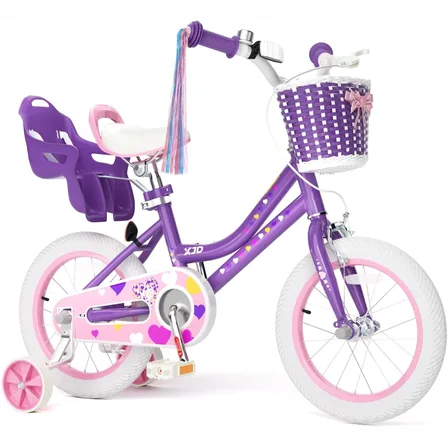
XJD Light Purple Girls Bike with Basket, Training Wheels, 12/14/16/20 Inch
The XJD Girls Bike with Basket in Light Purple is a single-speed training-wheel …$99.99
$119.99 -
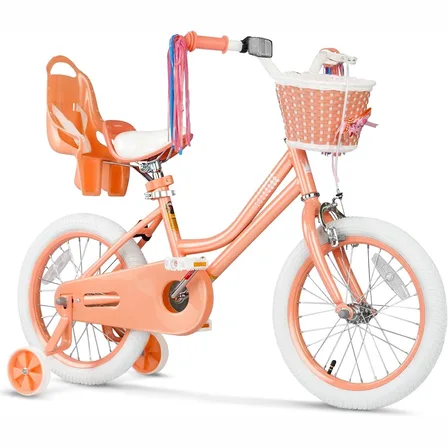
Girls 12/14/16 Inch Kids Bike by XJD with Training Wheels – Peach
The XJD Girls Bike in Peach is a training-wheel bike built for girls roughly 3 t…$149
$169 -

26-Inch XJD Beach Cruiser Bike for Girls – Purple, V-Brake
This XJD 26-inch purple beach cruiser is sized for big kids and teens — suggeste…$218.49
$229.99