

What age rides a 20 inch bike
A 20-inch bike generally suits children ages 7–12 and 48–60 inches (122–152 cm) tall, but measured fit and control matter more than age.
Start with height, not the birthday
Age is only a starting point because children of the same age can differ greatly in height, proportions, coordination and confidence. Measure the child without shoes, standing straight against a wall, and compare that height with the XBikes 20-inch range of 48–60 inches (122–152 cm).
A child outside that range should not be moved onto a 20-inch bike simply because they are seven, nor kept on one merely because they are under twelve. The neighboring XBikes starting points help frame the decision:
| Wheel size | Starting age | Rider height |
|---|---|---|
| 16 Inch | Ages 4–7 | 40–48 in / 102–122 cm |
| 18 Inch | Ages 5–9 | 43–52 in / 109–132 cm |
| 20 Inch | Ages 7–12 | 48–60 in / 122–152 cm |
| 24 Inch | Ages 10–14 | 54–64 in / 137–163 cm |
These ranges overlap intentionally. A rider near a boundary needs an actual fit check rather than an automatic move to the larger wheel.
Measure inseam and check stand-over clearance
Measure inseam from the floor to the crotch while the child stands upright with feet slightly apart. Then have the child try the assembled bicycle. They should be able to straddle the frame with practical clearance instead of being pressed against it or forced onto tiptoes.
There is no supplied universal inseam number for a 20-inch bike because frame shapes and setup can differ. Compare the measured inseam with the bicycle manufacturer's fit information and exact product manual. If that information is unclear, ask a qualified bicycle mechanic to assess the fit.
Test reach, braking and basic control
With the child seated in a normal riding position, check that they can reach the handlebar comfortably without locking their arms, stretching their torso or losing a stable posture. They must also be able to operate the bicycle's brakes confidently with their hands and maintain steering control.
Have the child try the bicycle in a quiet, controlled area with close adult supervision. Look for these practical signs:
- They can start and stop without the bicycle overwhelming them.
- They can steer, turn and look ahead while remaining balanced.
- They can reach and use the brakes without shifting into an unstable position.
- They appear calm enough to respond rather than freezing or panicking.
If height falls within the stated range but reach, braking or control is poor, the 20-inch bike is not yet an appropriate fit. The American Academy of Pediatrics advises having the child try the bicycle and not buying an oversized bike merely to allow room for growth.
How the supplied catalog option helps
The Light Pink XJD Girls' Bicycle with Basket & Training Wheels is listed in Training Wheel Bikes with 12 Inch, 14 Inch, 16 Inch and 20 Inch SKU labels. Its 20 Inch option makes it directly relevant to this question, while the smaller labels provide same-listing size comparison points. Those labels do not replace an individual fit check or establish additional age ranges.

Select the exact 20 Inch SKU only after confirming the displayed variant and checking the child's measurements and control on the bicycle. Follow the exact product manual for assembly, maintenance, compatibility, load limits and any torque requirements; use a qualified bicycle mechanic when those instructions cannot be followed confidently.
Do not overlook the helmet fit
A correctly sized bicycle still requires a properly fitting bicycle helmet. The U.S. Consumer Product Safety Commission advises that the helmet sit level and that its straps be adjusted according to the helmet manufacturer's instructions. A loose, tilted or poorly strapped helmet should be corrected before riding.
Make the 20-inch decision
Use age 7–12 as the quick answer, then make the decision from evidence: measure height and inseam, compare height with 48–60 inches (122–152 cm), and have the child test stand-over clearance, reach, braking and control. Choose a 20-inch bike only when all of those checks support it; otherwise compare the neighboring size range and try again rather than buying large for future growth.
Bikes for your next adventure
-

26-Inch XJD Beach Cruiser Bike for Girls – Purple, V-Brake
This XJD 26-inch purple beach cruiser is sized for big kids and teens — suggeste…$218.49
$229.99 -
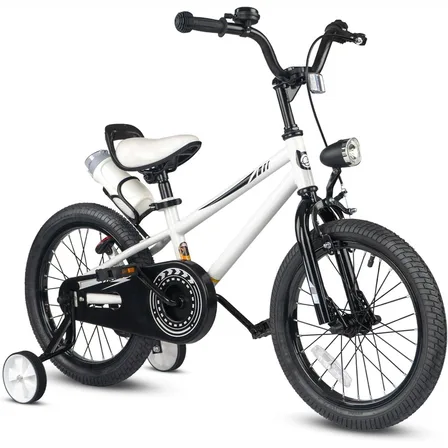
XJD Kids' Training Wheel Bike for Boys & Girls, 12/14/16 Inch – White
The XJD kids' training wheel bike in White is made for riders ages 3–8 (roughly …$169
$199 -
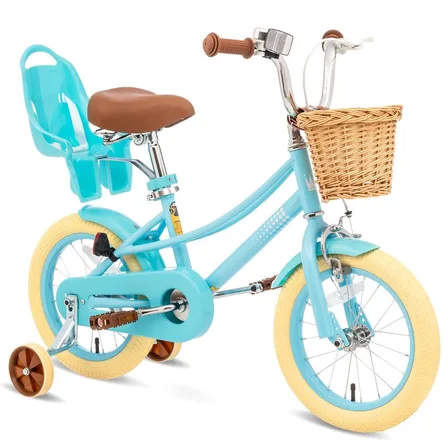
Girls' Training Wheel Bike by XJD, 12–20 Inch Wheels – Blue
This XJD girls' training wheel bike in Blue covers one of the widest fit ranges …$139
$159