

What age should a child get a bike
A child should get a bike when they are ready to steer, stop and follow simple instructions—then choose the size by fit, not birthday alone.
Age is a starting point, not the deciding measurement
For many families, the first relevant XBikes size is a 12-inch bicycle, listed as a starting point for ages 3–4 and heights 34–40 inches (86–102 cm). However, children of the same age can differ greatly in height, leg length, reach and confidence. A child outside an age band may need a different size, while a child inside it may not yet be ready to ride.
Do not buy an oversized bicycle simply to allow room for growth. A bike that is difficult to stand over, steer or stop can prevent a child from controlling it confidently. The right time is when readiness and an individual fit check point to a bicycle the child can manage now.
Measure and check these five things
- Standing height: Measure the child without shoes against a wall. Use the result to identify likely wheel sizes in the table below.
- Inseam: Measure from the floor to the crotch while the child stands straight. Compare it with the actual bicycle’s stand-over space and saddle adjustment rather than assuming wheel size guarantees a fit.
- Stand-over: Have the child straddle the bicycle. They should be able to stand comfortably and stabilize it without the frame obstructing them.
- Reach and steering: With the child seated, check that they can hold the handlebar, look ahead and turn without stretching, twisting or losing a stable position.
- Stopping control: Confirm that the child can reach and operate the bicycle’s braking controls as described in its manual. They should also understand when and how to stop before riding independently.
Compare the measured height with these starting points
| Wheel size | Age starting point | Rider height |
|---|---|---|
| 12 Inch | 3–4 | 34–40 in / 86–102 cm |
| 14 Inch | 3–6 | 37–45 in / 94–114 cm |
| 16 Inch | 4–7 | 40–48 in / 102–122 cm |
| 18 Inch | 5–9 | 43–52 in / 109–132 cm |
| 20 Inch | 7–12 | 48–60 in / 122–152 cm |
| 24 Inch | 10–14 | 54–64 in / 137–163 cm |
| 26 Inch | Youth and adults | Over 60 in / 153 cm |
Overlapping ranges are intentional starting points, not an automatic answer. If a child’s height falls into two rows, compare both bikes in person. Favor the one that gives the child comfortable stand-over, natural reach, reliable brake control and confidence today.
When the supplied 12-, 14- and 16-inch bikes are relevant
The XJD Girls BMX Bike 12/14/16 Inch with Training Wheels – Pink Blue and the XJD Boys & Girls BMX Bike with Training Wheels, 12/14/16" – Blue are both Kids' BMX Bikes offered in 12 Inch, 14 Inch and 16 Inch labels. These options are relevant when the child’s measured height points toward one of those three starting ranges and a hands-on check confirms control. Their supplied training wheels may also be relevant to families specifically seeking that feature.
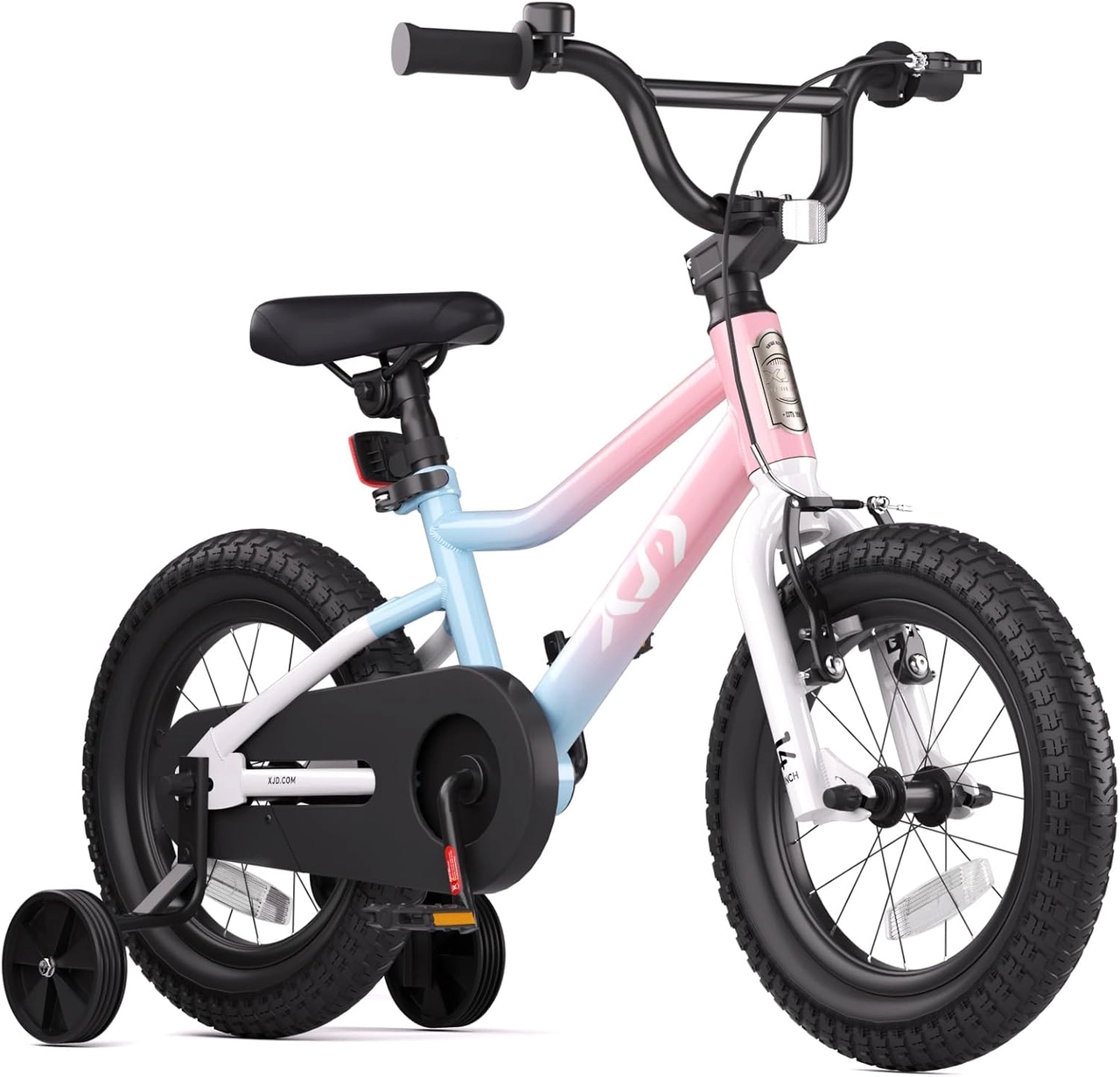 XJD Girls BMX Bike 12/14/16 Inch with Training Wheels – Pink Blue
Relevant for measured riders whose individual fit check points to a 12-, 14- or 16-inch Kids' BMX Bike and whose family wants supplied training wheels; offered in Pink Blue.
 XJD Boys & Girls BMX Bike with Training Wheels, 12/14/16" – Blue
A Blue Kids' BMX Bike option with supplied training wheels and 12-, 14- and 16-inch labels; relevance depends on measured height, stand-over, reach, brake control and confidence.
Choose between these catalog options by preferred exact listing and available size label, then verify the individual fit. The supplied facts do not establish differences in brakes, weight, materials, adjustment range or other components, so those details should not be assumed. Follow the exact product manual for assembly, maintenance, load limits and compatibility, or ask a qualified bicycle mechanic.
Neither supplied product is a suitable recommendation based only on age. They are not the relevant catalog choices when measurements point to 18, 20, 24 or 26 inches, or when the child cannot comfortably stand over, reach, steer and stop the selected model.
Check readiness before the first ride
Ask the child to demonstrate that they can listen, look ahead, steer predictably and stop when instructed in a controlled practice area. Current confidence matters: hesitation, panic or inability to manage the bicycle are reasons to pause, adjust the setup, consider another size or wait before independent riding.
A bicycle helmet is essential, but its label alone does not establish fit. Place it level on the child’s head and adjust it using the straps and the helmet manufacturer’s instructions. Recheck the fit rather than relying on how it fitted previously.
Make the decision in this order
- Decide whether the child is ready to steer, stop and follow instructions.
- Measure standing height and inseam.
- Use the XBikes table to shortlist wheel sizes.
- Have the child try the actual bicycle and compare stand-over, reach, steering, brake control and confidence.
- Select the bike that fits now; do not size up merely for future growth.
If readiness, measurements and the try-on check all agree, it is the right time for that child to get a bike. If any one of them does not, choose another size or wait and check again later.
Bikes for your next adventure
-
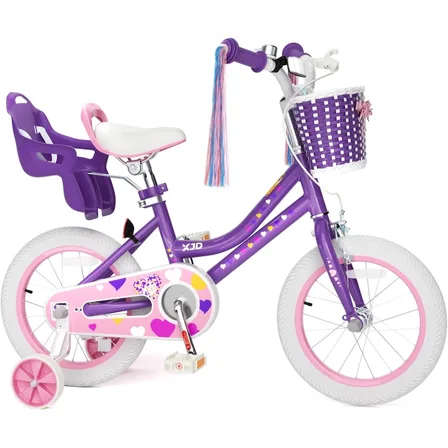
Purple XJD Girls' Bike with Doll Seat & Basket
For girls 71–122 cm tall (about ages 3–7), this XJD girls' bike in Purple pairs …$75.99
$99.99 -

XJD Boys 12/14/16" Training Wheel Bike – Blue
The XJD Boys Bike in Blue is a training wheel bike for riders 71–122 cm tall—rou…$169
$199 -

Kids Bike Helmet by XJD for Girls – Pink
The XJD Kids Bike Helmet in Pink is a lightweight multi-sport helmet for girls r…$59.99
$99