

What age should kid learn to ride bike
Most children can start learning to ride a bike between ages 3 and 6, but readiness and physical fit matter more than a birthday.
Look for readiness before choosing an age
A child is ready to learn when they want to try, can follow simple directions and can stay attentive long enough to practise. They should also be able to walk, steer and stop the bicycle while remaining in control. A cautious child may need more time than an eager peer of the same age, and that is normal.
Do not use age as the only buying rule. Measure the child, check how they handle the actual bicycle and choose a size they can control now. An oversized bike bought for future growth can make starting, stopping and balancing unnecessarily difficult.
Measure height and check the individual fit
Measure the child barefoot, standing upright against a wall. Record total height. For inseam, measure from the floor to the crotch with the legs slightly apart. Compare height with the XBikes starting points below, then have the child try the bicycle.
| Wheel size | Age starting point | Rider height |
|---|---|---|
| 12 Inch | 3–4 | 34–40 in / 86–102 cm |
| 14 Inch | 3–6 | 37–45 in / 94–114 cm |
| 16 Inch | 4–7 | 40–48 in / 102–122 cm |
| 18 Inch | 5–9 | 43–52 in / 109–132 cm |
| 20 Inch | 7–12 | 48–60 in / 122–152 cm |
| 24 Inch | 10–14 | 54–64 in / 137–163 cm |
| 26 Inch | Youth and adults | Over 60 in / 153 cm |
These ranges overlap because children have different proportions and abilities. Height narrows the options; inseam, reach, brake control and confidence decide whether a particular bike fits.
Run a hands-on fit check
Have the child try the exact bicycle rather than relying on its label. Check these points before deciding:
- Stand-over: The child should be able to straddle the bike securely rather than being forced onto tiptoes or against the frame.
- Reach: They should hold the handlebar without stretching, locking their elbows or losing an upright, controlled position.
- Brakes: Confirm that they can comfortably reach and operate the controls fitted to that exact bicycle.
- Starting and stopping: They should be able to get moving, stop when asked and support the bike without panic.
- Steering: Ask them to turn both ways at walking pace while looking ahead and remaining in control.
If any of these checks fail, compare another size or setup. Do not treat room to grow as a reason to accept poor present-day control.
How the supplied bike helps with the decision
The XJD Girls Bike for Kids Ages 3-8, 12/14/16 Inch with Training Wheels – Purple provides three catalog size options—12 Inch, 14 Inch and 16 Inch—within the early-learning part of the XBikes chart. That makes it useful for comparing adjacent starting points for a child measuring 34–48 inches overall. The “Ages 3-8” wording is part of the exact catalog title, not proof of fit; use the measured ranges and hands-on checks instead.
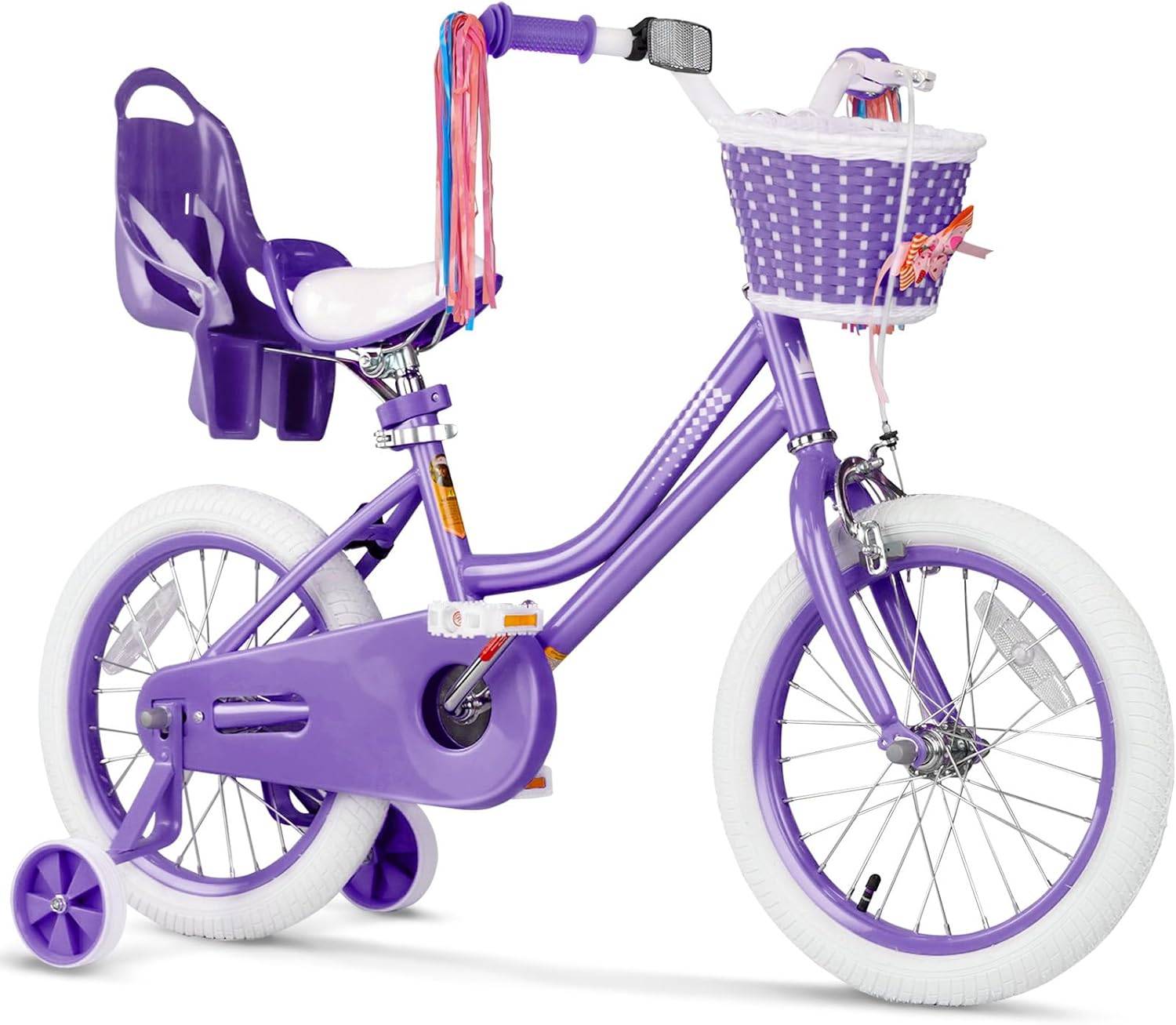
This product is relevant when the child’s measured height falls within one of those three starting ranges and training wheels suit the learning approach. It is not the supplied option to use as a substitute when measurements point to 18 Inch or larger. Compare the exact 12, 14 or 16 Inch SKU label against the child’s current fit rather than assuming adjacent wheel sizes are equivalent.
Plan the first practice sessions
Choose a flat, open area away from traffic and obstacles. Keep sessions short enough that fatigue does not replace concentration. Let the child practise looking ahead, steering, starting and stopping in small steps. Stay close enough to assist, but avoid pulling the handlebar because that prevents the child from learning how steering inputs affect balance.
If training wheels are used, they can support early pedalling and steering practice, but current confidence still matters. Recheck fit as skills change and after a growth spurt. For assembly, adjustments, maintenance, compatibility, load limits or torque, follow the exact product manual or ask a qualified bicycle mechanic; those details cannot be inferred from wheel size.
Protect the rider and make the decision
Use a bicycle helmet that fits properly, sits level and has its straps adjusted according to the helmet manufacturer’s instructions. Check the fit before every ride rather than assuming a previously adjusted helmet still fits.
For the title question, begin considering a bike around ages 3–6, then make the actual decision from the child’s measured height, inseam, reach, brake control and confidence. Measure today, identify the matching wheel-size starting point, and arrange a hands-on fit check before choosing the bike.
Bikes for your next adventure
-

XJD Kids Bike for Girls – Pink, 12/14/16/20 Inch with Training Wheels
The XJD Kids Bike for Girls in Pink is a training-wheel bike built to carry your…$139
$159 -

Blue XJD Girls Bike with Training Wheels – 12/14/16 Inch
If you're shopping for a first pedal bike for a daughter roughly 3 to 8 years ol…$149
$169 -

26-Inch XJD Beach Cruiser Bike for Girls – Purple, V-Brake
This XJD 26-inch purple beach cruiser is sized for big kids and teens — suggeste…$218.49
$229.99