

What age should my child ride a bike
Most children can start riding a bike around age 3, but age is only a starting point. Measure your child’s height, then confirm stand-over clearance, reach, brake control and confidence on the actual bike.
Start with height, not a birthday
Children of the same age can differ considerably in size, coordination and confidence. Measure your child without shoes, standing straight against a wall. Compare that height with the XBikes starting points below, then have the child try the bicycle before deciding.
| Wheel size | Starting age | Rider height |
|---|---|---|
| 12 Inch | Ages 3–4 | 34–40 in / 86–102 cm |
| 14 Inch | Ages 3–6 | 37–45 in / 94–114 cm |
| 16 Inch | Ages 4–7 | 40–48 in / 102–122 cm |
| 18 Inch | Ages 5–9 | 43–52 in / 109–132 cm |
| 20 Inch | Ages 7–12 | 48–60 in / 122–152 cm |
| 24 Inch | Ages 10–14 | 54–64 in / 137–163 cm |
| 26 Inch | Youth and adults | Over 60 in / 153 cm |
These ranges overlap deliberately: they narrow the search but do not establish fit. If age points toward one size and measured height points toward another, use height to choose which bicycles to try.
Measure inseam and check stand-over
Height identifies likely wheel sizes; inseam helps reveal whether the frame itself is manageable. Measure from the floor to the crotch while the child stands upright with feet slightly apart. Compare that measurement with the bicycle’s stand-over height using the manufacturer’s exact sizing information.
On the actual bicycle, ask the child to straddle the frame with both feet planted securely. The frame must not prevent a stable stance. Do not buy an oversized bicycle merely to allow room for growth. A bike that will fit later may be difficult to start, stop or steady today.
Test reach, brakes and confidence
Seat position alone cannot correct every mismatch. With the child seated and holding the handlebar, check whether the posture looks controlled rather than stretched. The child should be able to steer without locking the arms or shifting forward just to reach.
Next, have the child place hands on the brake controls. Confirm that the controls are within comfortable reach and that the child can operate them deliberately while maintaining a secure grip. Follow the bicycle’s manual for permitted adjustments; ask a qualified bicycle mechanic when setup, compatibility or adjustment requirements are unclear.
Finally, consider current skill. A tentative new rider may need easier foot placement and a less demanding reach than a confident rider of identical height. A short, supervised trial should show whether the child can:
- mount and dismount without losing balance;
- start, steer and stop under control;
- look ahead while keeping a stable riding position;
- reach and use the brakes without struggling.
When the supplied cruiser sizes are relevant
The XJD Pink Beach Cruiser for Girls – Rear Rack & V-Brake is offered in 20 Inch, 24 Inch and 26 Inch labels. Those options make it useful for comparing the three larger starting points in the table: 20 Inch for riders 48–60 inches tall, 24 Inch for riders 54–64 inches tall and 26 Inch for youth and adults over 60 inches tall. The labels do not replace an individual fit check.
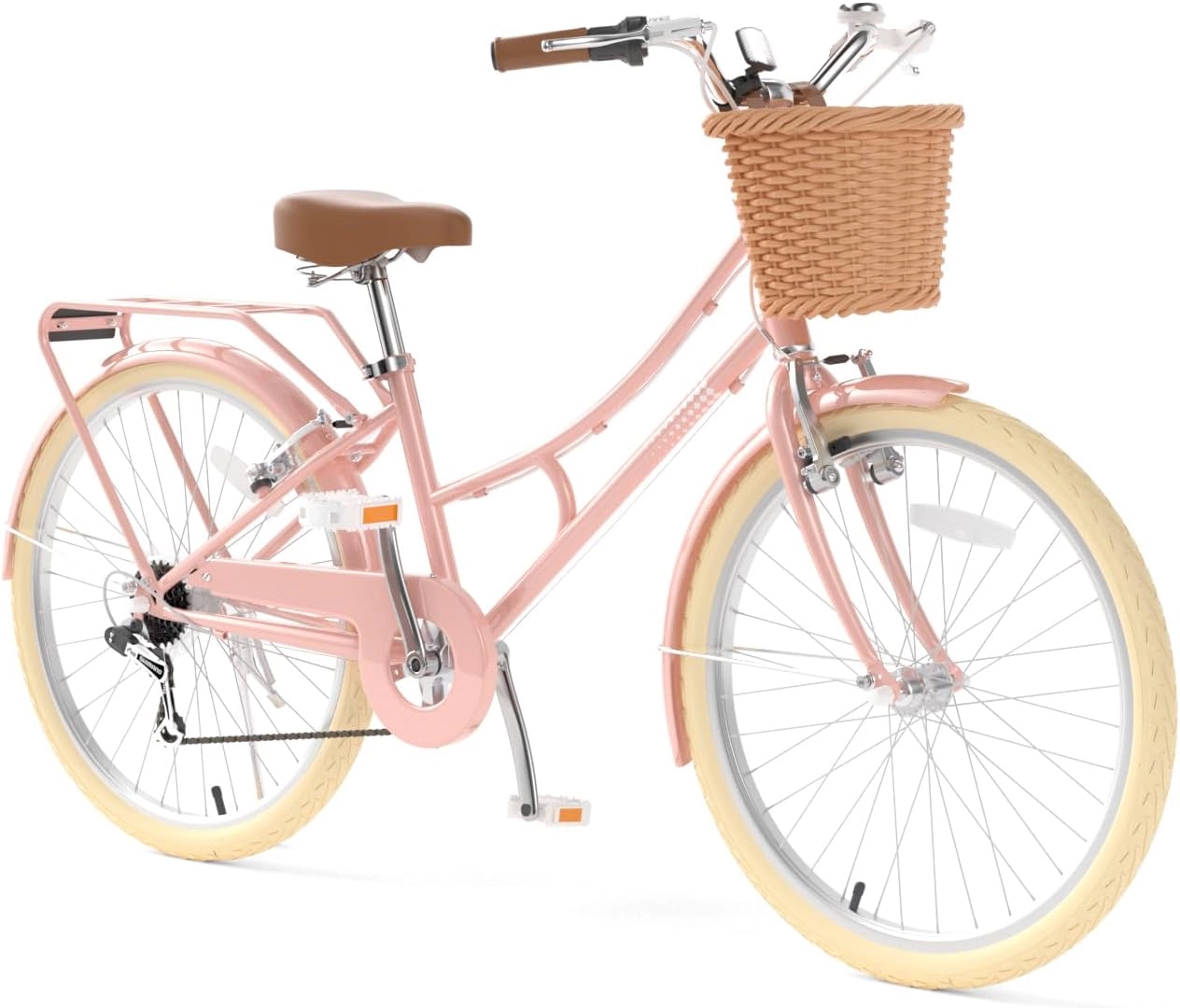
This cruiser is relevant only when the child’s measurements place them near one of those three sizes and the actual bicycle passes the stand-over, reach and brake-control checks. For a child whose height points to 12, 14, 16 or 18 Inch, these catalog options are larger comparison points, not equal substitutes. Use another correctly sized bicycle for the fit trial.
The product title identifies a rear rack and V-brake, but it does not provide load, assembly, compatibility, maintenance or adjustment specifications. Consult the exact product manual or a qualified bicycle mechanic for those details.
Add a properly fitted helmet
A bicycle decision is incomplete without a helmet fit check. Choose a bicycle helmet that fits the individual child, sits level on the head and uses its straps according to the helmet manufacturer’s instructions. Recheck the fit whenever the helmet is adjusted or worn over a different hairstyle or head covering.
A helmet does not make an oversized or poorly controlled bicycle appropriate. Bicycle fit, riding ability, supervision and a properly fitted helmet are separate checks, and each one matters before the child rides.
Make the decision today
Measure height and inseam first, select the matching wheel-size starting point, and arrange an actual fit trial. Buy only when your child can stand over the bike, reach the handlebar and brakes, and start, steer and stop with present-day confidence—not because a birthday or future growth suggests they should manage it.
Bikes for your next adventure
-
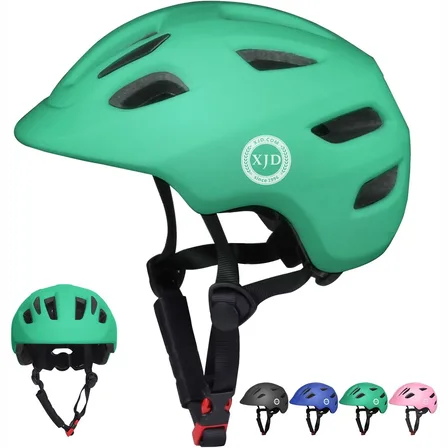
Green XJD Toddler Bike Helmet with Adjustable Fit, XS (46–51 cm)
The XJD toddler bike helmet in Green is built for the youngest riders — the size…$20.39
$23.99 -

Kids Bike Helmet by XJD for Boys & Girls – Black, Blue, Green, Pink, Purple
The XJD Kids Bike Helmet covers a wide 2-to-8-year age range thanks to two head-…$59.99
-

Kids Bike Helmet by XJD for Girls – Pink
The XJD Kids Bike Helmet in Pink is a lightweight multi-sport helmet for girls r…$59.99
$99