

What age to teach your kid to ride a bike
Most children are ready to learn between ages 3 and 7, but readiness matters more than a birthday. Measure height and inseam, then check balance, reach, braking and confidence on the actual bike.
Use age as a starting point, not the decision
There is no single correct teaching age. A child may be ready when they can follow simple directions, look ahead, steer intentionally and keep trying without becoming overwhelmed. They should also have enough coordination to place their feet down promptly and operate the bike’s controls.
Interest matters. If a child resists, cannot focus on stopping or becomes frightened after a few minutes, pause and try again later. Waiting is usually more productive than turning practice into a contest with siblings or friends.
Measure before choosing a bike
Measure the child’s standing height without shoes. For inseam, have the child stand against a wall with feet slightly apart; use a firm book held level at the crotch and measure from its top edge to the floor. Inseam helps you judge stand-over clearance and whether the child can put their feet down confidently.
Use these XBikes wheel-size ranges only to identify sizes worth trying:
| Wheel size | Starting age | Rider height |
|---|---|---|
| 12 Inch | 3–4 | 34–40 in / 86–102 cm |
| 14 Inch | 3–6 | 37–45 in / 94–114 cm |
| 16 Inch | 4–7 | 40–48 in / 102–122 cm |
| 18 Inch | 5–9 | 43–52 in / 109–132 cm |
| 20 Inch | 7–12 | 48–60 in / 122–152 cm |
| 24 Inch | 10–14 | 54–64 in / 137–163 cm |
| 26 Inch | Youth and adults | Over 60 in / 153 cm |
Overlapping ranges are intentional: children with the same height can have different proportions and control. Never buy an oversized bicycle merely to allow room for growth.
Check readiness on the actual bicycle
Have the child try the bicycle rather than deciding from the size label alone. Confirm all of the following before beginning:
- The child can straddle the bike with practical stand-over clearance.
- They can reach the handlebar without stretching, locking their elbows or losing a comfortable posture.
- They can reach and operate the brakes with control.
- They can place their feet down and support the bicycle confidently.
- They can steer, look forward and respond to instructions without panic.
If any check fails, compare another size or design. A wheel-size chart cannot establish fit by itself, and a catalog size label does not override what you observe.
How the supplied bikes fit this decision
These catalog options provide 12-, 14-, 16-, 20-, 24- and 26-inch comparison points, helping families compare a beginning-size training-wheel model with larger beach cruiser sizes after measuring the rider. They do not replace an individual fit and control check.
 Pink 12/14/16/20" XJD Girls Bike with Training Wheels & Basket
A training-wheel bike offered in 12, 14, 16 and 20 Inch labels, providing several size comparison points for younger learners after height, inseam and control checks.
 26-Inch XJD Beach Cruiser Bike for Girls – Purple, V-Brake
A beach cruiser with listed 20, 24 and 26 Inch variants. It is relevant for riders whose measurements and control match those larger XBikes starting points.
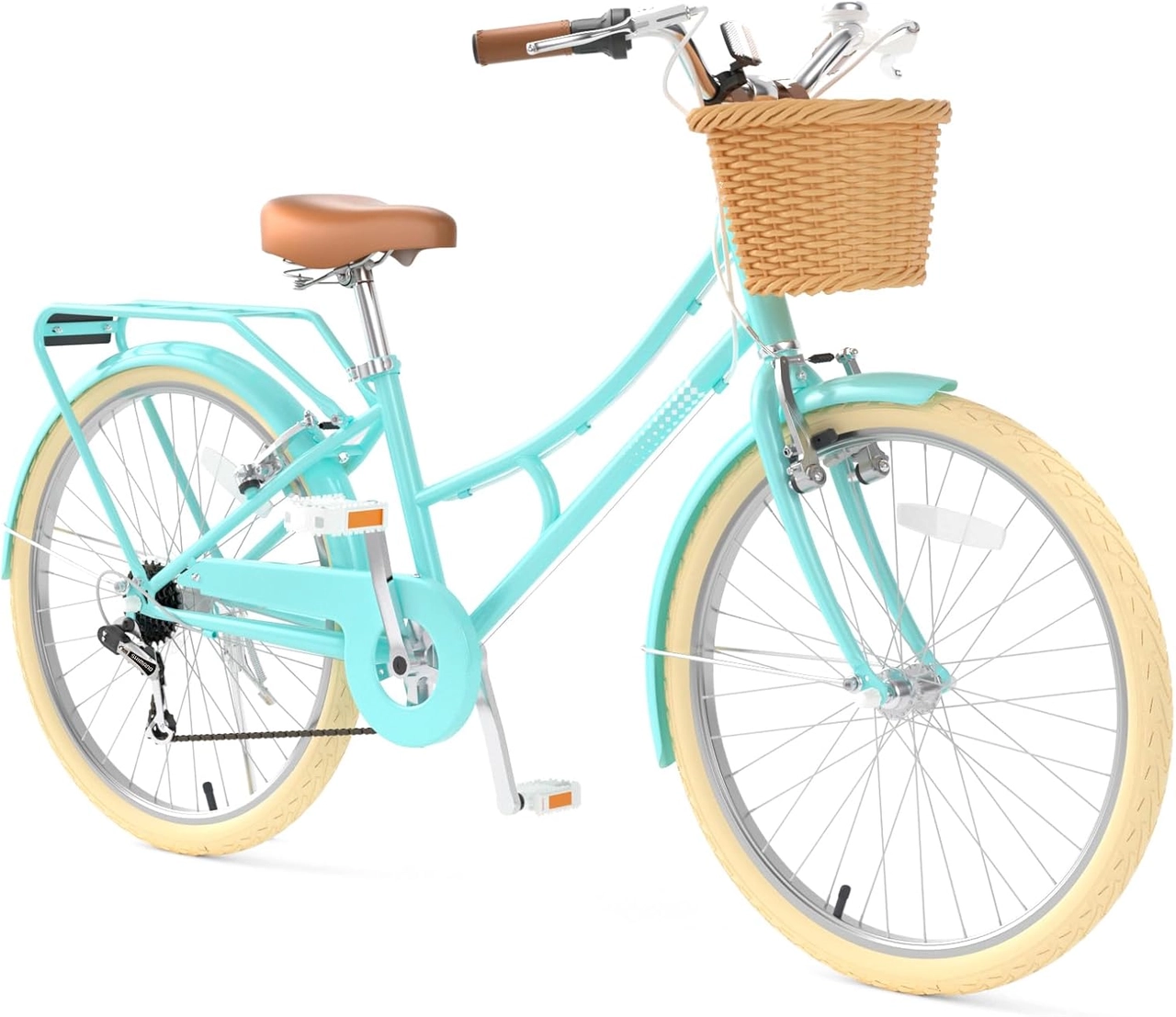 XJD 24-Inch Green Beach Cruiser Bike with U-Brake
A beach cruiser with listed 24 and 26 Inch variants, useful as a larger-size comparison only when the rider passes an individual fit, reach and brake-control check.
The Pink 12/14/16/20" XJD Girls Bike with Training Wheels & Basket is listed in 12 Inch, 14 Inch, 16 Inch and 20 Inch versions. Its smaller listed sizes overlap the common 3–7 learning period, while its 20-inch option starts at ages 7–12 and 48–60 inches under the XBikes starting points. Choose among them by measured fit, not by selecting the largest version.
The 26-Inch XJD Beach Cruiser Bike for Girls – Purple, V-Brake has listed 20-, 24- and 26-inch variants in its available SKU labels. The XJD 24-Inch Green Beach Cruiser Bike with U-Brake has listed 24- and 26-inch variants. These larger beach cruiser options are relevant only when the rider’s height, inseam, reach, braking ability and confidence suit that exact bicycle; they are not default first-learning bikes merely because the rider meets an age label.
Make the first practice session manageable
- Choose a flat, open area away from traffic and obstacles.
- Start with mounting, feet-down control and stopping before asking the child to pedal farther.
- Keep attempts short, calm and focused on one skill at a time.
- Stop while the child is still attentive; repeat on another day if control declines.
Use a properly fitting bicycle helmet every time. It should sit level and be secured with its straps according to the helmet manufacturer’s instructions. Follow the exact bicycle manual for assembly, maintenance and adjustments; if anything is unclear, use a qualified bicycle mechanic.
Decide what to do next
If your child shows interest, follows directions and can control a correctly fitted bike, begin teaching now—whether that is at 3, 5 or 7. If reach, stand-over, braking or confidence is not yet adequate, change the bike fit or wait. Measure first, compare the matching wheel-size starting points, and let a successful hands-on fit check determine the day learning begins.
Bikes for your next adventure
-

Kids Bike Helmet by XJD for Boys & Girls – Black, Blue, Green, Pink, Purple
The XJD Kids Bike Helmet covers a wide 2-to-8-year age range thanks to two head-…$59.99
-

Kids Bike Helmet by XJD for Girls – Pink
The XJD Kids Bike Helmet in Pink is a lightweight multi-sport helmet for girls r…$59.99
$99 -

XJD Kids Bike for Girls – Pink, 12/14/16/20 Inch with Training Wheels
The XJD Kids Bike for Girls in Pink is a training-wheel bike built to carry your…$139
$159