

What are 14 inch size for bikes
A 14-inch bike is a children’s bicycle with 14-inch wheels. On the XBikes chart, it is a starting point for riders 37–45 inches (94–114 cm) tall, typically ages 3–6, but the child must still be checked on the actual bike.
What “14 inch” means
The 14-inch label describes the bicycle’s wheel size. It does not mean the bike is 14 inches tall, and it is not the child’s inseam measurement. Bikes sharing a wheel-size label can still feel different because the rider’s position and reach depend on the complete bicycle.
Use 14 inches to narrow the search, then judge fit with the child present. Height is more useful than age for the initial comparison, while inseam, reach, brake control and confidence determine whether a particular bike is workable.
Measure the rider before comparing sizes
- Measure height: Have the child stand without shoes, upright against a wall, and measure from the floor to the top of the head.
- Measure inseam: With feet slightly apart, measure from the floor to the crotch. Keep this measurement available when checking stand-over space and the manufacturer’s fit information.
- Observe reach: On the bike, the child should be able to hold the handlebar and steer without stretching, locking the arms or losing a stable seated position.
- Check controls: The child must be able to operate the fitted brakes comfortably and reliably. Brake reach cannot be confirmed from wheel size alone.
Record the measurements rather than relying on clothing size or a recent age estimate. If the bike cannot be tried locally, compare those measurements with the exact model’s manual or fit guidance and ask a qualified bicycle mechanic when the result remains uncertain.
Compare 14 inch with nearby wheel sizes
| Wheel size | XBikes age starting point | XBikes rider-height starting point |
|---|---|---|
| 12 Inch | Ages 3–4 | 34–40 in / 86–102 cm |
| 14 Inch | Ages 3–6 | 37–45 in / 94–114 cm |
| 16 Inch | Ages 4–7 | 40–48 in / 102–122 cm |
The ranges overlap because age and height do not establish fit by themselves. A child near an overlap should compare both relevant sizes in person. Do not move up to a 16-inch bike merely to leave growing room: an oversized bicycle can make mounting, stopping and steering harder to manage. Likewise, do not keep a child on a 12-inch bike solely because its age range still appears to apply.
How to check a 14-inch bike in person
First, have the child stand over the bicycle and confirm that the position is comfortable and manageable. Then check whether the child can get on and off without struggling. While seated, look for a natural handlebar reach and the ability to turn the handlebar without losing balance or changing position awkwardly.
Next, confirm that the child can reach and operate the brakes fitted to that exact bicycle. Let the rider start, steer, stop and put a foot down in a controlled practice area. Hesitation is useful information: current confidence matters alongside physical measurements. The American Academy of Pediatrics advises having the child try the bicycle, checking stand-over and control reach, and avoiding an oversized bike bought for future growth.
Where the supplied XBikes option fits
XJD Kids' Training Wheel Bike for Boys & Girls, 12/14/16 Inch – White is listed in the Training Wheel Bikes category and offers 12 Inch, 14 Inch and 16 Inch SKU labels. That makes it directly relevant: its 14 Inch option matches the requested wheel-size label, while the 12 Inch and 16 Inch options provide nearby catalog comparisons. Those labels do not prove that any SKU fits a particular child, so use the measurements and individual checks above.

Before assembly, adjustment or maintenance, follow the manual for the exact product. If instructions are missing or any control cannot be set up correctly, use a qualified bicycle mechanic rather than guessing about compatibility, load limits or torque.
Make the final 14-inch decision
- Keep 14 Inch on the shortlist if the rider’s measured height is within 37–45 inches (94–114 cm).
- Compare 12 Inch or 16 Inch when the measured height falls in an overlapping range, but treat each as a different size requiring its own fit check.
- Reject any bike the child cannot comfortably stand over, reach, steer, brake and stop with present confidence.
Add a properly fitting bicycle helmet for every ride. It should sit level and be secured with its straps according to the helmet manufacturer’s instructions, consistent with U.S. Consumer Product Safety Commission guidance. The next step is simple: measure height and inseam, then have the child try the exact 14-inch bike and demonstrate comfortable control before choosing it.
Bikes for your next adventure
-
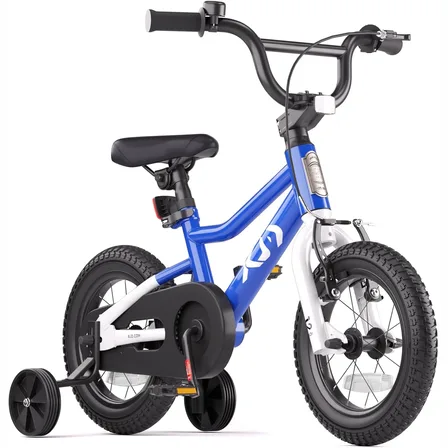
XJD Boys & Girls BMX Bike with Training Wheels, 12/14/16" – Blue
The XJD Boys & Girls BMX Bike in Blue is a first pedal bike for kids roughly age…$99.99
$119.99 -

Black XJD Kids Bike for Boys – 12, 14 & 16 Inch Sizes
For a son between roughly 3 and 8 years old, the XJD Kids Bike in Black covers t…$169
$199 -

XJD Girls Bike for Kids Ages 3-8, 12/14/16 Inch with Training Wheels – Purple
The XJD Girls Bike in Purple is a training-wheel bicycle for kids ages 3 to 8, f…$149
$169