

What age would a 16 inch bike be for
A 16-inch bike usually suits children ages 4–7 who are 40–48 inches (102–122 cm) tall, but your child must try it for fit and control.
Start with height, not the birthday
Age gives parents a quick starting point, not a final answer. For a 16-inch bike, compare the rider’s measured height with the XBikes starting range of 40–48 inches (102–122 cm). A four-year-old outside that range may need a different wheel size, while an older child within it may still fit a 16-inch bike.
Measure height without shoes, with the child standing straight against a wall. Then measure inseam from the floor to the crotch. Inseam does not have a universal pass-or-fail number here; use it during an actual fit check to judge stand-over clearance and how confidently the child can start and stop.
Compare the nearby wheel-size ranges
| Wheel size | Starting age | Rider height |
|---|---|---|
| 14 Inch | Ages 3–6 | 37–45 in / 94–114 cm |
| 16 Inch | Ages 4–7 | 40–48 in / 102–122 cm |
| 18 Inch | Ages 5–9 | 43–52 in / 109–132 cm |
| 20 Inch | Ages 7–12 | 48–60 in / 122–152 cm |
The overlapping ranges are intentional starting points because children with the same height can differ in leg length, arm reach and confidence. Do not move up merely because the child is near the top of an age band. An oversized bicycle bought for future growth can make mounting, steering and stopping harder.
Check the 16-inch bike in person
Have the child wear their usual riding shoes and try the exact bicycle. A suitable wheel-size range does not guarantee that every frame or control layout will fit the same way.
- Stand-over: Ask the child to straddle the bicycle while standing over the frame. They should be able to stand securely rather than being forced onto tiptoes or against the frame.
- Starting and stopping: Check that they can get into a riding position and return to the ground without panic or loss of balance.
- Reach and steering: Their hands should reach the handlebar comfortably, and they should be able to turn it without stretching, twisting or losing a stable posture.
- Brake control: Confirm that the child can reach and operate the bicycle’s braking controls confidently. Do not assume a control is usable simply because the wheel size appears correct.
- Confidence: Watch for relaxed, deliberate control. If the child looks frightened, cannot steer predictably or struggles to stop, do not treat the size as a fit.
Where the supplied bike fits the question
The XJD Girls' Bike with Training Wheels, 12/14/16/20 Inch – Purple is directly relevant because its supplied size options include 16 Inch. Its 12 Inch, 14 Inch and 20 Inch labels also let you identify smaller and larger catalog options, but those sizes are not equivalent to 16 Inch. The title identifies it as a training-wheel bike; whether training wheels suit the rider depends on current balance skills and confidence, not age alone.
This catalog option helps you compare the requested 16-inch label with adjacent available labels in one product listing, while the physical fit check determines whether the selected size works for your child.

Use only the exact size label you have evaluated. The presence of several sizes under one product title does not mean their fit, setup or components are interchangeable. For assembly, adjustment, compatibility, maintenance, load limits and torque instructions, follow the manual for the exact product and size, or ask a qualified bicycle mechanic.
Know when a 16-inch bike is not the answer
Reconsider 16 Inch if the child is outside the 40–48 inch (102–122 cm) starting range, cannot stand over the bicycle securely, must overreach to steer, cannot operate the brakes reliably or lacks control during starts and stops. Compare another wheel-size starting range, then repeat the same individual check.
Do not choose 16 Inch solely because the child is four to seven, and do not automatically choose 20 Inch to provide growing room. The 20-inch starting point is ages 7–12 and 48–60 inches (122–152 cm); it is a distinct size range, not a substitute for a properly fitting 16-inch bike.
Complete the decision before riding
Once the bicycle fits, add a properly fitting bicycle helmet. It should sit level and its straps should be used according to the helmet manufacturer’s instructions. Recheck bicycle fit as the child grows or if their control changes.
Your next step is simple: measure the child’s height, use 40–48 inches (102–122 cm) as the 16-inch starting range, and have them try the exact bicycle. Choose it only if stand-over, reach, braking and confident control all work now—not because they may grow into it later.
Bikes for your next adventure
-
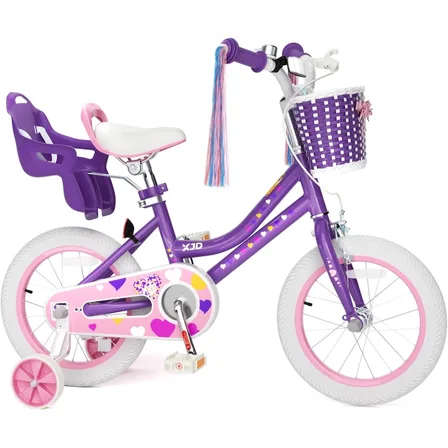
Purple XJD Girls' Bike with Doll Seat & Basket
For girls 71–122 cm tall (about ages 3–7), this XJD girls' bike in Purple pairs …$75.99
$99.99 -
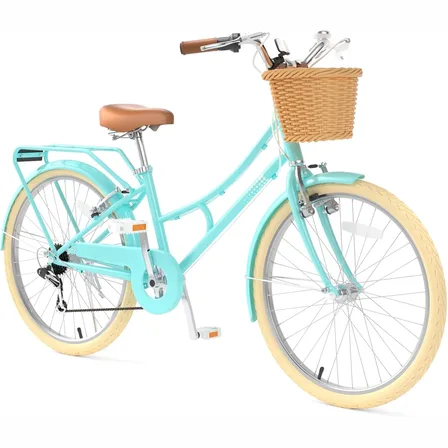
XJD 24-Inch Green Beach Cruiser Bike with U-Brake
This XJD 24-inch beach cruiser in green is made for riders about 4'8" to 5'4" ta…$159.99
$199.99 -

Kids Bike Helmet by XJD for Boys & Girls – Black, Blue, Green, Pink, Purple
The XJD Kids Bike Helmet covers a wide 2-to-8-year age range thanks to two head-…$59.99