

What age would ride a 12 inch bike
A 12-inch bike usually suits a child aged 3–4 and 34–40 inches (86–102 cm) tall, but measured fit and control matter more than age.
Start with height, not the birthday
The XBikes starting point for a 12-inch wheel bike is age 3–4 and a rider height of 34–40 inches (86–102 cm). These figures narrow the search; they do not confirm that a particular frame fits an individual child.
Measure the child’s height without shoes, standing straight against a wall. Then measure inseam from the floor to the crotch while the child stands naturally. Compare both measurements with the bicycle maker’s exact sizing and stand-over guidance. Wheel diameter alone does not reveal saddle range, frame shape or reach.
A child outside the 34–40-inch range should not be moved onto or kept on a 12-inch bike merely because their age appears to match. Use the measured height to select the likely wheel-size range, then confirm the actual fit in person.
Check the bike with the child aboard
Have the child try the exact bicycle rather than buying an oversized model for future growth. During the check, look for these practical signs:
- Stand-over: The child can straddle the bicycle as directed by its manufacturer without the frame preventing a stable stance.
- Starting and stopping: The child can get into position, set off and stop without being overwhelmed by the bicycle.
- Reach: The handlebars can be held comfortably without an extreme stretch, locked elbows or loss of steering control.
- Brake control: The child can reach and operate the provided braking controls as the product manual specifies.
- Confidence: The child remains composed while steering, turning and stopping at a suitable practice location.
If the rider cannot perform these checks, the birthday label does not make the bike suitable. Recheck setup against the exact manual, compare another size or ask a qualified bicycle mechanic for help.
When 12, 14 and 16 inches overlap
Children develop at different rates, so the XBikes starting ranges overlap. Use this compact comparison to decide which sizes deserve an individual fit check:
| Wheel size | Starting age | Rider height |
|---|---|---|
| 12 Inch | 3–4 | 34–40 in / 86–102 cm |
| 14 Inch | 3–6 | 37–45 in / 94–114 cm |
| 16 Inch | 4–7 | 40–48 in / 102–122 cm |
For example, a 3-year-old who is 38 inches tall falls within both the 12-inch and 14-inch starting ranges. That does not make the sizes equivalent. Compare stand-over, reach, brake operation and present confidence on each exact bicycle. Likewise, a child at 40 inches sits at the edge of multiple ranges, making a hands-on comparison especially important.
How the supplied XBikes options are relevant
The two catalog options directly help with this question because each is offered in a 12 Inch SKU, as well as 14 Inch and 16 Inch SKUs for a nearby-size comparison. Select the SKU deliberately: a product page containing several sizes does not mean every variant fits the same rider.
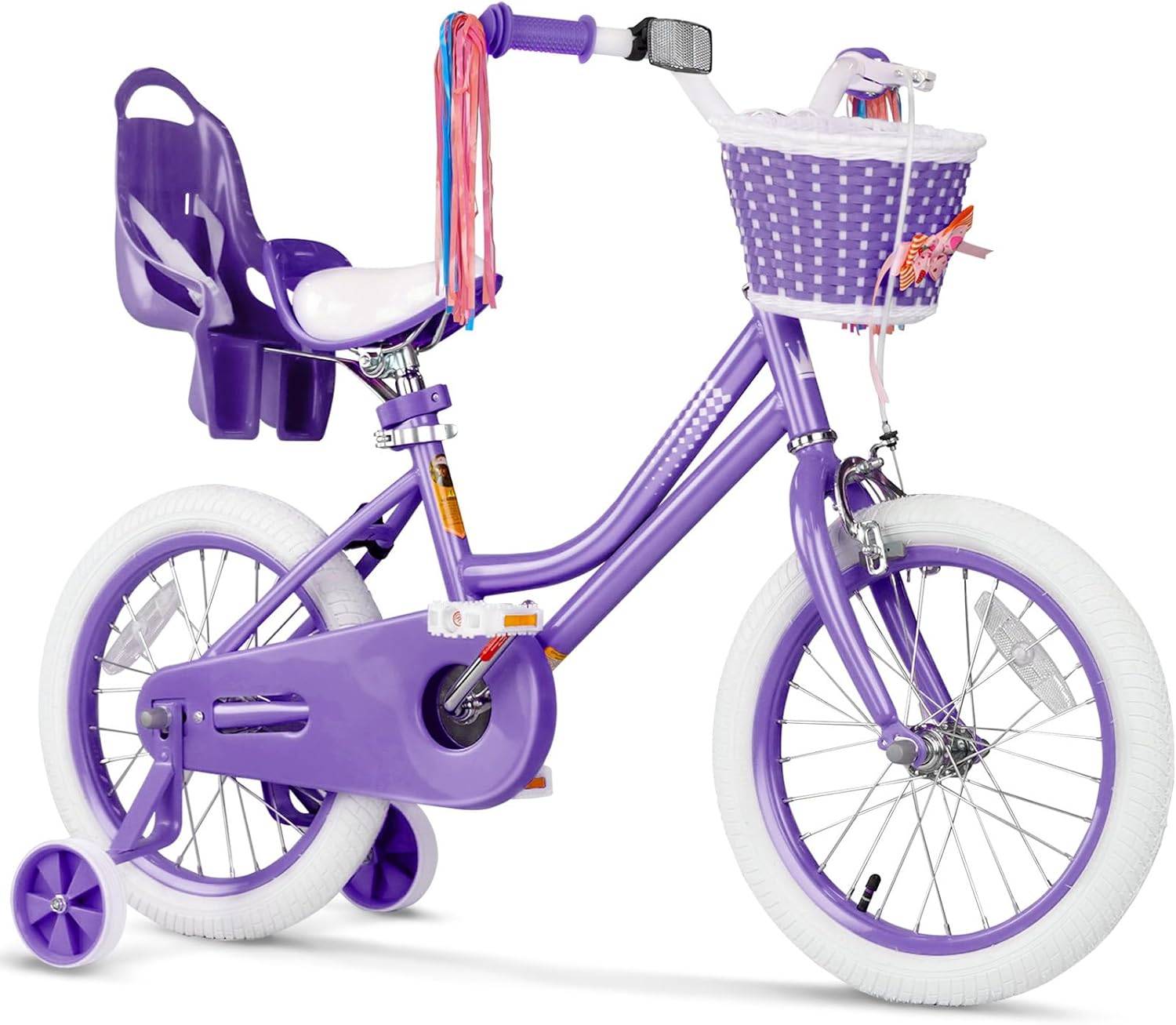 XJD Girls Bike for Kids Ages 3-8, 12/14/16 Inch with Training Wheels – Purple
Relevant because it has a 12 Inch SKU, plus 14 Inch and 16 Inch comparison choices. Its “Ages 3-8” wording is a catalog label; confirm fit from measured height and an individual check.
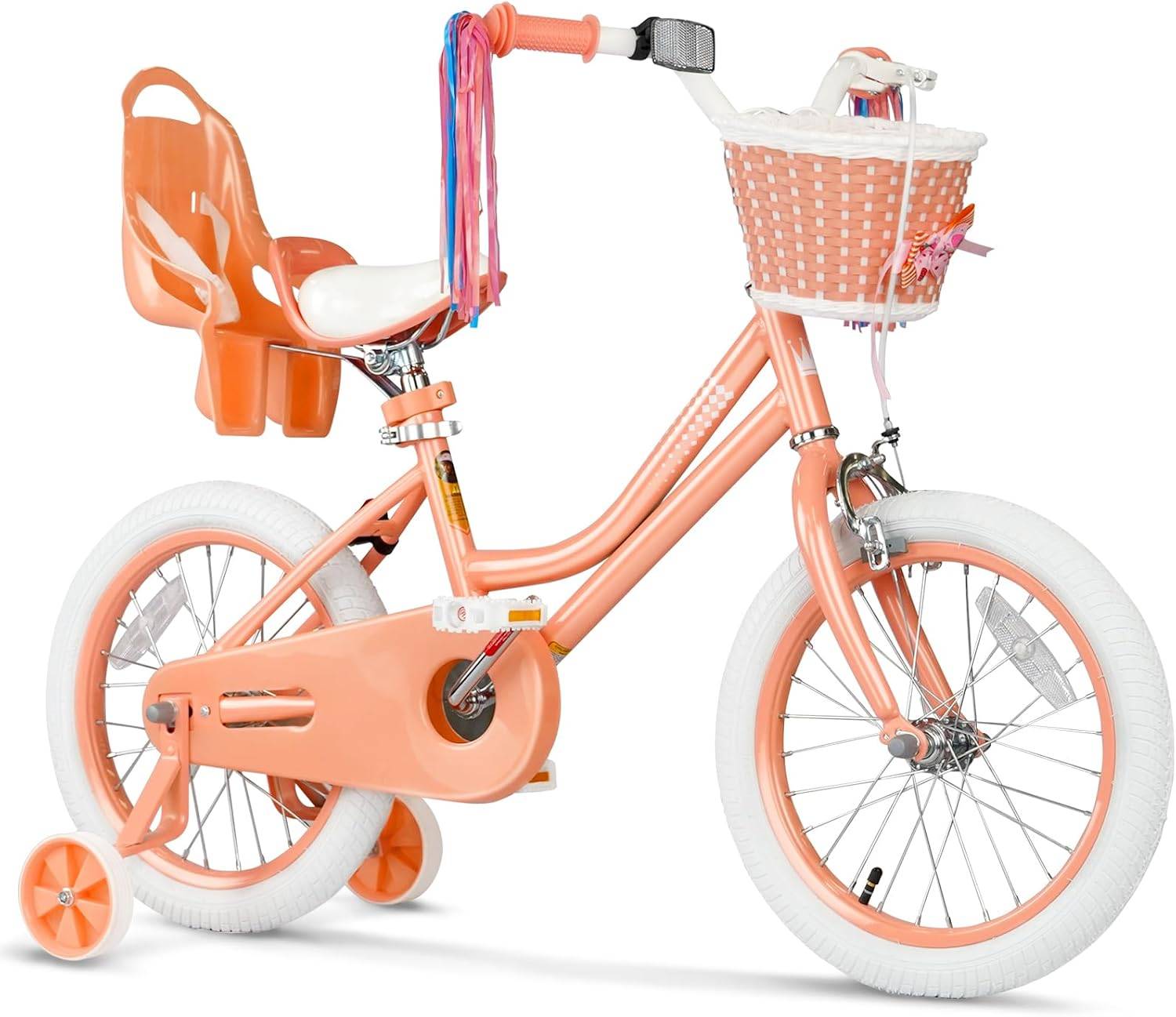 Girls 12/14/16 Inch Kids Bike by XJD with Training Wheels – Peach
This training wheel bike includes 12 Inch, 14 Inch and 16 Inch SKU labels, making it relevant for direct and nearby-size comparisons. Select the exact variant only after measuring the rider and checking fit.
XJD Girls Bike for Kids Ages 3-8, 12/14/16 Inch with Training Wheels – Purple is categorized as a training wheel bike and has 12 Inch, 14 Inch and 16 Inch SKU labels. Its embedded “Ages 3-8” wording is a catalog label, not evidence that every size fits every child across that span. Use the XBikes height ranges and an individual fit check.
Girls 12/14/16 Inch Kids Bike by XJD with Training Wheels – Peach is also categorized as a training wheel bike and is available under 12 Inch, 14 Inch and 16 Inch SKU labels. Compare the exact selected size with the child’s measurements; do not infer fit from the shared product listing or color.
Both products include the requested 12-inch size among their supplied SKU labels, so they are relevant candidates rather than merely nearest-size substitutes. The 14-inch and 16-inch variants remain different sizes and should only be considered against their own height starting points and a fresh fit check.
Finish the fit and safety check
Before riding, follow the exact product manual for assembly, adjustments, maintenance, compatibility, load limits and any torque requirements. If an instruction is missing, unclear or difficult to complete, use a qualified bicycle mechanic rather than guessing.
Add a bicycle helmet that fits the individual child. It should sit level and its straps should be used according to the helmet manufacturer’s instructions. A helmet cannot correct a bicycle that is too large, difficult to control or poorly adjusted.
The next decision is simple: if the child measures 34–40 inches (86–102 cm), try the exact 12-inch model and verify stand-over, reach, braking and confident control. If any check fails, do not buy it for the child to grow into; compare the correctly indicated size and repeat the full fit check.
Bikes for your next adventure
-
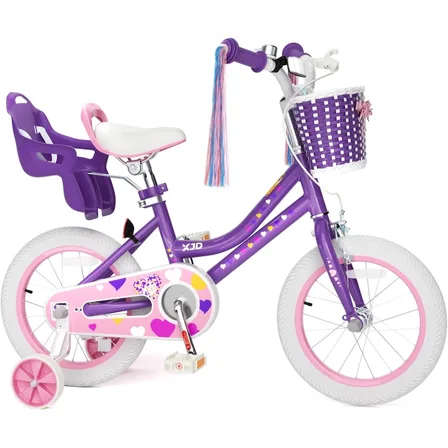
Purple XJD Girls' Bike with Doll Seat & Basket
For girls 71–122 cm tall (about ages 3–7), this XJD girls' bike in Purple pairs …$75.99
$99.99 -
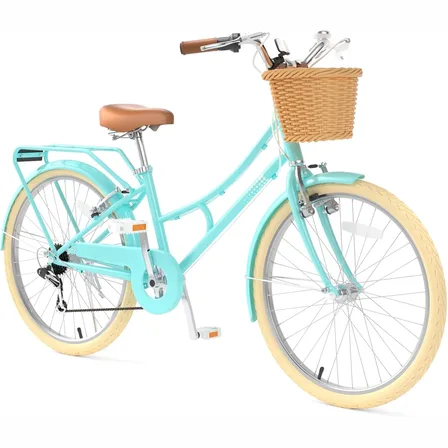
XJD 24-Inch Green Beach Cruiser Bike with U-Brake
This XJD 24-inch beach cruiser in green is made for riders about 4'8" to 5'4" ta…$159.99
$199.99 -

Kids Bike Helmet by XJD for Boys & Girls – Black, Blue, Green, Pink, Purple
The XJD Kids Bike Helmet covers a wide 2-to-8-year age range thanks to two head-…$59.99