

What ages is a 20 inch bike for
A 20-inch bike is generally for ages 7–12 and riders 48–60 inches (122–152 cm) tall, but your child’s measurements and control matter more than age.
Start with height, not the birthday
The XBikes wheel-size starting point places a 20-inch bike in the 7–12 age range. That range is only a screening tool: children of the same age can differ considerably in height, proportions, reach and riding confidence.
Measure your child’s current height without shoes, standing straight against a wall. If the result is within 48–60 inches (122–152 cm), a 20-inch bike is reasonable to try. A child outside that range should also compare the adjacent wheel-size starting points rather than forcing the choice by age.
| Wheel size | Starting age | Rider height |
|---|---|---|
| 16 inch | 4–7 | 40–48 in / 102–122 cm |
| 18 inch | 5–9 | 43–52 in / 109–132 cm |
| 20 inch | 7–12 | 48–60 in / 122–152 cm |
| 24 inch | 10–14 | 54–64 in / 137–163 cm |
The overlapping ranges are intentional starting points, not proof that two sizes fit equally. Use the child’s individual fit to choose between them.
Measure inseam and check stand-over clearance
Next, measure inseam while the child is wearing the shoes used for riding. Have them stand with feet slightly apart, place a straight-edged book firmly between the legs to represent the saddle, then measure from the floor to the top edge of the book.
Compare that measurement with the stand-over height and adjustment information for the exact bicycle being considered. When the child straddles the bike, they should be able to stand securely rather than being supported by the frame. Because geometry can vary between models sharing a wheel size, wheel diameter alone cannot confirm this clearance. Follow the exact product manual for adjustment limits or ask a qualified bicycle mechanic.
Confirm reach, steering and braking
Have the child sit in a normal riding position and hold the grips. Their posture should allow comfortable steering without an exaggerated stretch. Ask them to turn the handlebar both ways while remaining balanced and in control.
They must also be able to reach and operate the bicycle’s brakes confidently. Check actual brake control on the exact model; do not infer it from wheel size or age. Current confidence matters too: a hesitant rider may handle a physically suitable bike differently from an experienced rider. The American Academy of Pediatrics advises having the child try the bicycle, checking stand-over and brake reach, and avoiding an oversized bike purchased merely for future growth.
How the supplied 20-inch options compare
All three supplied catalog products include a 20-inch SKU label, so they provide relevant options for a child who falls near the 20-inch starting range. The two training-wheel-bike listings also offer 12-, 14-, 16- and 20-inch labels, while the beach-cruiser listing includes 20-, 24- and 26-inch labels in specified colors. These labels help narrow the catalog comparison, but an individual fit check still decides suitability.
 Pink 12/14/16/20" XJD Girls Bike with Training Wheels & Basket
Offers a supplied 20 Inch SKU alongside 12-, 14- and 16-inch choices. Its Training Wheel Bikes category makes it relevant to compare after confirming the child’s measurements and control.
 26-Inch XJD Beach Cruiser Bike for Girls – Purple, V-Brake
Although its exact catalog title begins with 26-Inch, supplied labels include Mint Green / 20 Inch and Pink / 20 Inch. Those variants are relevant only after an individual fit check.
 Light Pink XJD Girls' Bicycle with Basket & Training Wheels
Includes a supplied 20 Inch SKU in its 12-, 14-, 16- and 20-inch range. Treat the training wheels and basket as catalog features, not evidence of age suitability or individual fit.
Training-wheel-bike listings
Pink 12/14/16/20" XJD Girls Bike with Training Wheels & Basket is categorized as a Training Wheel Bike and has 12 Inch, 14 Inch, 16 Inch and 20 Inch SKU labels. Its 20 Inch selection is the title-relevant one; verify that exact selection before comparing its fit.
Light Pink XJD Girls' Bicycle with Basket & Training Wheels is also categorized as a Training Wheel Bike, with the same four supplied size labels: 12 Inch, 14 Inch, 16 Inch and 20 Inch. Do not treat the presence of training wheels as evidence that the bicycle fits a particular child.
Beach-cruiser listing
26-Inch XJD Beach Cruiser Bike for Girls – Purple, V-Brake is categorized as a Beach Cruiser Bike. Despite “26-Inch” appearing in its catalog title, its supplied SKU labels include Mint Green / 20 Inch and Pink / 20 Inch, alongside 24- and 26-inch choices. For this question, only the explicitly labeled 20-inch variants are direct size candidates; the title itself is not fit evidence.
Do not size up just for growth
A 24-inch bike begins at ages 10–14 and heights of 54–64 inches (137–163 cm), so some children overlap both starting ranges. That overlap is a reason to try both sizes, not permission to assume the larger one will work. Reject a size if the rider cannot stand over it securely, steer without stretching, or operate the brakes with control.
Likewise, a child near the lower edge of the 20-inch range may still fit a 16- or 18-inch bicycle better. None of the supplied products lists an 18-inch SKU, so an 18-inch option would need to be assessed separately rather than replaced with a 20-inch model.
Make the final 20-inch decision
- Measure height and inseam in riding shoes.
- Use 48–60 inches (122–152 cm) and ages 7–12 only as the 20-inch starting point.
- Try the exact bicycle and confirm stand-over clearance, comfortable reach, steering control and brake operation.
- Select the exact 20-inch SKU label; do not rely on a broader product title.
- Follow the product manual or use a qualified bicycle mechanic for assembly, adjustment, maintenance, compatibility or torque questions.
Before riding, fit a bicycle helmet so it sits level and use its straps according to the manufacturer’s instructions, as advised by the U.S. Consumer Product Safety Commission. Choose the 20-inch bike only when the measured rider can comfortably stand over, reach, steer and brake on that exact model today.
Bikes for your next adventure
-
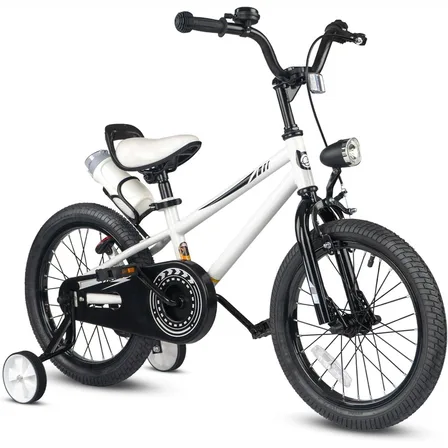
XJD Kids' Training Wheel Bike for Boys & Girls, 12/14/16 Inch – White
The XJD kids' training wheel bike in White is made for riders ages 3–8 (roughly …$169
$199 -
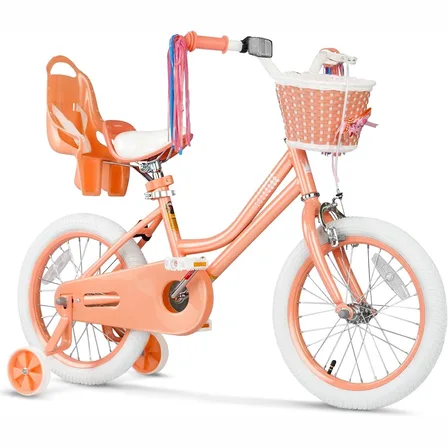
Girls 12/14/16 Inch Kids Bike by XJD with Training Wheels – Peach
The XJD Girls Bike in Peach is a training-wheel bike built for girls roughly 3 t…$149
$169 -
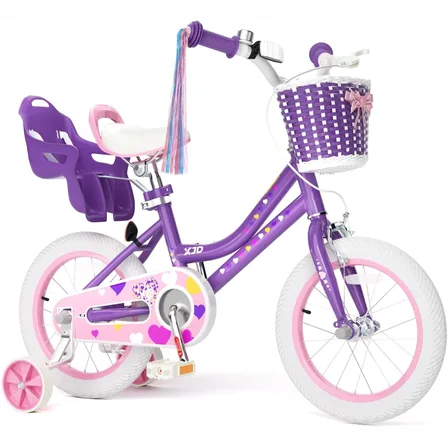
XJD Light Purple Girls Bike with Basket, Training Wheels, 12/14/16/20 Inch
The XJD Girls Bike with Basket in Light Purple is a single-speed training-wheel …$99.99
$119.99