

What ages can use a toddler bike
Toddlers can use a bike when they fit it and can control it; for XBikes, the first starting point is a 12 Inch bike at ages 3–4 and 34–40 in (86–102 cm).
Age is only the first filter
A birthday does not determine whether a bicycle fits. Children of the same age can differ in height, leg length, reach and confidence. Start with the XBikes age and height ranges below, then have the child try the actual bicycle.
Do not move up a wheel size simply to leave room for growth. An oversized bicycle can make mounting, stopping, steering and reaching the controls harder. The right answer to “what ages can use a toddler bike?” is therefore the age range whose size also passes an individual fit check.
XBikes age and height starting points
| Wheel size | Starting age range | Rider height |
|---|---|---|
| 12 Inch | 3–4 | 34–40 in / 86–102 cm |
| 14 Inch | 3–6 | 37–45 in / 94–114 cm |
| 16 Inch | 4–7 | 40–48 in / 102–122 cm |
| 18 Inch | 5–9 | 43–52 in / 109–132 cm |
| 20 Inch | 7–12 | 48–60 in / 122–152 cm |
| 24 Inch | 10–14 | 54–64 in / 137–163 cm |
| 26 Inch | Youth and adults | Over 60 in / 153 cm |
For a toddler-age shopper, 12 Inch is the earliest listed starting point. A child within the overlapping 12 Inch and 14 Inch ranges should try both rather than choosing from age alone. Likewise, reaching a listed age does not make a size suitable if the child is outside its height range or cannot control it comfortably.
What to measure and check
- Measure standing height: Have the child stand straight without shoes against a wall. Compare the result with the table before considering a wheel size.
- Measure inseam: With feet slightly apart, measure from the floor to the crotch. Do not convert that number into a claimed size formula; use it during the physical stand-over and mounting check.
- Check stand-over: Have the child straddle the bicycle. They should not be forced onto tiptoes or pressed against the frame. Follow the exact product manual for its adjustment instructions.
- Check reach: The child should hold the handlebars without stretching, locking the elbows or losing a stable seated position.
- Check braking and control: Confirm that the child can operate the provided controls, steer, start and stop without an adult moving their hands or body into position.
- Consider current confidence: A hesitant beginner may need the easier-to-control fit even when two wheel-size ranges overlap.
If any of these checks fail, the bicycle is not a suitable fit yet, regardless of the age printed in a chart or product name. The American Academy of Pediatrics guidance likewise emphasizes trying the bicycle, checking stand-over and control, verifying brake reach, and avoiding an oversized bike bought for growth.
When the supplied bicycles are relevant
The Black XJD Kids' BMX Bicycle with Training Wheels is categorized as a Kids' BMX Bike and is offered in 12 Inch, 14 Inch and 16 Inch labels. The Pink Girls' 12/14/16" Bike by XJD – Basket & Doll Seat is categorized as a Training Wheel Bike and has the same three size labels. These options are relevant because their listed sizes cover the earliest three XBikes starting ranges, allowing parents to compare a measured child with 12, 14 and 16 Inch choices.
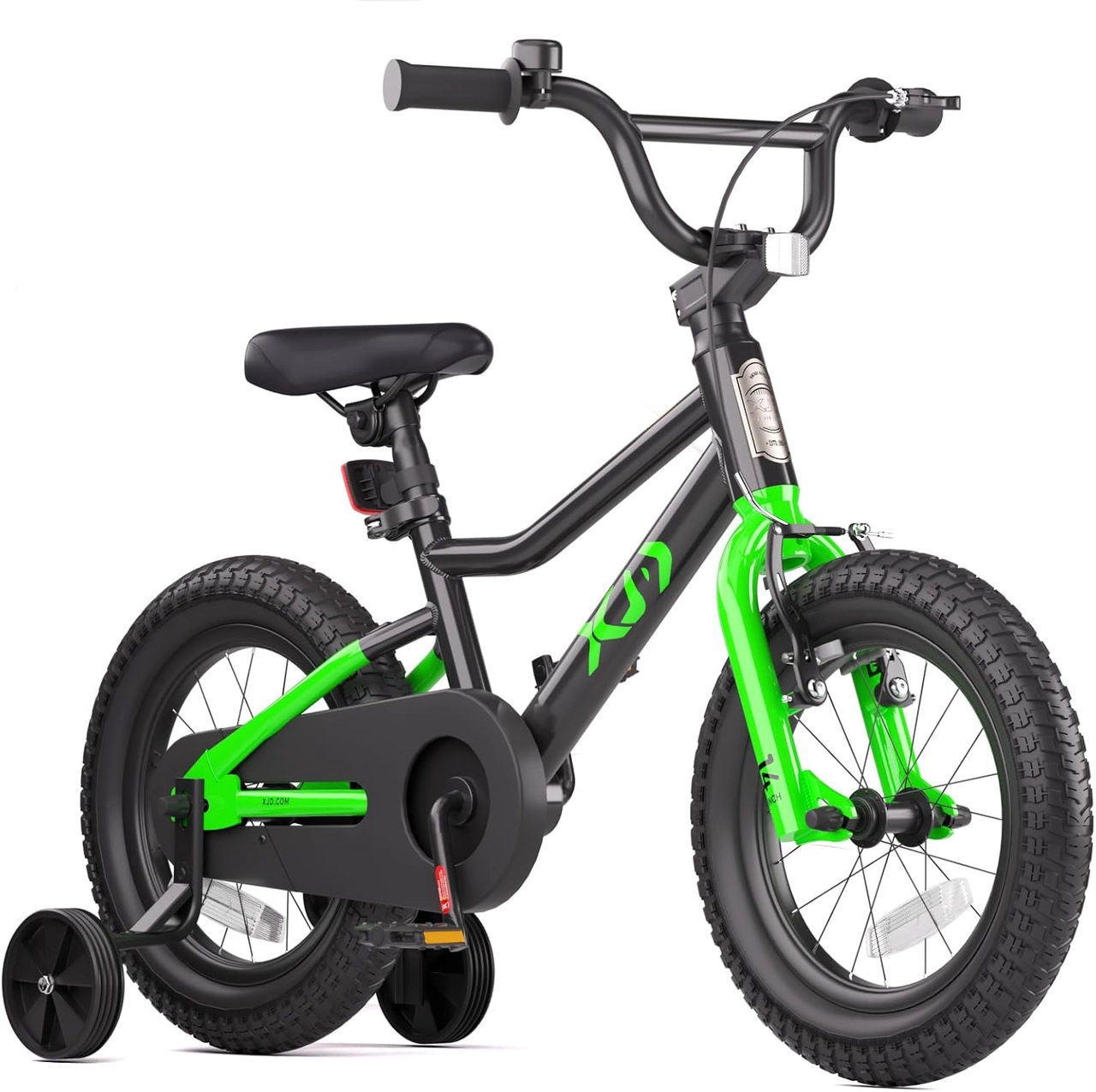 Black XJD Kids' BMX Bicycle with Training Wheels
Offered in 12 Inch, 14 Inch and 16 Inch labels, this Kids' BMX Bike is relevant when the child's measured height and individual fit check match one of those XBikes ranges.
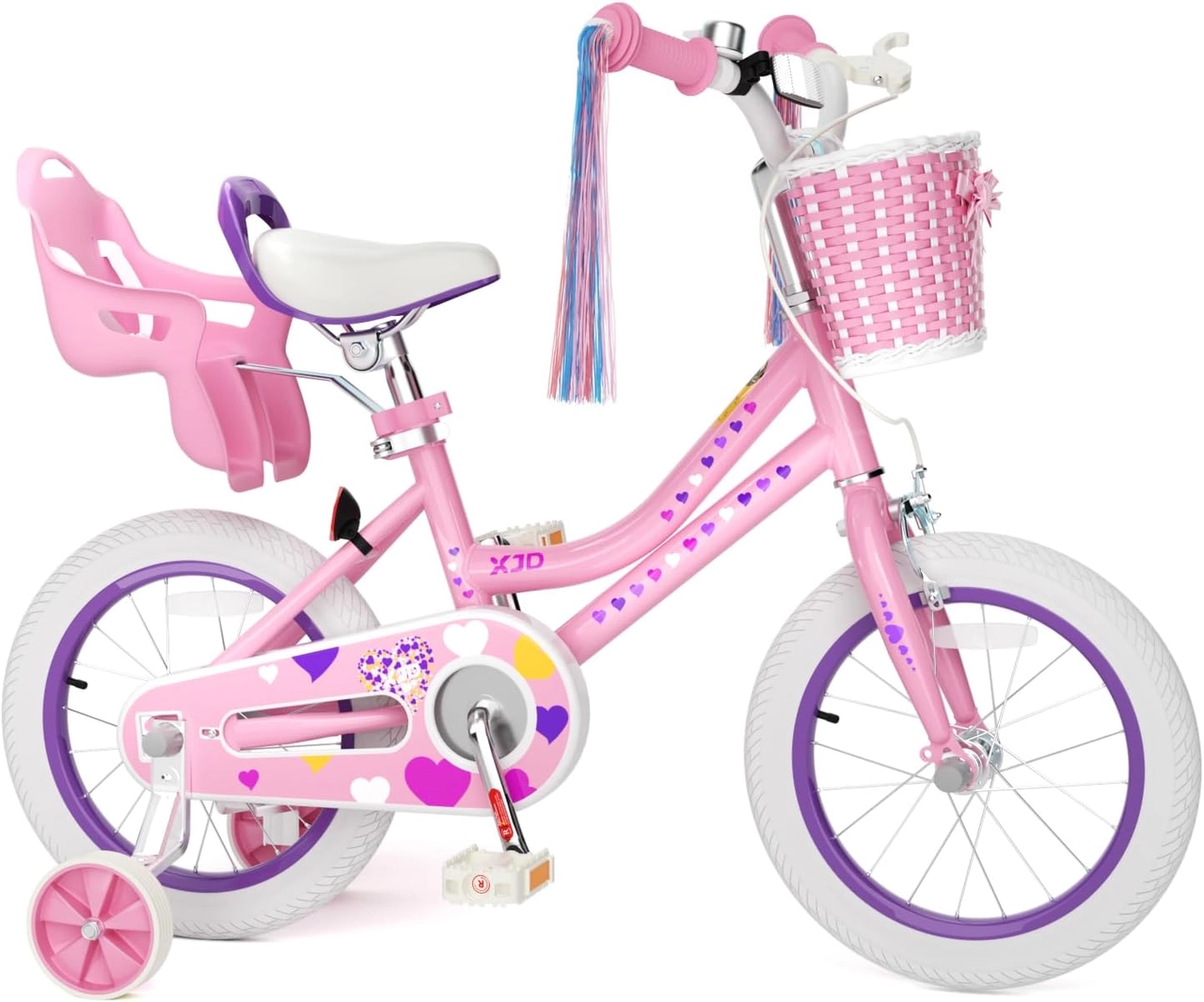 Pink Girls' 12/14/16" Bike by XJD – Basket & Doll Seat
This Training Wheel Bike is offered in 12 Inch, 14 Inch and 16 Inch labels. Compare the child's measured height with those XBikes ranges, then confirm stand-over, reach, control and confidence on the exact bicycle.
These products may be relevant for a child measuring within one of those size ranges who can pass the individual fit and control checks. They are not relevant merely because the child is called a toddler, likes the styling or will eventually grow into the bicycle. Neither supplied listing includes an 18 Inch or larger option, so children whose measurements and fit check point beyond 16 Inch should consider a different catalog option.
The shared size labels do not prove that the two bicycles have identical geometry, adjustment ranges or control placement. Have the child try the exact model and size. For assembly, maintenance, load limits, compatibility and torque requirements, follow that product's manual or use a qualified bicycle mechanic.
Before the first ride
Use a properly fitting bicycle helmet. It should sit level, and its straps should be adjusted according to the helmet manufacturer's instructions, consistent with U.S. Consumer Product Safety Commission guidance. An adult should also choose a controlled practice area and supervise while the child demonstrates starting, steering and stopping.
Next decision: measure the child's height and inseam today, shortlist only the matching 12, 14 or 16 Inch range, then let the child try that exact bicycle. Buy only when stand-over, reach, brake operation and confident control all work now—not at some future growth stage.
Bikes for your next adventure
-

XJD Boys 12/14/16" Training Wheel Bike – Blue
The XJD Boys Bike in Blue is a training wheel bike for riders 71–122 cm tall—rou…$169
$199 -

Black XJD Kids Bike for Boys – 12, 14 & 16 Inch Sizes
For a son between roughly 3 and 8 years old, the XJD Kids Bike in Black covers t…$169
$199 -
XJD Pink Girls' Bike – Kids 12/14/16 Inch Training Wheel Bicycle
The XJD Pink Girls' Bike is a training-wheel bicycle for girls ages 3 to 8 (ride…$149
$169