

What are good bikes teens
Good bikes for teens are correctly sized 20-, 24-, or 26-inch bicycles that the rider can straddle, steer, brake, start, and stop confidently. Measure the teen first; do not choose by age or buy an oversized bike for future growth.
Start with height, then verify the actual fit
Measure the teen’s height without shoes. Use the XBikes wheel-size starting points below to identify which bicycles are worth trying, but do not treat the chart as a final fit decision.
| Wheel size | Starting age | Rider height |
|---|---|---|
| 20 Inch | 7–12 | 48–60 in / 122–152 cm |
| 24 Inch | 10–14 | 54–64 in / 137–163 cm |
| 26 Inch | Youth and adults | Over 60 in / 153 cm |
A shorter or younger teen may begin with a 20-inch comparison, many teens fall within the 24-inch starting range, and riders over 60 inches may consider 26-inch bicycles. The ranges overlap deliberately: measured height narrows the search, while an individual test confirms the choice.
Measure inseam and check stand-over clearance
Measure inseam from the floor to the crotch while the teen stands upright. Then have the rider straddle the bicycle with both feet on the ground. There should be usable clearance between the rider and the top tube, and the teen should be able to mount and dismount without catching clothing or losing balance.
HealthyChildren guidance from the American Academy of Pediatrics recommends having the child try the bicycle and warns against buying an oversized model merely to allow room for growth. A bicycle that is difficult to straddle or stabilize is not made suitable by lowering the saddle alone.
Compare reach, brakes, and confidence
With the teen seated in a normal riding position, check whether the handlebars can be reached without an uncomfortable stretch, locked elbows, or a sharply hunched posture. The rider should turn the bars smoothly in both directions while remaining balanced.
Ask the teen to operate every brake control from the riding position. Their hands must reach and use the controls reliably without abandoning their grip. Because the supplied catalog facts do not identify brake types or adjustment procedures, follow the exact bicycle manual or ask a qualified bicycle mechanic to check setup and compatibility.
Finally, observe a controlled start, straight-line ride, turn, slow-down, and stop in a traffic-free area. Current confidence matters as much as measurements. If the rider cannot perform those actions predictably, compare a different size or configuration rather than assuming practice will correct a poor fit.
How the supplied XBikes products relate
The three supplied catalog bicycles help show the available 12-, 14-, and 16-inch end of the range, but those sizes are generally below the teen starting points in the XBikes chart. They are comparison points for younger or substantially smaller riders, not substitutes for a correctly fitted 20-, 24-, or 26-inch teen bike.
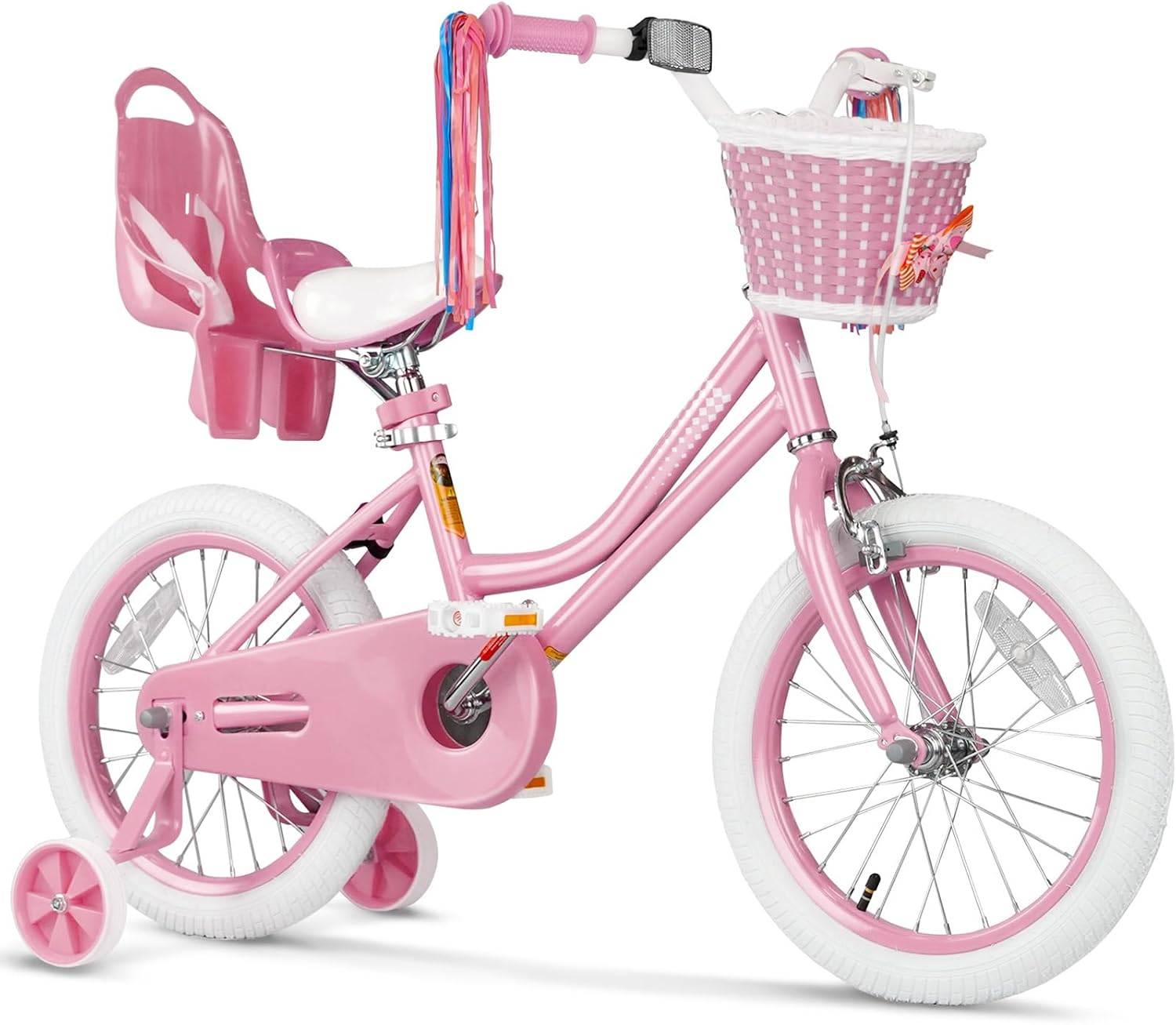 XJD Pink Girls' Bike – Kids 12/14/16 Inch Training Wheel Bicycle
A Training Wheel Bike offered in 12 Inch, 14 Inch, and 16 Inch sizes. These are smaller than the usual teen starting points and should be considered only when the rider’s measurements and individual fit check support them.
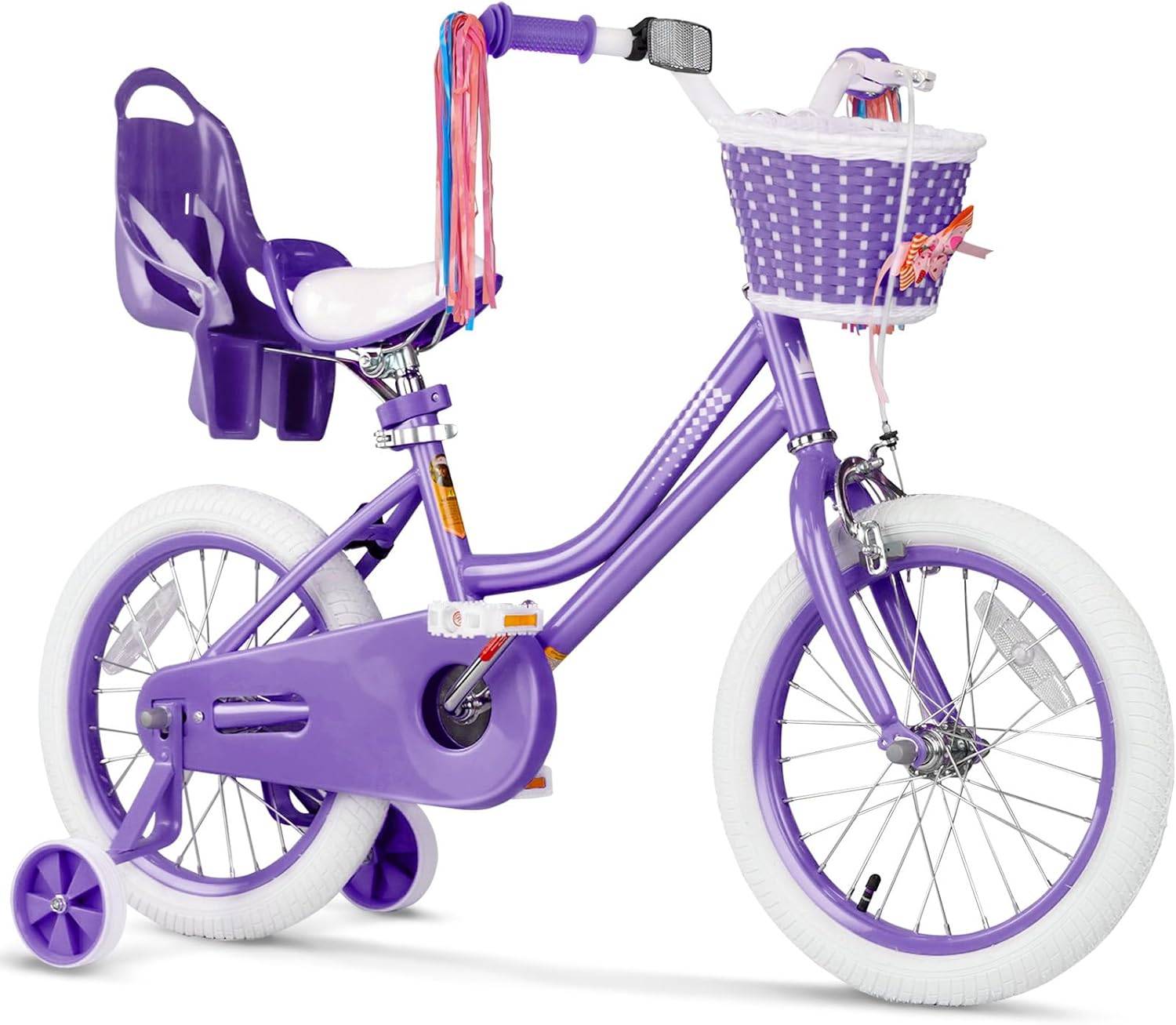 XJD Girls Bike for Kids Ages 3-8, 12/14/16 Inch with Training Wheels – Purple
This purple Training Wheel Bike has 12 Inch, 14 Inch, and 16 Inch options. The age wording in its catalog title is not fit evidence; use measured height, inseam, reach, brake access, and confidence.
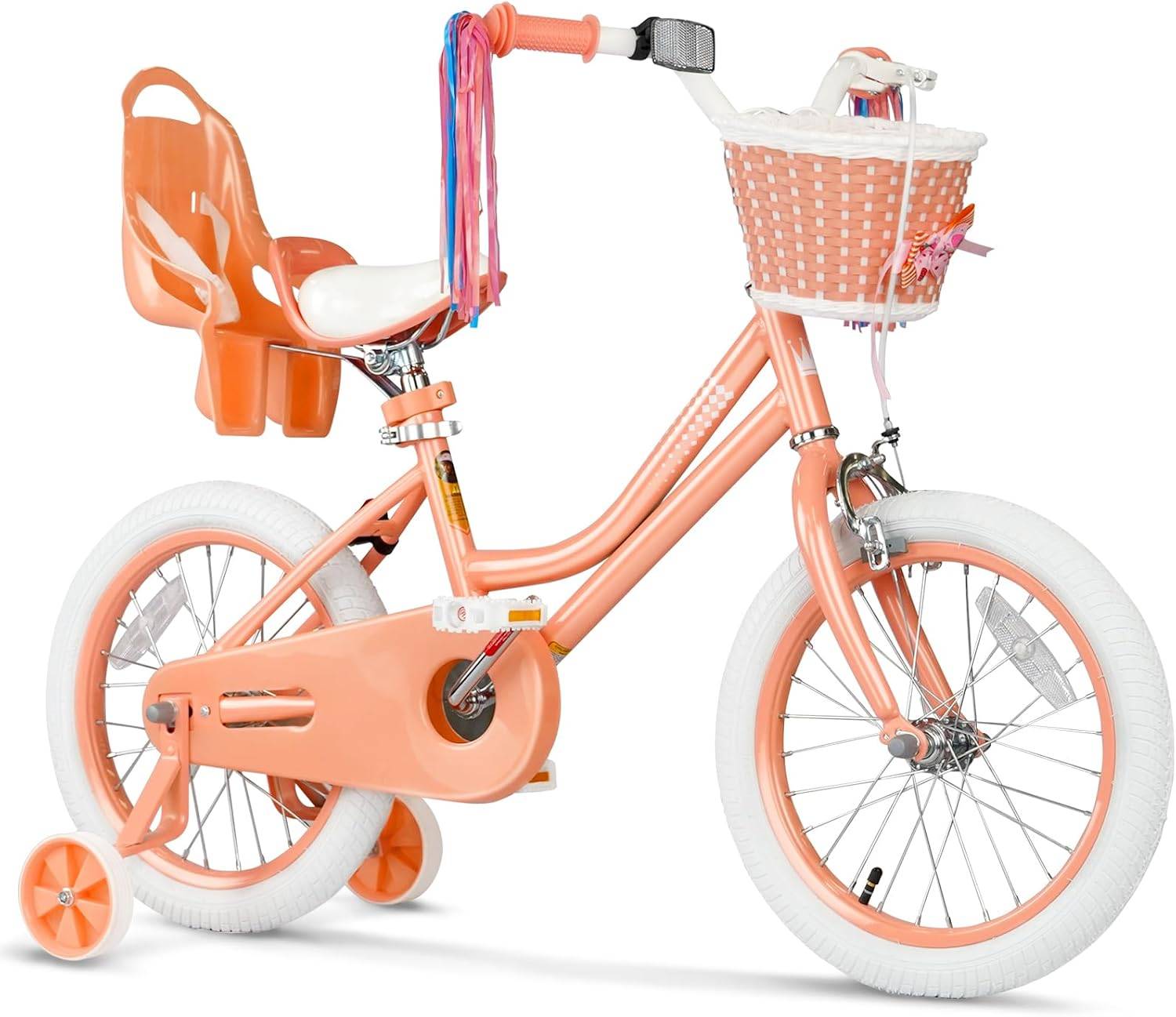 Girls 12/14/16 Inch Kids Bike by XJD with Training Wheels – Peach
This peach Training Wheel Bike is available in 12 Inch, 14 Inch, and 16 Inch sizes. It is a smaller-size comparison point, not a substitute for a properly fitted 20-, 24-, or 26-inch teen bicycle.
XJD Pink Girls' Bike – Kids 12/14/16 Inch Training Wheel Bicycle is listed as a Training Wheel Bike with 12 Inch, 14 Inch, and 16 Inch options. XJD Girls Bike for Kids Ages 3-8, 12/14/16 Inch with Training Wheels – Purple has the same supplied size options and category. Its “Ages 3-8” wording is only part of the catalog title and is not fit evidence. Girls 12/14/16 Inch Kids Bike by XJD with Training Wheels – Peach is likewise a Training Wheel Bike offered in those three sizes.
Under the XBikes starting points, 16-inch bicycles correspond to heights of 40–48 inches / 102–122 cm and ages 4–7. Therefore, none of these supplied products offers the 20-, 24-, or 26-inch sizes most relevant to typical teen comparisons. Do not select one solely because its styling appeals to the rider; verify both the listed wheel size and physical fit.
What else to compare before choosing
- Control: The teen can hold a steady line, turn, and stop without fighting the bicycle.
- Adjustment: The bicycle can be configured for the individual rider according to its exact manual.
- Condition: Assembly and maintenance are completed as the manufacturer directs, or checked by a qualified bicycle mechanic.
- Intended riding: Compare bicycles suitable for where the teen will actually ride, then confirm fit rather than relying on a category name.
Do not assume details that are absent from a listing, including load limits, component compatibility, assembly steps, or torque settings. Consult the exact product manual or a qualified bicycle mechanic for those points.
Make the final teen-bike decision
Have the teen wear a properly fitting bicycle helmet that sits level, with straps used according to the helmet manufacturer’s instructions, as advised by the U.S. Consumer Product Safety Commission. Then test the candidate bicycle in a controlled area.
Choose only after height and inseam lead to an appropriate starting size and the teen demonstrates comfortable stand-over clearance, natural reach, dependable brake access, and confident control. For the supplied 12-, 14-, and 16-inch products, proceed only if the rider’s measurements and an individual fit check genuinely support those smaller sizes; otherwise, compare correctly sized 20-, 24-, or 26-inch bicycles.
Bikes for your next adventure
-
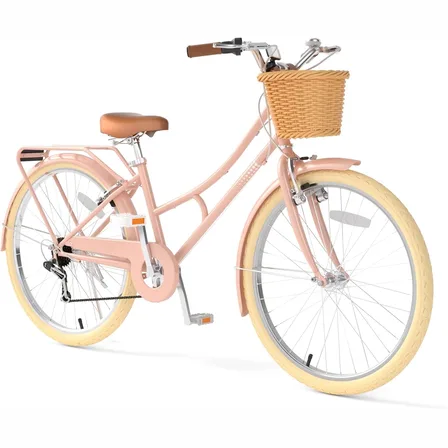
Pink XJD Beach Cruiser Bike, 24"/26", U-Brake
The XJD Pink Beach Cruiser Bike is a single-speed cruiser built for older kids a…$159.99
-
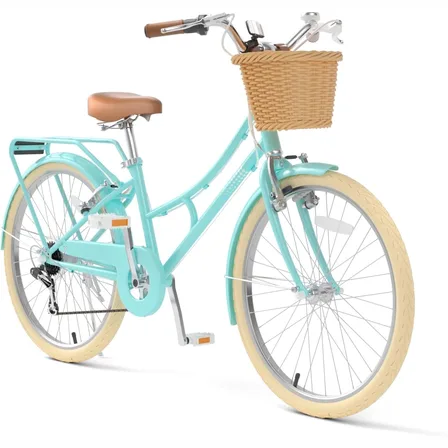
XJD Kids Beach Cruiser Bicycle, Rear Rack & V-Brakes, Mint Green
The XJD Beach Cruiser in Mint Green is a geared, multi-speed cruiser bike for ol…$179.99
$209.99 -

26-Inch XJD Beach Cruiser Bike for Girls – Purple, V-Brake
This XJD 26-inch purple beach cruiser is sized for big kids and teens — suggeste…$218.49
$229.99