

What does 12 inch bike mean
A 12 inch bike is a bicycle classified by its roughly 12-inch wheel size, not by frame height. It is an XBikes starting point for riders ages 3–4 and 34–40 in (86–102 cm) tall, but the child must still try the bike for fit and control.
What the 12-inch label actually tells you
The label describes the bike’s wheel-size class. It does not mean the seat is 12 inches high, the frame measures 12 inches, or every 12-inch model fits the same child. Frame shape, seat adjustment, handlebar position and controls can make two bikes with the same wheel label feel different.
Use “12 Inch” to narrow the search, then confirm the individual bicycle fits. Age is only a starting point because children of the same age can differ substantially in height, leg length, reach and riding confidence.
Measure the child before comparing bikes
- Measure standing height: Have the child stand upright without shoes against a wall. For a 12-inch bike, compare the result with the XBikes starting range of 34–40 in (86–102 cm).
- Measure inseam: Measure from the floor to the crotch while the child stands in the shoes normally worn for riding. Use that measurement to assess clearance and whether the child can reach the ground appropriately on the actual model.
- Check reach: On the bike, the child should be able to hold the handlebars and steer without stretching or losing a comfortable, controlled posture.
- Check the controls: If the bicycle has hand-operated brakes, confirm the child can reach and operate them reliably. Control matters more than matching an age label.
Manufacturer geometry and adjustment ranges are not supplied here. Consult the exact product manual or a qualified bicycle mechanic rather than assuming an inseam will fit every bike carrying the same wheel-size label.
Compare 12 inches with nearby wheel sizes
| Wheel size | XBikes age starting point | Rider-height starting point |
|---|---|---|
| 12 Inch | Ages 3–4 | 34–40 in / 86–102 cm |
| 14 Inch | Ages 3–6 | 37–45 in / 94–114 cm |
| 16 Inch | Ages 4–7 | 40–48 in / 102–122 cm |
| 20 Inch | Ages 7–12 | 48–60 in / 122–152 cm |
These ranges overlap, so height alone does not automatically settle the choice. In an overlap, compare stand-over clearance, seated reach, brake control and the child’s current confidence on each candidate. Do not move to a larger bike merely to leave room for growth; an oversized bicycle can be harder for a child to control.
How the supplied XBikes products are relevant
All three supplied catalog options are training-wheel bikes with a “12 Inch” SKU label, so they are directly relevant when comparing a 12-inch bicycle. Their additional size labels also help a parent identify nearby size classes that may be worth fit-checking, without treating those sizes as equivalent.
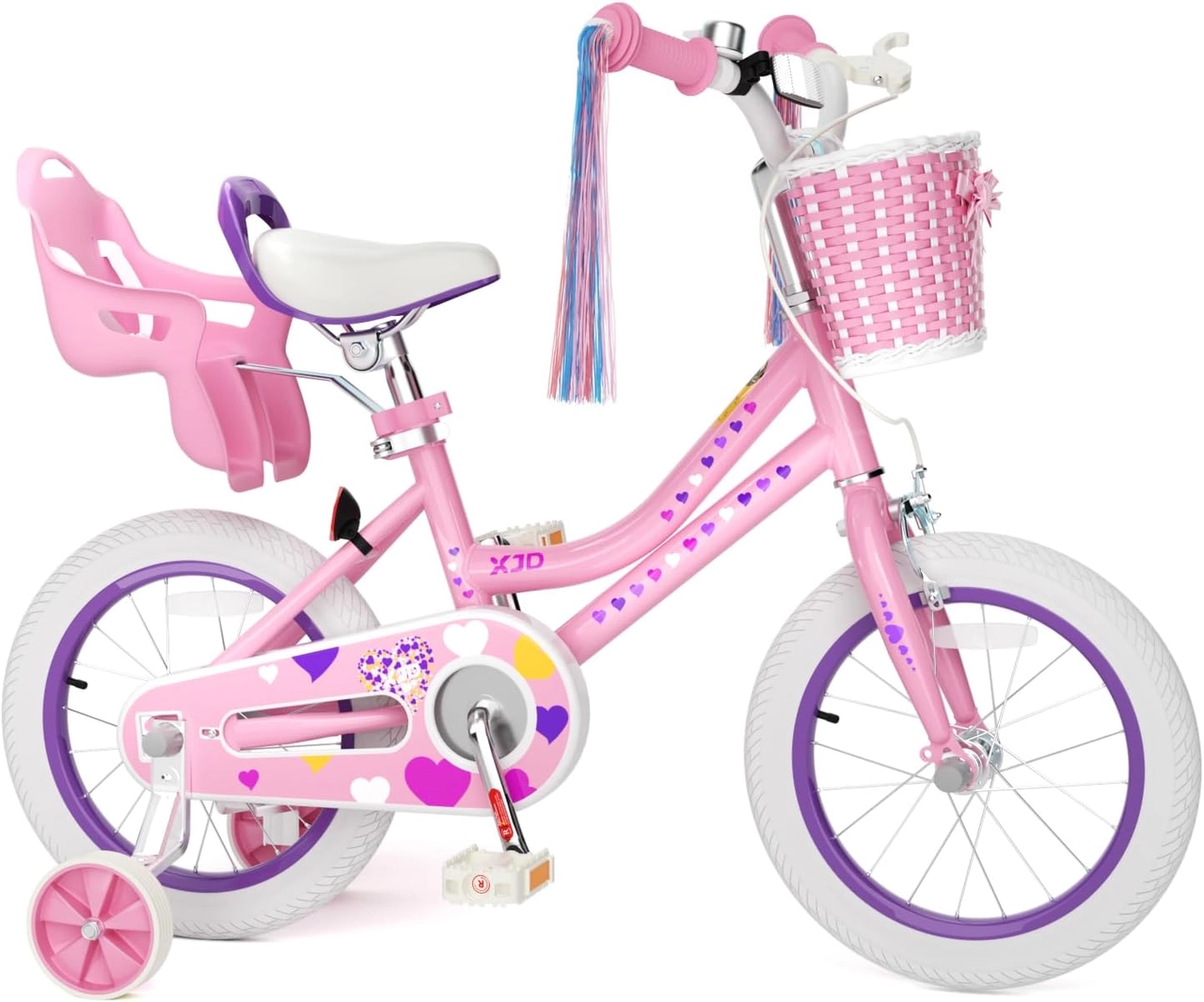 Pink Girls' 12/14/16" Bike by XJD – Basket & Doll Seat
A Training Wheel Bikes option with 12 Inch, 14 Inch and 16 Inch SKU labels. The 12 Inch version directly matches the requested wheel-size class; its title also identifies a basket and doll seat.
 Pink 12/14/16/20" XJD Girls Bike with Training Wheels & Basket
Listed in Training Wheel Bikes with 12 Inch, 14 Inch, 16 Inch and 20 Inch labels. It directly supports a 12-inch comparison while showing larger labeled options; the title identifies training wheels and a basket.
 Light Pink XJD Girls' Bicycle with Basket & Training Wheels
A Training Wheel Bikes listing available in 12 Inch, 14 Inch, 16 Inch and 20 Inch labels. Its 12 Inch SKU is relevant to the title, and its catalog title identifies a basket and training wheels.
Pink Girls' 12/14/16" Bike by XJD – Basket & Doll Seat is listed in Training Wheel Bikes and offers 12 Inch, 14 Inch and 16 Inch SKU labels. Its catalog title identifies a basket and doll seat.
Pink 12/14/16/20" XJD Girls Bike with Training Wheels & Basket is also listed in Training Wheel Bikes. Its available labels are 12 Inch, 14 Inch, 16 Inch and 20 Inch, making it useful for viewing the requested class alongside several larger labeled options.
Light Pink XJD Girls' Bicycle with Basket & Training Wheels is listed in the same category and likewise has 12 Inch, 14 Inch, 16 Inch and 20 Inch labels. Its title identifies a basket and training wheels.
Those catalog facts do not establish frame dimensions, brake type, weight, load limits or compatibility. Check the exact SKU and its product manual before purchase, assembly or adjustment; use a qualified bicycle mechanic when the instructions are unclear.
Perform the fit check on the actual 12-inch bike
- Have the child stand over the bicycle and verify appropriate clearance rather than relying on the wheel label.
- With the child seated, check that starting, stopping and putting a foot down feel controlled.
- Ask the child to steer and turn while maintaining a comfortable grip and posture.
- Confirm any brake controls are within reach and can be used consistently.
- Consider present confidence. A tentative beginner may need a different fit from a child of the same height who already rides confidently.
Training wheels do not remove the need for correct sizing or active supervision. Follow the exact manual for assembly, maintenance and adjustments; do not improvise torque settings or compatibility decisions.
What to do next
First measure the child’s height and inseam. If height is within 34–40 in (86–102 cm), try the 12-inch SKU of a relevant model and complete the stand-over, reach, brake and confidence checks. If those checks fail—or the child falls into an overlapping height range—compare the nearby labeled size in person instead of automatically sizing up.
Before riding, provide a properly fitting bicycle helmet. It should sit level and its straps should be used according to the helmet manufacturer’s instructions. Choose a 12-inch bike only when the measured child can comfortably stand over, reach, steer and stop that specific bicycle today.
Bikes for your next adventure
-

XJD 24-Inch Green Beach Cruiser Bike with U-Brake
This XJD 24-inch beach cruiser in green is made for riders about 4'8" to 5'4" ta…$159.99
$199.99 -

Kids Bike Helmet by XJD for Girls – Pink
The XJD Kids Bike Helmet in Pink is a lightweight multi-sport helmet for girls r…$59.99
$99 -
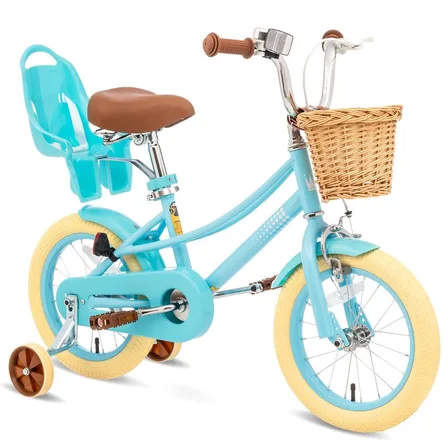
Girls' Training Wheel Bike by XJD, 12–20 Inch Wheels – Blue
This XJD girls' training wheel bike in Blue covers one of the widest fit ranges …$139
$159