

What does it mean 26 inch bike
A 26 inch bike is a bicycle built around a nominal 26-inch wheel size. It does not mean the frame or seat is 26 inches tall, and it does not guarantee a child will fit.
What “26 inch” actually describes
The label identifies the bicycle’s wheel-size family. It is mainly useful when comparing complete bicycles and choosing compatible wheel or tire parts. Because “26 inch” is a nominal category rather than a complete set of dimensions, the wheel may not measure exactly 26 inches when checked from the outside of the fitted tire.
For replacement parts, read the size markings on the tire sidewall and follow the exact bicycle or component manual. If the markings are missing or confusing, ask a qualified bicycle mechanic to identify the required standard. Do not select a tire, tube or wheel merely because another product also says “26 inch.”
Who should start with a 26-inch bike?
XBikes uses a 26-inch bike as a starting point for youth and adults taller than 60 inches (153 cm). Age alone should not determine the choice. A shorter rider should not be moved to a 26-inch bicycle simply to allow room for growth.
| Wheel size | XBikes starting height | What to do |
|---|---|---|
| 20 Inch | 48–60 in / 122–152 cm | Compare when the measured rider is below the 26-inch starting height. |
| 24 Inch | 54–64 in / 137–163 cm | Compare carefully in the overlap, then use an individual fit check. |
| 26 Inch | Over 60 in / 153 cm | Treat this as a starting point, not proof of fit. |
The overlap matters. A rider just over 60 inches may still have better control on a 24-inch model, while another rider of similar height may fit a particular 26-inch frame. Frame shape, saddle adjustment and handlebar position can make bicycles with the same wheel label feel different.
What parents should measure and check
- Measure standing height: Have the rider stand barefoot against a wall and compare the result with the XBikes starting points.
- Measure inseam: Measure from the floor to the crotch while the rider stands upright. Compare that measurement with the bicycle’s stand-over space and saddle-adjustment information from its exact product documentation.
- Check stand-over: With the rider straddling the bicycle, confirm that the frame does not prevent a stable, comfortable stance.
- Check reach: The rider should hold the handlebar without an awkward stretch or cramped posture and should be able to steer while looking ahead.
- Check brake control: Confirm that the rider can comfortably reach and operate the brake controls while maintaining a secure grip.
- Observe confidence: Ask the rider to start, stop, turn and put a foot down under close supervision in a traffic-free area.
If any check fails, do not assume practice will make an oversized bicycle suitable. Try a different size or frame, and use a qualified bicycle mechanic when adjustment or assembly guidance is needed.
How the supplied XBikes options help
These catalog options are relevant because each provides a 26-inch choice, while several also offer 20-inch and 24-inch labels for direct size comparison. Their listings help narrow the wheel-size decision, but the individual rider still needs to try the bicycle.
 XJD Kids Beach Cruiser Bicycle, Rear Rack & V-Brakes, Mint Green
Available in 20 Inch, 24 Inch and 26 Inch labels, this mint green beach cruiser provides adjacent wheel-size comparison options. Supplied features include a rear rack and V-brakes; actual rider fit still requires an individual check.
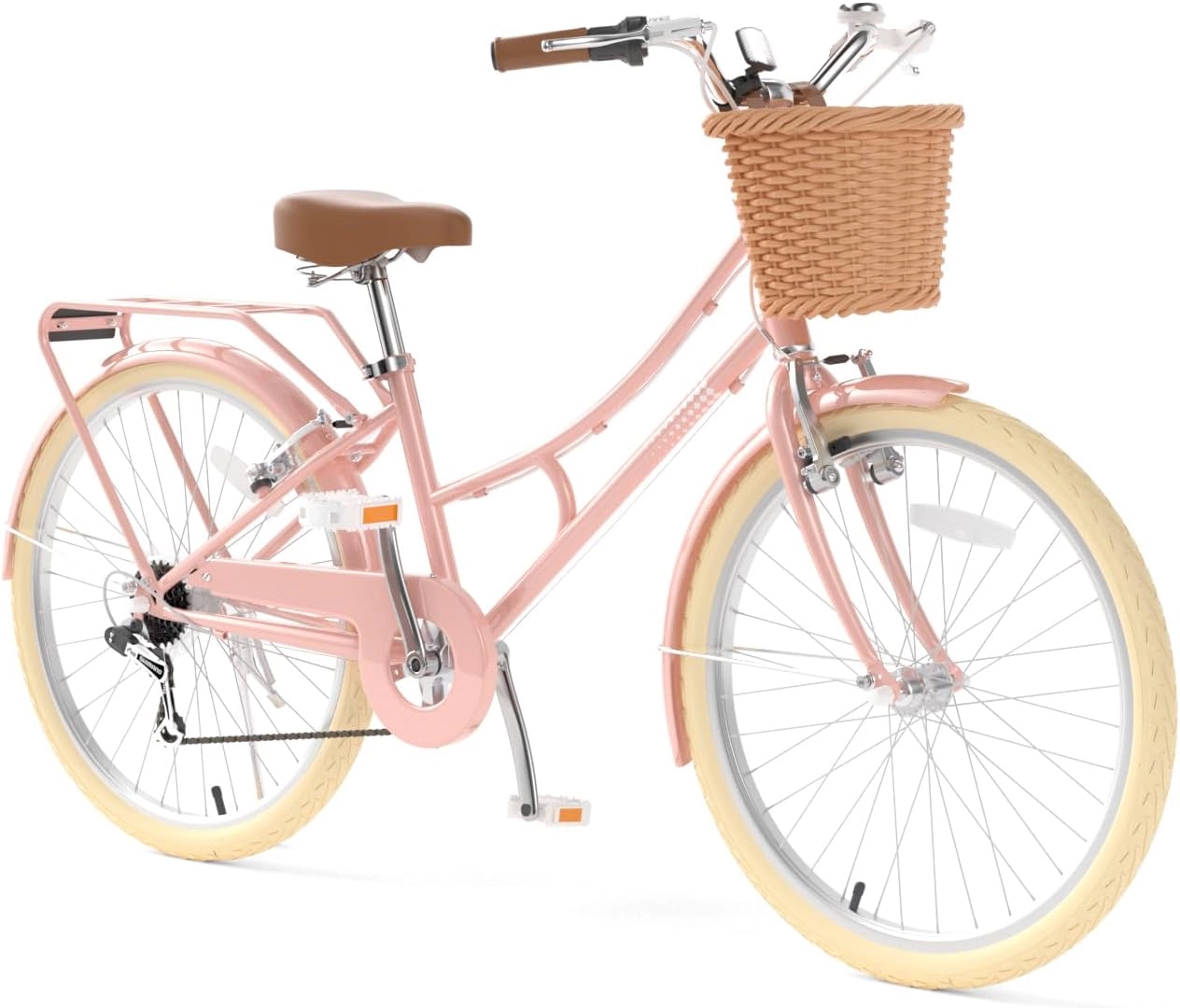 XJD Pink Beach Cruiser for Girls – Rear Rack & V-Brake
This pink beach cruiser is offered with 20 Inch, 24 Inch and 26 Inch labels, making it relevant for comparing wheel-size categories. Its supplied facts identify a rear rack and V-brake, but its title is not fit evidence.
 26-Inch XJD Beach Cruiser Bike for Girls – Purple, V-Brake
This listing includes 26-inch choices in Mint Green, Pink and Purple, plus smaller Mint Green and Pink labels for comparison. The Purple option is 26 Inch, and the supplied title identifies a V-brake.
XJD Kids Beach Cruiser Bicycle, Rear Rack & V-Brakes, Mint Green is listed with 20 Inch, 24 Inch and 26 Inch options. That makes its size labels useful when comparing adjacent wheel categories; its supplied facts also identify a rear rack and V-brakes.
XJD Pink Beach Cruiser for Girls – Rear Rack & V-Brake likewise has 20 Inch, 24 Inch and 26 Inch options. The catalog identifies a rear rack and V-brake, but its title wording is not evidence that every girl—or every child of a particular age—will fit it.
26-Inch XJD Beach Cruiser Bike for Girls – Purple, V-Brake includes Mint Green choices in 20, 24 and 26 Inch, Pink choices in 20, 24 and 26 Inch, and Purple in 26 Inch. Color does not change the need to verify stand-over, reach and braking control.
Before the first ride
Have the bicycle assembled, adjusted and maintained according to its exact product manual. Where the supplied facts do not specify compatibility, load limits, maintenance steps or torque values, consult that manual or a qualified bicycle mechanic rather than guessing.
A bicycle helmet must fit properly, sit level and have its straps used according to the helmet manufacturer’s instructions. The helmet does not correct a poor bicycle fit.
The 26-inch decision
Choose a 26-inch bike only when the rider is over 60 inches (153 cm) and the actual bicycle passes the stand-over, inseam, reach, brake-control and confidence checks. If those checks are uncomfortable or uncertain, compare a 24-inch option instead of buying the 26-inch model for future growth.
Bikes for your next adventure
-

Kids Bike Helmet by XJD for Girls – Pink
The XJD Kids Bike Helmet in Pink is a lightweight multi-sport helmet for girls r…$59.99
$99 -

Kids Bike Helmet by XJD for Boys & Girls – Black, Blue, Green, Pink, Purple
The XJD Kids Bike Helmet covers a wide 2-to-8-year age range thanks to two head-…$59.99
-

XJD Kids Bike for Girls – Pink, 12/14/16/20 Inch with Training Wheels
The XJD Kids Bike for Girls in Pink is a training-wheel bike built to carry your…$139
$159