

What frame size bike for 11 year old
For most 11-year-olds, start by comparing a 20-inch and 24-inch bike. Measure the child first: 20-inch suits 48–60 in (122–152 cm), while 24-inch suits 54–64 in (137–163 cm). Choose only after checking stand-over, reach, braking and control in person.
Choose from height, not age alone
“Frame size” on a child’s bike is often discussed through wheel size, but wheel diameter does not guarantee that every frame will fit identically. Frame shape, saddle position and handlebar reach can differ. Use the XBikes ranges as starting points, then have the rider try the exact bicycle.
| Wheel size | XBikes starting range | What it means at age 11 |
|---|---|---|
| 20 Inch | Ages 7–12; 48–60 in / 122–152 cm | A candidate for a shorter 11-year-old or a rider who needs easier control. |
| 24 Inch | Ages 10–14; 54–64 in / 137–163 cm | The usual first comparison for an 11-year-old within this height range. |
| 26 Inch | Youth and adults over 60 in / 153 cm | Consider only when the rider is over 60 in and can pass every fit check. |
The ranges overlap because children of the same age vary considerably. A child who is 56 inches tall could compare both 20-inch and 24-inch models; confidence, proportions and control should decide between them. Never move up merely because the next size may last longer.
Measure before comparing bikes
Record the child’s height without shoes, standing straight against a wall. Then measure inseam from the floor to the crotch while the child stands naturally. Height identifies the starting wheel size; inseam helps you judge whether the rider can stand over the actual frame comfortably.
Bring both measurements when shopping, but do not convert inseam into a frame size with an unverified formula. Compare it with the stand-over dimensions and setup instructions for the exact model. If those details are unavailable or unclear, consult the product manual or a qualified bicycle mechanic.
Perform the fit check on the exact bicycle
Have the child try the bike rather than assessing it by wheel label alone. The American Academy of Pediatrics advises against buying an oversized bicycle for future growth and emphasizes stand-over, control and brake reach.
- Stand-over: With both feet on the ground, confirm the frame does not prevent a comfortable, stable stance.
- Starting and stopping: The rider should mount, set off, stop and dismount without struggling against the bike’s size.
- Reach: Hands should meet the handlebar without an exaggerated stretch or a cramped posture.
- Brake control: The child must reach and operate the brake controls reliably while maintaining steering control.
- Confidence: Ask for slow turns and controlled stops in a suitable traffic-free area. Size down if the larger option makes the rider hesitant or unstable.
Adjust only within the limits and procedures stated in the exact product manual. For assembly, compatibility, maintenance or torque questions not covered there, use a qualified bicycle mechanic.
How the supplied XBikes options compare
These catalog options provide useful 20-, 24- and 26-inch comparison points for an 11-year-old. Their listed wheel sizes help narrow the fitting appointment, but the product titles and SKU labels cannot confirm individual fit.
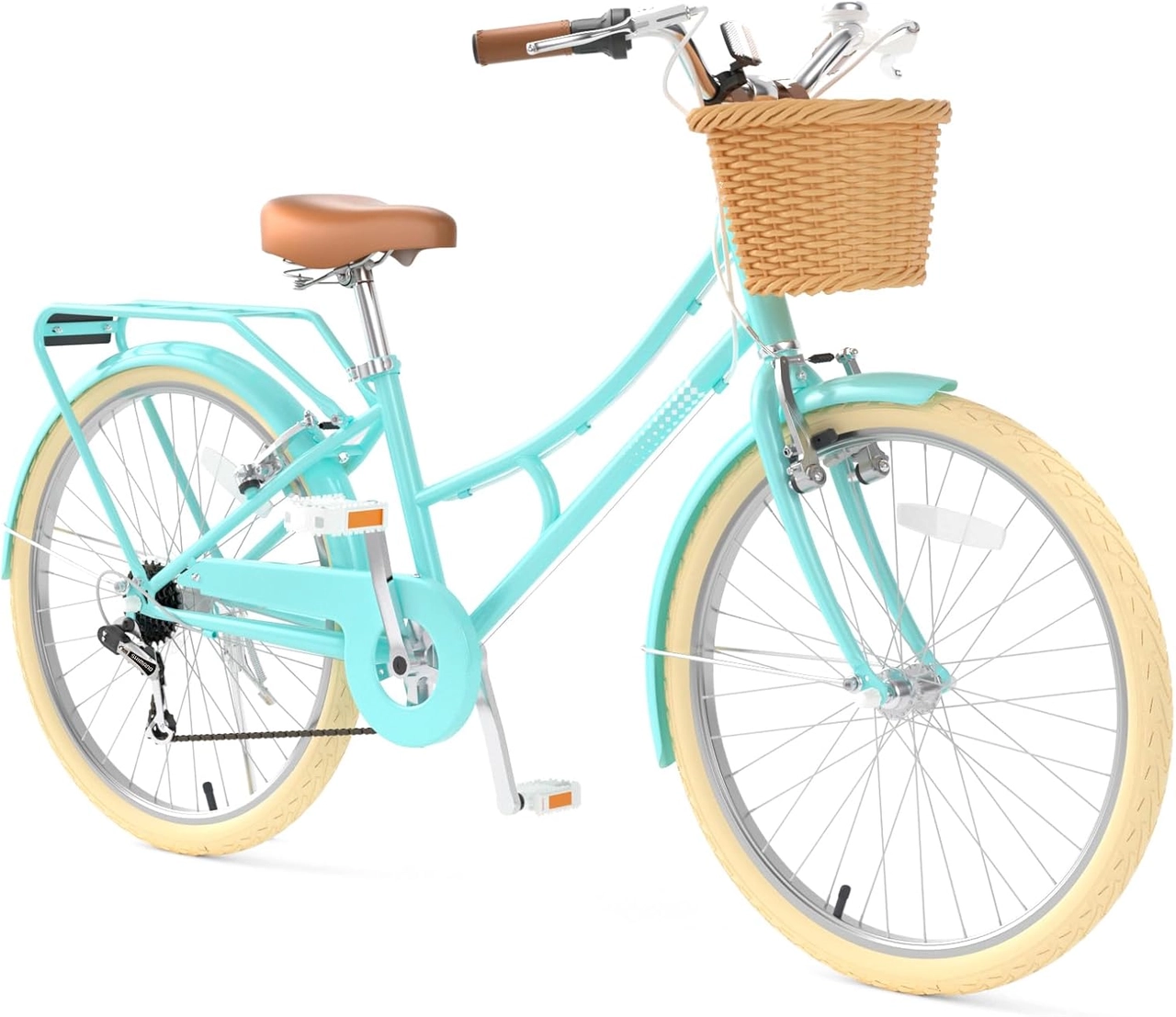 XJD 24-Inch Green Beach Cruiser Bike with U-Brake
Its 24-inch SKUs are relevant for riders measuring 54–64 inches. The 26-inch SKU should be considered only above 60 inches and after checking stand-over, reach, braking and control.
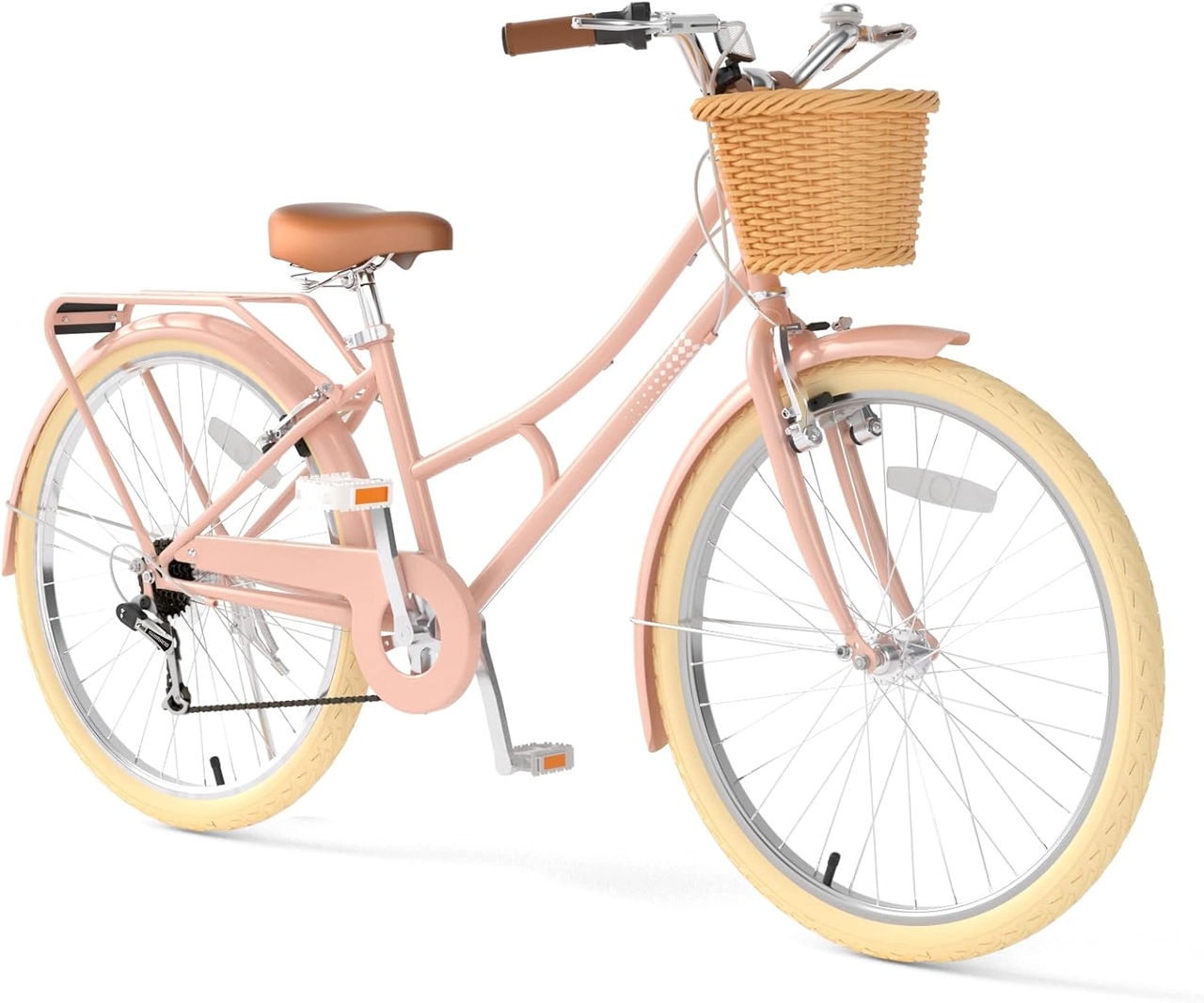 Pink XJD Beach Cruiser Bike, 24"/26", U-Brake
The available 24-inch option fits the main comparison for an 11-year-old measuring 54–64 inches. Its 26-inch option has a separate over-60-inch starting point and still requires an individual fit check.
 Light Pink XJD Girls' Bicycle with Basket & Training Wheels
Of its 12-, 14-, 16- and 20-inch SKUs, only the 20-inch option is a likely comparison for this query, covering the 48–60-inch starting range before an individual fit check.
The XJD 24-Inch Green Beach Cruiser Bike with U-Brake has Green / 24 Inch, Pink / 24 Inch and Pink / 26 Inch SKU labels. Its 24-inch versions match the starting range of 54–64 inches; the 26-inch version is relevant only above 60 inches and after a successful fit check.
The Pink XJD Beach Cruiser Bike, 24"/26", U-Brake is offered with 24 Inch and 26 Inch labels. Compare the 24-inch option first for a rider within 54–64 inches. Do not treat its 26-inch option as equivalent: it begins at a different height threshold.
The Light Pink XJD Girls' Bicycle with Basket & Training Wheels lists 12, 14, 16 and 20 Inch options. Only its 20-inch option is a plausible comparison for this question, and only when the child measures 48–60 inches. The smaller listed sizes fall below the XBikes starting range normally relevant to an 11-year-old.
Make the final size decision
Begin with 20 inches if the rider is 48–60 inches tall and with 24 inches if the rider is 54–64 inches tall; in the overlap, try both. Consider 26 inches only above 60 inches. Reject any candidate the child cannot comfortably stand over, steer, start, stop or brake. Finally, add a properly fitting bicycle helmet that sits level and has its straps adjusted according to the helmet manufacturer’s instructions.
Bikes for your next adventure
-

XJD Girls Bike for Kids Ages 3-8, 12/14/16 Inch with Training Wheels – Purple
The XJD Girls Bike in Purple is a training-wheel bicycle for kids ages 3 to 8, f…$149
$169 -

Pink Girls' 12/14/16" Bike by XJD – Basket & Doll Seat
The XJD Pink Girls' Bike with Basket & Doll Seat is made for riders 71–122 cm ta…$75.99
$99.99 -

Black XJD Kids Bike for Boys – 12, 14 & 16 Inch Sizes
For a son between roughly 3 and 8 years old, the XJD Kids Bike in Black covers t…$169
$199