

What height for 16 inch bike frame
For an XBikes 16-inch kids’ bike, start with a rider height of 40–48 in (102–122 cm), usually ages 4–7, then confirm the fit in person.
First, check whether “16 inch” means the wheel
In children’s bike listings, 16 inch normally describes wheel size, not the bicycle frame’s measured height. The 40–48 in (102–122 cm) starting range applies to a 16-inch wheel bike.
If a listing genuinely specifies a 16-inch frame, do not apply that wheel-size range. Frame geometry and measuring conventions vary, so use the manufacturer’s sizing information and arrange an individual fit check. The three products discussed below offer 16 Inch size labels, so they are relevant to the usual wheel-size meaning of this question.
Measure the child before comparing sizes
Measure the rider’s full height without shoes, standing straight against a wall. Then measure inseam from the floor to the crotch, using a firm book held level to represent the saddle area. Record both measurements in inches or centimetres.
Compare full height with the XBikes starting range first. For 16 Inch, that is 40–48 in (102–122 cm). Age 4–7 is only a secondary guide: children of the same age can differ substantially in height, leg length, reach and confidence.
Confirm the fit on the actual bicycle
A number on a chart cannot show whether a child can control a particular bike. Have the child try the exact model and size whenever possible. The American Academy of Pediatrics advises against buying an oversized bicycle simply for a child to grow into.
- Stand-over: The child should be able to straddle the bicycle without the frame preventing a stable stance.
- Starting and stopping: They should be able to get moving, stop and put a foot down without panic or a forced stretch.
- Reach: Hands should reach the handlebar naturally while the rider remains balanced and able to steer.
- Brake control: The child must be able to reach and operate the fitted controls reliably. Check the exact product manual for adjustment instructions.
- Confidence: A hesitant beginner may need a more manageable fit even when height falls within the stated range.
If stand-over room, reach or brake operation is doubtful, do not choose that bike solely because “16 Inch” appears on its label. Follow the product manual or ask a qualified bicycle mechanic to assess setup and fit.
When to compare 14, 16 and 18 Inch
| Wheel size | XBikes rider-height starting point | Age starting point |
|---|---|---|
| 14 Inch | 37–45 in / 94–114 cm | 3–6 |
| 16 Inch | 40–48 in / 102–122 cm | 4–7 |
| 18 Inch | 43–52 in / 109–132 cm | 5–9 |
The overlapping ranges are intentional starting points, not proof that two sizes fit equally. A rider near an overlap should try the relevant sizes and compare stand-over, reach, brake control and confidence. Never move up merely to allow more growing room.
How the supplied 16 Inch options are relevant
All three catalog options include an available 16 Inch label, making them useful models to compare after the rider measures 40–48 in (102–122 cm). They also have 12 Inch and 14 Inch labels, which can help when the child is below the 16-inch starting range or the individual fit check shows that 16 Inch is too difficult to control.
 XJD Light Purple Girls Bike with Basket, Training Wheels, 12/14/16/20 Inch
Offers a confirmed 16 Inch label, plus 12 Inch and 14 Inch labels for size comparison. It is categorized as a Training Wheel Bike; individual height, stand-over, reach and control still determine fit.
 XJD Girls BMX Bike 12/14/16 Inch with Training Wheels – Pink Blue
This Kids’ BMX Bike has confirmed 12 Inch, 14 Inch and 16 Inch labels and training wheels in its exact title. Its 16 Inch option is relevant only after measurement and a hands-on fit check.
 XJD Boys & Girls BMX Bike with Training Wheels, 12/14/16" – Blue
A Kids’ BMX Bike with confirmed 12 Inch, 14 Inch and 16 Inch labels. Compare its 16 Inch option against the rider’s measured height, inseam, reach, brake control and confidence.
The XJD Light Purple Girls Bike with Basket, Training Wheels, 12/14/16/20 Inch is categorized as a Training Wheel Bike; the supplied available labels are 12 Inch, 14 Inch and 16 Inch. Although 20 Inch appears in its exact catalog title, only those three labels are confirmed here.
The XJD Girls BMX Bike 12/14/16 Inch with Training Wheels – Pink Blue and XJD Boys & Girls BMX Bike with Training Wheels, 12/14/16" – Blue are categorized as Kids’ BMX Bikes. Each has supplied 12 Inch, 14 Inch and 16 Inch labels. Those category and label differences support comparison, but they do not establish fit by themselves.
Make the final 16 Inch decision
Choose a 16-inch wheel bike only when the measured rider is around 40–48 in (102–122 cm) and can comfortably straddle, reach, steer, stop and operate the controls on the exact bicycle. Complete assembly and adjustments according to that product’s manual, or use a qualified bicycle mechanic where instructions or compatibility are uncertain.
Before riding, fit a bicycle helmet properly: it should sit level and its straps should be adjusted according to the helmet manufacturer’s instructions. If the child cannot demonstrate calm, reliable control, reassess the size rather than treating age or future growth as the deciding factor.
Bikes for your next adventure
-
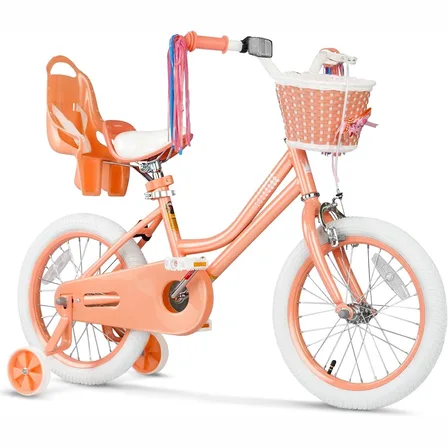
Girls 12/14/16 Inch Kids Bike by XJD with Training Wheels – Peach
The XJD Girls Bike in Peach is a training-wheel bike built for girls roughly 3 t…$149
$169 -
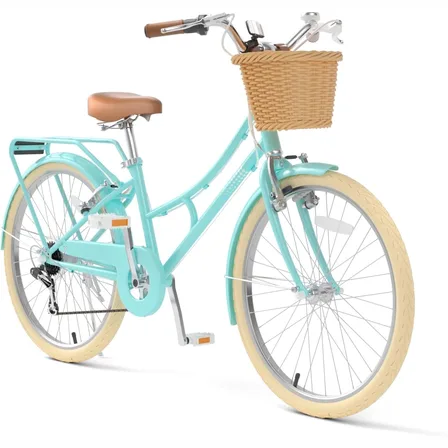
XJD Kids Beach Cruiser Bicycle, Rear Rack & V-Brakes, Mint Green
The XJD Beach Cruiser in Mint Green is a geared, multi-speed cruiser bike for ol…$179.99
$209.99 -
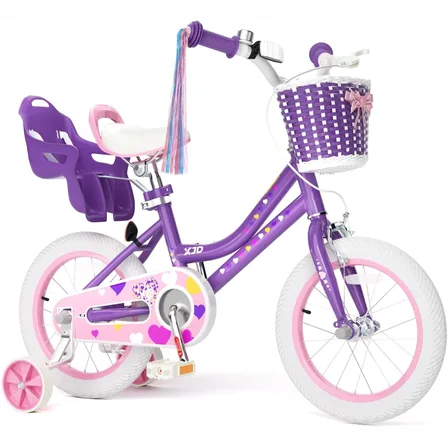
XJD Light Purple Girls Bike with Basket, Training Wheels, 12/14/16/20 Inch
The XJD Girls Bike with Basket in Light Purple is a single-speed training-wheel …$99.99
$119.99