

What height for a 24 inch bike
A 24-inch bike is a starting point for a rider 54–64 inches (137–163 cm) tall, usually ages 10–14, but measured fit and control decide.
Measure height before choosing
Have the child stand without shoes against a wall, looking straight ahead. Keep the feet flat and together, then measure from the floor to the top of the head. Compare that result with the XBikes 24-inch starting range of 54–64 inches (137–163 cm).
Age is only a secondary clue. A child outside the listed age range may still fall within the height range, while a 10- to 14-year-old may need another wheel size. Do not move up to a 24-inch bike simply because there is room to grow.
Check inseam, stand-over and reach
Next, measure inseam without shoes. Ask the rider to stand with feet slightly apart, place a straight-edged book firmly between the legs as if it were a saddle, and measure from the floor to the book’s top edge.
There is no single inseam number that proves every 24-inch bicycle will fit because frame shapes differ. Use the measurement to check the exact bicycle and its manual. When the child straddles the frame, there should be clear space between the body and the top tube. If contact occurs, the bike is too tall for a safe, confident start.
While seated, the rider should reach the handlebar without stretching, locking the elbows or leaning excessively. They must also turn the handlebar comfortably and reach and operate the brakes with control. If saddle or handlebar adjustment is needed, follow the exact product manual or ask a qualified bicycle mechanic; do not improvise limits or settings.
Compare the nearby wheel-size ranges
| Wheel size | XBikes rider-height starting point | Typical age |
|---|---|---|
| 20 Inch | 48–60 in / 122–152 cm | 7–12 |
| 24 Inch | 54–64 in / 137–163 cm | 10–14 |
| 26 Inch | Over 60 in / 153 cm | Youth and adults |
These ranges overlap, so height alone does not settle every borderline case. A rider around 60 inches (152–153 cm) may appear in more than one starting range. In that situation, compare actual stand-over clearance, reach, brake access and present confidence on each candidate. A larger wheel size is not automatically more suitable.
How to perform the final fit check
- Confirm that measured height falls near the relevant starting range.
- Have the child straddle the actual bicycle and check for clear stand-over space.
- Set the saddle only as permitted by the product manual, then check whether the rider can start and stop with confidence.
- Confirm a relaxed reach to the handlebar and easy steering without overextension.
- Make sure the child can reach and operate the brakes reliably before riding away.
If the child looks stretched, cannot control the brakes, struggles to start or stop, or feels intimidated, reject that fit even when age and height seem to match. The American Academy of Pediatrics advises having the child try the bicycle and avoiding an oversized bike bought only for future growth.
Which supplied 24-inch options are relevant?
The catalog choices below help because two are explicitly 24-inch bicycles, while another listing includes 24-inch SKU labels alongside other sizes. They let you identify the requested wheel size before completing the individual fit checks above.
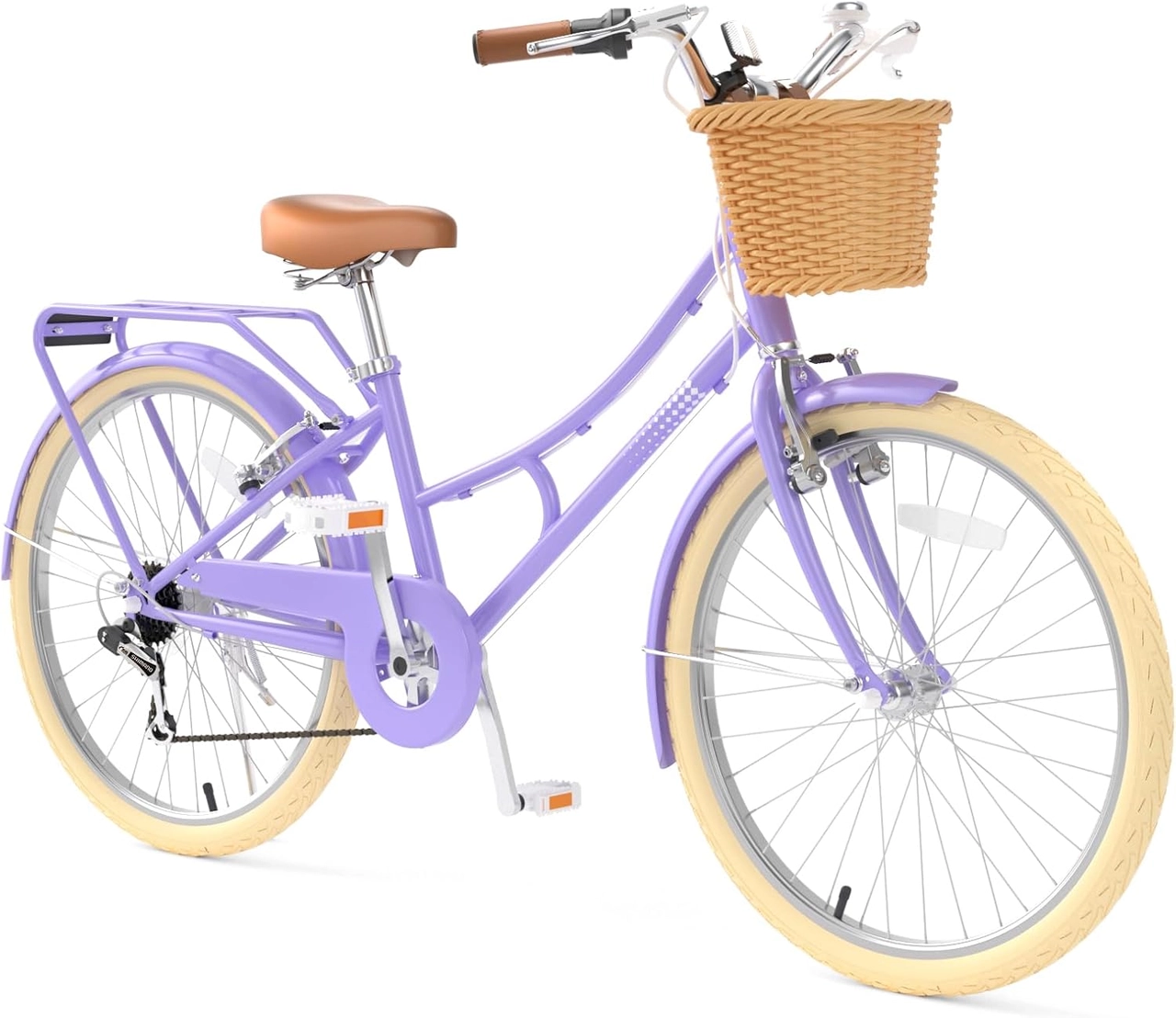 24-Inch Purple XJD Beach Cruiser Bike with U-Brake
Directly relevant: the catalog title specifies a 24-inch beach cruiser with U-brake, and its available SKU label is Default. Confirm individual stand-over, reach and brake control.
 26-Inch XJD Beach Cruiser Bike for Girls – Purple, V-Brake
Potentially relevant through its Mint Green / 24 Inch and Pink / 24 Inch SKU labels, despite the exact title stating 26-inch. Its Purple SKU is labeled 26 Inch, not 24 Inch.
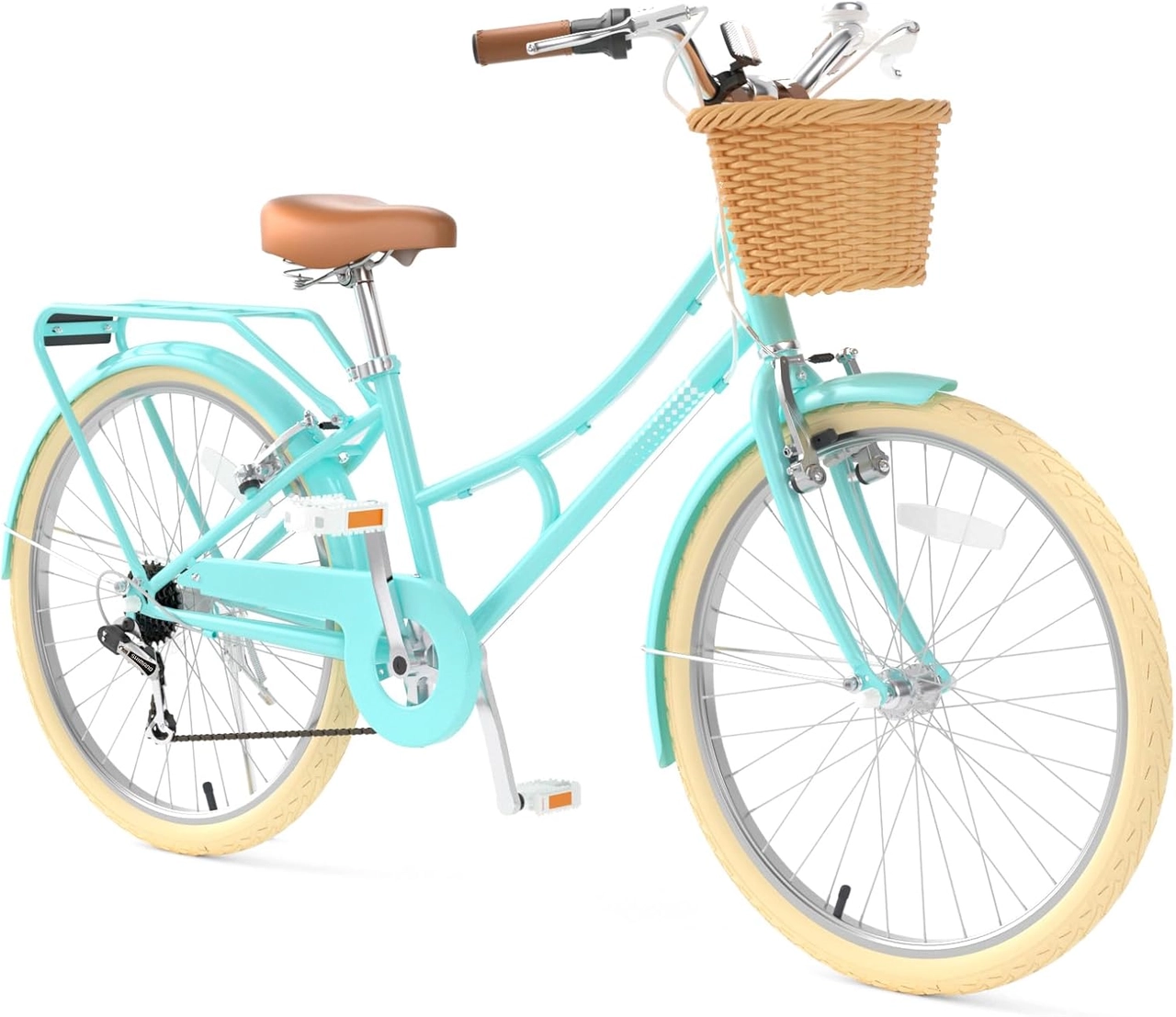 XJD 24-Inch Green Beach Cruiser Bike with U-Brake
Directly relevant because the listing specifies a 24-inch beach cruiser and offers Green / 24 Inch and Pink / 24 Inch SKU labels. It also lists a distinct Pink / 26 Inch option.
The 24-Inch Purple XJD Beach Cruiser Bike with U-Brake is directly relevant because its catalog title specifies a 24-inch wheel size. Its available SKU label is “Default,” so confirm the exact configuration shown on the product page before proceeding.
The XJD 24-Inch Green Beach Cruiser Bike with U-Brake is also directly relevant. Its supplied SKU labels include Green / 24 Inch and Pink / 24 Inch; the listing also contains Pink / 26 Inch, which is a different size and should not be treated as equivalent.
The 26-Inch XJD Beach Cruiser Bike for Girls – Purple, V-Brake needs closer attention. Although its exact catalog title says 26-inch, its available SKU labels include Mint Green / 24 Inch and Pink / 24 Inch, as well as 20-inch and 26-inch choices. Select only a clearly labeled 24-inch SKU when evaluating it for this question. The Purple option supplied is 26-inch, not 24-inch.
These catalog facts establish size labels, not individual suitability. They do not replace measuring the rider or trying the bicycle.
Make the decision and prepare to ride
Choose a 24-inch bike only when the rider is near the 54–64-inch (137–163 cm) starting range and passes the stand-over, reach, brake-control and confidence checks on that exact model. If any check fails, compare a different size rather than expecting the child to grow into poor control.
Before riding, provide a bicycle helmet that fits properly, sits level and has its straps adjusted according to the helmet manufacturer’s instructions, as advised by the U.S. Consumer Product Safety Commission. Follow the bicycle’s exact manual—or use a qualified bicycle mechanic—for assembly, maintenance, compatibility, load limits and torque. Measure the child now, then test the clearly labeled 24-inch configuration before deciding.
Bikes for your next adventure
-

26-Inch XJD Beach Cruiser Bike for Girls – Purple, V-Brake
This XJD 26-inch purple beach cruiser is sized for big kids and teens — suggeste…$218.49
$229.99 -
Pink XJD Beach Cruiser Bike, 24"/26", U-Brake
The XJD Pink Beach Cruiser Bike is a single-speed cruiser built for older kids a…$159.99
-
XJD Pink Beach Cruiser for Girls – Rear Rack & V-Brake
The XJD Pink Beach Cruiser for girls is the step-up bike for riders who've outgr…$179.99
$209.99