

What height is 16 inch bike for
A 16-inch bike is a starting match for a child 40–48 inches (102–122 cm) tall, usually age 4–7. Measure the rider and check the actual fit before choosing.
Use height first, not age
In the XBikes wheel-size starting points, a 16 Inch bike corresponds to rider height 40–48 inches (102–122 cm). The age range of 4–7 is only a secondary guide because children of the same age can differ considerably in proportions, reach and riding ability.
Do not move a shorter rider onto a 16-inch bike simply because they will grow. The American Academy of Pediatrics advises having the child try the bicycle and avoiding an oversized bike bought for future growth. A bike that is too large can make starting, stopping and steering harder to control.
What to measure at home
Measure the child without shoes, standing upright against a wall. Record total height from the floor to the top of the head. Then measure inseam from the floor to the crotch, using a firm, level book to represent where the saddle area would meet the body.
Compare total height with the 40–48-inch (102–122 cm) starting range. Inseam matters too, but the supplied sizing standard does not give a universal inseam number for 16-inch bikes. Bicycle frames and adjustments vary, so use the measurement during an in-person fit check rather than trying to match it to an invented cutoff.
Check the 16-inch bike with the child
Once height suggests that 16 Inch may be suitable, have the rider try the exact bicycle. Check these points before deciding:
- Stand-over: The child should be able to straddle the bicycle without the frame preventing secure footing.
- Starting and stopping: The rider should be able to get on, set off and stop without the bicycle overwhelming them.
- Reach: Hands should reach the controls while the child maintains a comfortable, controlled position.
- Brake control: The child must be able to reach and operate the brakes fitted to that exact bicycle.
- Confidence: Watch for tense reaching, difficulty steering or fear caused by the bicycle’s size.
If one of these checks fails, do not treat the height chart as permission to proceed. Compare another size or model. For assembly, adjustment limits, compatibility, maintenance and torque, follow the exact product manual or ask a qualified bicycle mechanic.
How nearby wheel sizes compare
| Wheel label | XBikes rider-height starting point | Age starting point |
|---|---|---|
| 14 Inch | 37–45 in / 94–114 cm | 3–6 |
| 16 Inch | 40–48 in / 102–122 cm | 4–7 |
| 18 Inch | 43–52 in / 109–132 cm | 5–9 |
| 20 Inch | 48–60 in / 122–152 cm | 7–12 |
The overlap is intentional: wheel size cannot be selected from height alone. A child near a boundary should try the relevant options and be judged on stand-over, reach, brake use and current confidence. An 18-inch or 20-inch bike is not equivalent to a 16-inch bike, even where height ranges overlap.
Which supplied products are relevant?
Both supplied catalog options include a 16 Inch SKU, so they are directly relevant comparison points. Their other listed sizes also help a parent compare adjacent choices when the individual fit check shows that 16 Inch is not suitable.
 XJD Boys & Girls BMX Bike with Training Wheels, 12/14/16" – Blue
This Kids' BMX Bikes model has 12 Inch, 14 Inch and 16 Inch SKU labels. Its 16 Inch option directly matches the requested size, while the smaller options offer comparison points if the individual fit check indicates a smaller bike.
 Girls' Training Wheel Bike by XJD with Basket – Purple
This Training Wheel Bikes model is offered with 14 Inch, 16 Inch and 20 Inch SKU labels. The 16 Inch option is directly relevant, with adjacent smaller and larger labels available for fit comparison.
XJD Boys & Girls BMX Bike with Training Wheels, 12/14/16" – Blue is listed under Kids' BMX Bikes and offers 12 Inch, 14 Inch and 16 Inch SKU labels. Its 16 Inch option matches the requested wheel-size label; the smaller labels provide comparison choices, not proof that either will fit a particular child.
Girls' Training Wheel Bike by XJD with Basket – Purple is listed under Training Wheel Bikes and offers 14 Inch, 16 Inch and 20 Inch SKU labels. Its 16 Inch option is directly relevant, while the 14 Inch and 20 Inch options span smaller and larger starting ranges. Choose among them only after checking the rider on the exact bicycle.
Make the final decision
If the child measures 40–48 inches (102–122 cm), put 16 Inch on the try-first list. If the child falls outside that range, begin with the wheel-size starting point matching their measured height instead. In either case, approve the bike only when the child can straddle it, reach the controls, operate the brakes and ride with appropriate confidence.
Finish the setup with a properly fitting bicycle helmet. The U.S. Consumer Product Safety Commission says it should sit level and its straps should be used according to the helmet manufacturer’s instructions. The practical next step is simple: record height and inseam, compare the chart, then conduct the full fit check on the exact 16-inch bike before buying.
Bikes for your next adventure
-
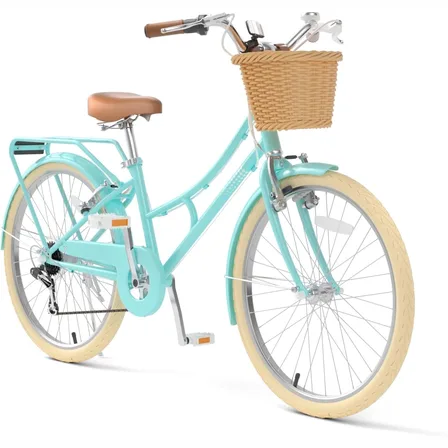
XJD Kids Beach Cruiser Bicycle, Rear Rack & V-Brakes, Mint Green
The XJD Beach Cruiser in Mint Green is a geared, multi-speed cruiser bike for ol…$179.99
$209.99 -

XJD Pink Beach Cruiser for Girls – Rear Rack & V-Brake
The XJD Pink Beach Cruiser for girls is the step-up bike for riders who've outgr…$179.99
$209.99 -
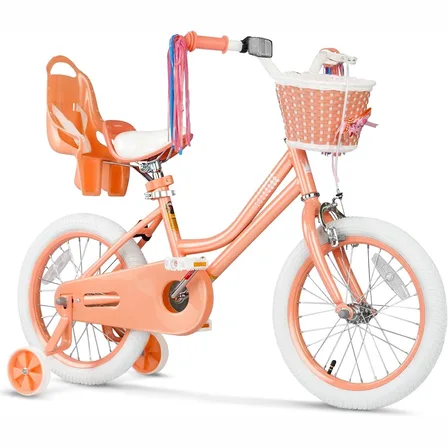
Girls 12/14/16 Inch Kids Bike by XJD with Training Wheels – Peach
The XJD Girls Bike in Peach is a training-wheel bike built for girls roughly 3 t…$149
$169