

What height is a 14 inch bike for
A 14-inch bike is a starting fit for a child 37–45 inches (94–114 cm) tall, usually age 3–6. Measure the child and confirm the fit in person before choosing.
Use height first, not age
The 3–6 age range is only a starting point. Children of the same age can differ significantly in leg length, arm reach, coordination and confidence. A younger child may fit comfortably, while an older child may still need the same wheel size.
Do not choose a larger bicycle simply to leave growing room. An oversized bike can make mounting, stopping and steering harder. The child’s measured height, inseam, reach, brake control and current riding confidence should decide the fit.
What to measure at home
- Standing height: Have the child stand without shoes against a wall, looking straight ahead. Mark the top of the head and measure from the floor. Compare the result with the 37–45 inch (94–114 cm) starting range.
- Inseam: With feet slightly apart, measure from the floor to the crotch. Use this measurement when checking whether the child can stand over the actual frame comfortably.
- Reach: On the bicycle, check that the child can hold the handlebars without stretching, locking the elbows or leaning excessively forward.
Wheel size alone does not define frame shape or riding position. Two 14-inch bicycles can therefore feel different even though their wheel labels match.
Compare the nearby wheel sizes
| Wheel size | Rider height starting point | Typical age |
|---|---|---|
| 12 Inch | 34–40 in / 86–102 cm | 3–4 |
| 14 Inch | 37–45 in / 94–114 cm | 3–6 |
| 16 Inch | 40–48 in / 102–122 cm | 4–7 |
The ranges overlap because height does not capture every part of fit. A child near 40 inches, for example, falls within the starting ranges for all three sizes. That does not make the sizes interchangeable. Try the exact bicycle and choose the one the child can control now.
Check the 14-inch bike in person
Ask the child to straddle the frame and confirm that the stand-over position is comfortable. Then have the child sit in a normal riding position. Check that mounting and getting off look controlled rather than awkward.
The child should be able to steer without overreaching and operate the bicycle’s brakes confidently. Confirm that the brake controls are within comfortable reach and that the child can use them without losing a secure grip. If the child cannot stop, turn or dismount reliably, the bike is not a suitable current fit even when height falls inside the range.
Confidence matters, but it should not be used to excuse poor physical fit. A hesitant new rider benefits from a bicycle that is manageable now; a confident rider still needs appropriate stand-over clearance, reach and brake control.
How the supplied 14-inch options are relevant
Both supplied catalog options include a 14 Inch SKU label, so they are directly relevant to this wheel-size question. They also offer nearby 12 Inch and 16 Inch labels, which can help when a child’s measurements fall in an overlapping range, although each exact bicycle still requires an individual fit check.
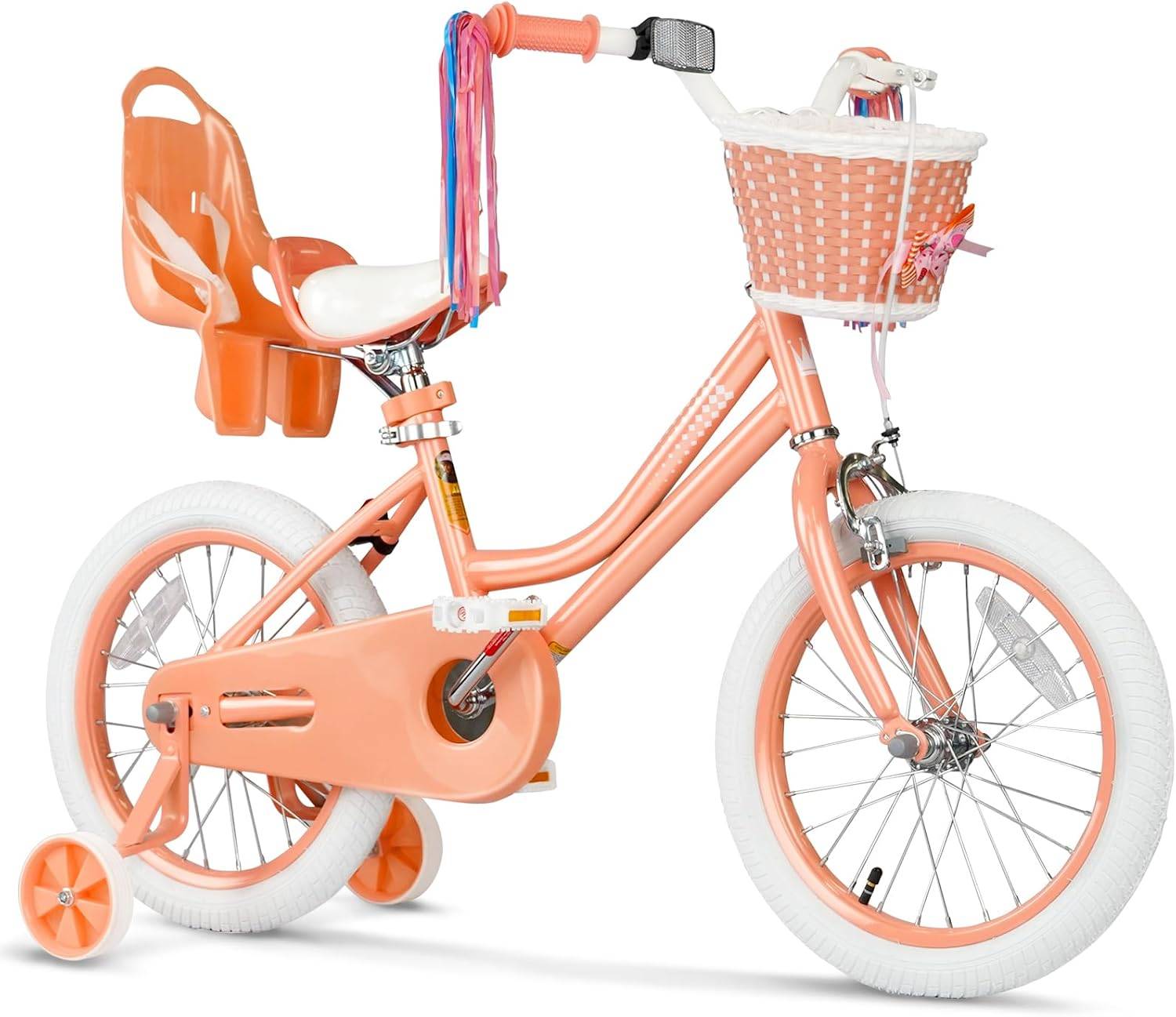 Girls 12/14/16 Inch Kids Bike by XJD with Training Wheels – Peach
Available in a 14 Inch option, with 12 Inch and 16 Inch labels for nearby comparison. Its title identifies training wheels; confirm the child’s present fit and control on the exact bike.
 XJD Light Purple Girls Bike with Basket, Training Wheels, 12/14/16/20 Inch
A Training Wheel Bikes option with supplied 12 Inch, 14 Inch and 16 Inch SKU labels. The 14 Inch version is relevant for a measured fit check within the stated height starting range.
Girls 12/14/16 Inch Kids Bike by XJD with Training Wheels – Peach is listed in the Training Wheel Bikes category and has 12 Inch, 14 Inch and 16 Inch options. Select the 14 Inch option only if the child’s measurements and in-person control checks support it.
XJD Light Purple Girls Bike with Basket, Training Wheels, 12/14/16/20 Inch is also listed in the Training Wheel Bikes category. The supplied available SKU labels are 12 Inch, 14 Inch and 16 Inch. Its title includes 20 Inch, but a 20 Inch SKU is not included in the supplied availability facts, so verify the exact selectable option before relying on that title wording.
Training wheels are a supplied feature in both product titles, but they do not correct a bicycle that is too large or too small. For assembly, adjustment, compatibility, maintenance, load limits or torque details, follow the exact product manual or consult a qualified bicycle mechanic.
Make the final decision
Start with 14 inches when the child measures 37–45 inches (94–114 cm), then let the actual fit decide. Have the child try the exact bicycle and reject it if stand-over, handlebar reach, braking, turning or getting off is not comfortably controlled.
Finish the setup with a properly fitting bicycle helmet. It should sit level and its straps should be used according to the helmet manufacturer’s instructions. The practical next step is simple: record height and inseam, try the 14-inch model, and buy only for the child’s present control—not anticipated growth.
Bikes for your next adventure
-

XJD Girls Bike for Kids Ages 3-8, 12/14/16 Inch with Training Wheels – Purple
The XJD Girls Bike in Purple is a training-wheel bicycle for kids ages 3 to 8, f…$149
$169 -
Girls 12/14/16 Inch Kids Bike by XJD with Training Wheels – Peach
The XJD Girls Bike in Peach is a training-wheel bike built for girls roughly 3 t…$149
$169 -
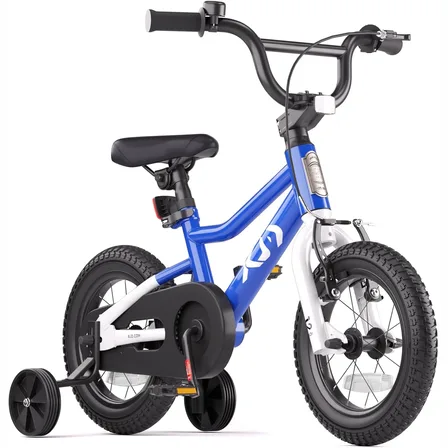
XJD Boys & Girls BMX Bike with Training Wheels, 12/14/16" – Blue
The XJD Boys & Girls BMX Bike in Blue is a first pedal bike for kids roughly age…$99.99
$119.99