

What height is a 19 inch bike for
A 19-inch kids’ bike does not have a verified height range in the XBikes chart. Measure the child and arrange an individual fit check before buying.
Start by confirming what “19 inch” means
On a children’s bicycle, the advertised inch size usually refers to wheel size, but you should verify that in the bicycle’s listing or manual. If 19 inches describes the frame instead, the wheel-size guidance below does not apply. Use the manufacturer’s fit instructions and have the child try the exact bicycle.
XBikes provides starting ranges for 18-inch and 20-inch wheels, but no 19-inch standard. An 18-inch bike starts at ages 5–9 and rider heights of 43–52 inches (109–132 cm). A 20-inch bike starts at ages 7–12 and heights of 48–60 inches (122–152 cm).
These neighboring ranges do not create a reliable 19-inch range. Do not average their numbers or assume that every bike marked 19 inches will fit between them; bicycle geometry and the child’s proportions can differ.
Measure the rider before comparing sizes
- Measure standing height: Have the child stand without shoes, upright against a wall, and record the floor-to-top-of-head measurement.
- Measure inseam: Measure from the floor to the crotch while the child stands naturally. This helps assess clearance over the bicycle.
- Compare the measured height: Use the XBikes ranges only as starting points, not as a final selection.
- Try the exact bike: Clothing, footwear, posture and individual proportions can change how manageable a bicycle feels.
Age is secondary. Two children of the same age can have different heights, inseams, arm lengths and confidence levels, so an age label cannot confirm fit.
Check the fit on the actual 19-inch bike
Have the child stand over the bicycle and confirm that there is comfortable clearance rather than forced contact with the frame. The child should be able to get on and off without struggling or tilting the bicycle excessively.
Next, watch the child sit in a normal riding position. They should reach the handlebar without an extreme stretch, steer while remaining balanced, and operate the brakes comfortably with their hands. Check that starting, stopping and putting a foot down feel controlled at the child’s current confidence level.
Do not choose an oversized bicycle merely to allow room for growth. If the child cannot control it now, move to a more manageable size or model. Follow the exact product manual for setup and adjustment; if fit or assembly remains uncertain, use a qualified bicycle mechanic.
How the supplied bikes relate to this question
The supplied catalog options do not include a 19-inch wheel size. They are 12-, 14- and 16-inch training-wheel bikes, so they are nearest-size catalog comparison points rather than substitutes for the requested size. They may be relevant only when the rider’s measurements and trial indicate that a smaller bicycle is appropriate.
Blue XJD Girls Bike with Training Wheels – 12/14/16 Inch, XJD Boys 12/14/16" Training Wheel Bike – Blue, and Black XJD Kids Bike for Boys – 12, 14 & 16 Inch Sizes each offer catalog labels of 12 Inch, 14 Inch and 16 Inch. Showing these options helps distinguish the available smaller sizes from the unavailable 19-inch size and lets a parent compare the child’s height with the applicable XBikes starting points.
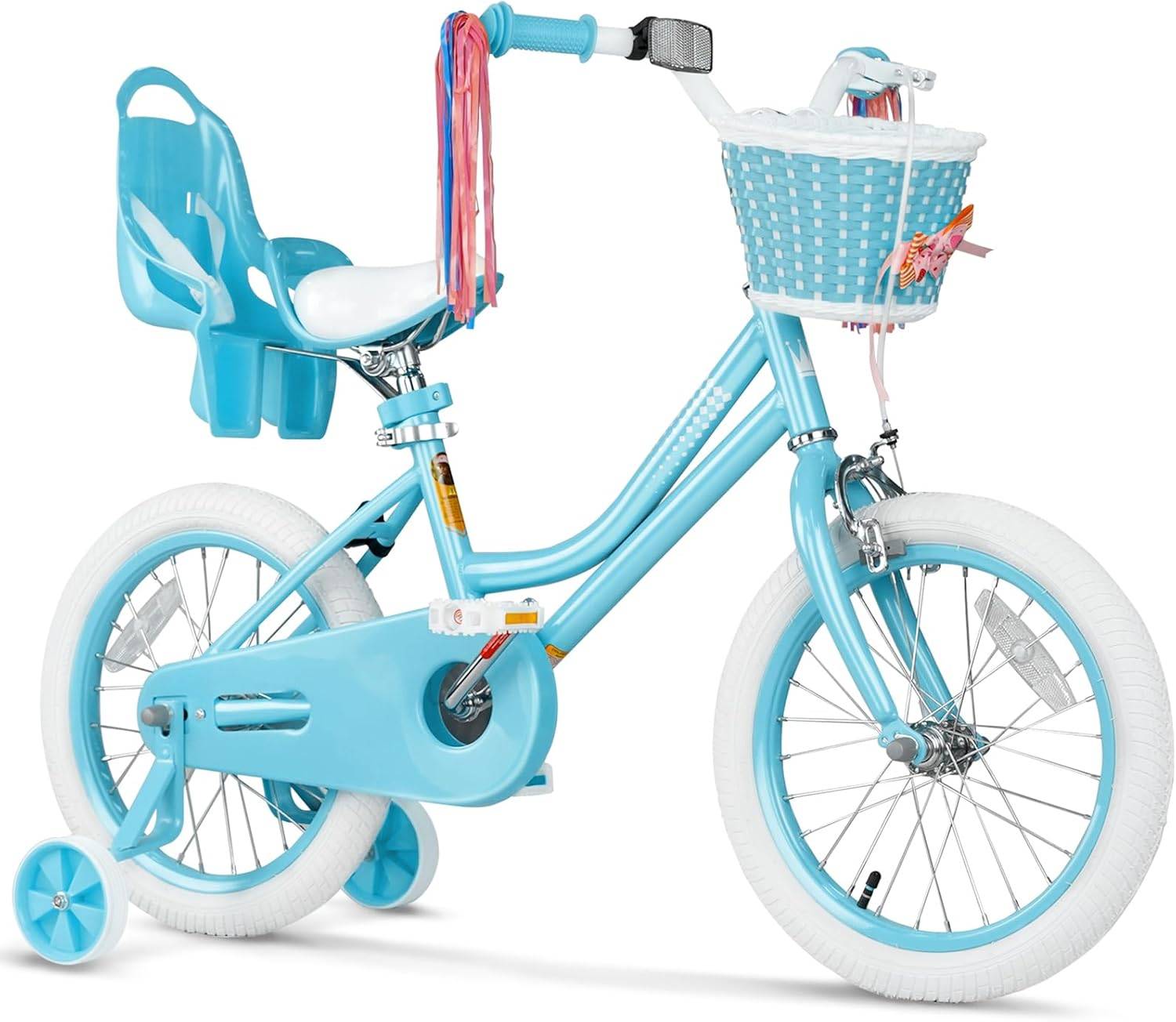 Blue XJD Girls Bike with Training Wheels – 12/14/16 Inch
Available in 12 Inch, 14 Inch and 16 Inch labels, this training-wheel bike is a smaller-size comparison point only; it is not a substitute for a 19-inch bicycle.
 XJD Boys 12/14/16" Training Wheel Bike – Blue
This blue training-wheel bike has 12 Inch, 14 Inch and 16 Inch catalog options. Use it only when the child’s measurements and individual fit check support one of those smaller sizes.
 Black XJD Kids Bike for Boys – 12, 14 & 16 Inch Sizes
Offered in 12, 14 and 16 Inch sizes, this training-wheel bike helps compare smaller catalog choices. None of its supplied size labels represents the requested 19-inch wheel size.
When a smaller supplied size may be relevant
| Wheel size | XBikes starting age | XBikes starting rider height |
|---|---|---|
| 12 Inch | 3–4 | 34–40 in / 86–102 cm |
| 14 Inch | 3–6 | 37–45 in / 94–114 cm |
| 16 Inch | 4–7 | 40–48 in / 102–122 cm |
| 18 Inch | 5–9 | 43–52 in / 109–132 cm |
| 20 Inch | 7–12 | 48–60 in / 122–152 cm |
A supplied 12-, 14- or 16-inch option deserves consideration only if the child’s measured height falls within its starting range and the individual fit check confirms stand-over clearance, comfortable reach, effective brake control and manageable handling. Training wheels in the product category do not make an incorrect size fit correctly.
If the child measures above the listed 16-inch range, that does not automatically prove a 19-inch bicycle fits. Compare the exact 19-inch model directly and check every control point. Likewise, a child within an overlapping height range may handle one size more confidently than another.
Make the 19-inch decision
First confirm that 19 inches is the wheel size. Then record the child’s height and inseam, compare the neighboring 18- and 20-inch starting ranges without inventing a midpoint, and have the child try the exact bicycle. Buy it only if stand-over, reach, steering, braking, starting and stopping are controlled now.
Finish the setup with a properly fitting bicycle helmet. It should sit level and its straps should be used according to the helmet manufacturer’s instructions. If the 19-inch bike cannot pass the fit check, choose a size the child can control today rather than sizing up for future growth.
Bikes for your next adventure
-
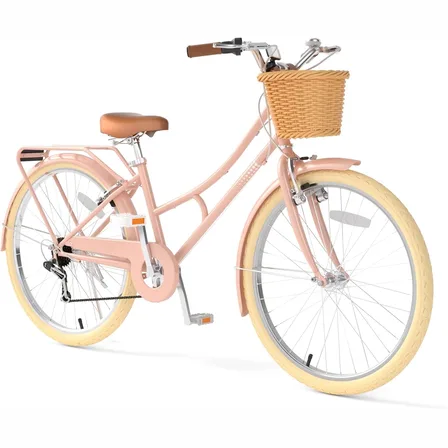
Pink XJD Beach Cruiser Bike, 24"/26", U-Brake
The XJD Pink Beach Cruiser Bike is a single-speed cruiser built for older kids a…$159.99
-

Light Pink XJD Girls' Bicycle with Basket & Training Wheels
The Light Pink XJD Girls' Bicycle with Basket & Training Wheels is a retro-style…$109.99
$129.99 -

XJD Boys 12/14/16" Training Wheel Bike – Blue
The XJD Boys Bike in Blue is a training wheel bike for riders 71–122 cm tall—rou…$169
$199