

What height is a 20 inch bike for
A 20-inch bike is a starting point for a child about 48–60 inches (122–152 cm) tall, usually ages 7–12, but only an individual fit check can confirm it.
Start with measured height, not age
Have the child stand barefoot against a wall, looking straight ahead, with heels on the floor. Measure from the floor to the top of the head. Compare that result with the XBikes 20-inch starting range of 48–60 inches (122–152 cm).
Age is only a secondary clue. Children of the same age can differ greatly in leg length, arm reach and confidence. A rider outside the height range will usually need another wheel size considered, while a rider inside it still needs to try the bicycle.
Measure inseam and check stand-over clearance
For inseam, place a firm, thin book between the child's legs and raise it gently to simulate the bicycle saddle. Measure vertically from the floor to the top edge of the book. Keep this measurement available when checking the bicycle manufacturer's fit information.
On the actual bike, ask the child to straddle the top tube with both feet flat on the ground. There should be comfortable clearance rather than contact with the frame. Because frame shapes differ, wheel diameter alone cannot establish the required clearance, and no universal clearance number should replace an in-person check.
If the child cannot stand comfortably over the frame, do not choose that bicycle merely because it has 20-inch wheels. Do not buy an oversized bike for future growth; difficulty mounting, stopping or controlling it means it does not fit now.
Test reach, brakes and control
With the saddle adjusted according to the exact product manual, have the child sit naturally and hold the handlebars. Look for relaxed arms and an upright, controlled position. The child should not need to stretch, twist or slide forward to steer.
- Can the rider mount and dismount without help or alarm?
- Can both hands reach and operate the brake controls comfortably, if fitted?
- Can the rider turn the handlebars without knees, arms or body becoming awkward?
- Can the rider start, ride slowly, turn and stop under control?
- Does the bicycle feel manageable at the child's current confidence level?
A failed check is a reason to compare another frame or wheel size, even when height and age appear to match. Follow the exact bicycle manual for assembly, adjustment, maintenance, load limits, compatibility and torque. If anything is unclear, use a qualified bicycle mechanic.
Compare the neighboring wheel sizes
| Wheel size | XBikes rider-height starting point | Age starting point |
|---|---|---|
| 16 Inch | 40–48 in / 102–122 cm | 4–7 |
| 20 Inch | 48–60 in / 122–152 cm | 7–12 |
| 24 Inch | 54–64 in / 137–163 cm | 10–14 |
The overlapping starting points are intentional prompts to check the individual bicycle. For example, a child within both the 20-inch and 24-inch ranges should not automatically move up. Compare stand-over clearance, reach, braking ability and control on each candidate, then choose the size the child can handle confidently today.
How the supplied catalog option helps
The XJD Girls' Bike with Training Wheels, 12/14/16/20 Inch – Purple is relevant because its supplied size labels include 12 Inch, 14 Inch, 16 Inch and the requested 20 Inch. That makes its 20 Inch option directly relevant to this height question, while the smaller labels provide comparison choices if the child's measurements and fit check point below 20 inches. The title and available labels do not prove that any size fits a particular child.

Training wheels do not correct a frame that is too large, a reach that is too long or brake controls the child cannot operate. Consider this product only after selecting its exact size label and confirming the child's individual fit. Use its exact manual for training-wheel setup and all other assembly or adjustment details.
Make the 20-inch decision
- Measure the child's standing height and inseam.
- Use 48–60 inches (122–152 cm) as the 20-inch height starting point, with ages 7–12 treated only as a guide.
- Have the child try the exact bicycle and check stand-over clearance, reach, brake operation and basic control.
- Reject an oversized or unmanageable bike, even if it offers room to grow.
Before riding, add a properly fitting bicycle helmet. It should sit level and its straps should be used according to the helmet manufacturer's instructions. Choose a 20-inch bike only when the child's measurements fall in the starting range and the real-bike checks confirm comfortable control now.
Bikes for your next adventure
-
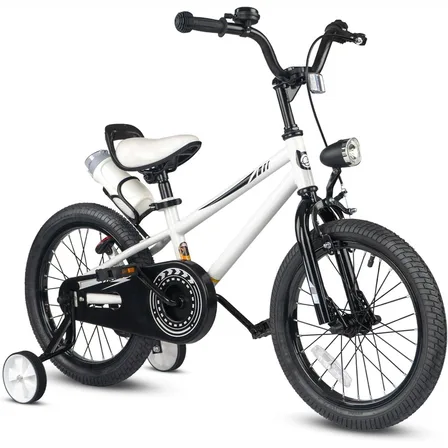
XJD Kids' Training Wheel Bike for Boys & Girls, 12/14/16 Inch – White
The XJD kids' training wheel bike in White is made for riders ages 3–8 (roughly …$169
$199 -
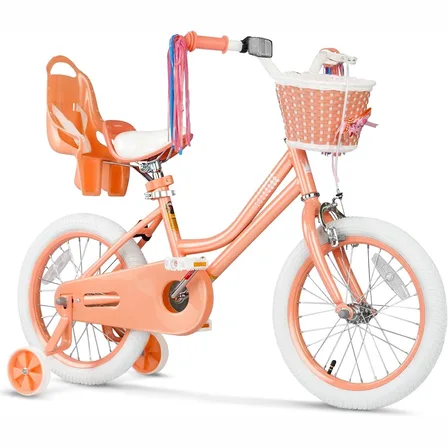
Girls 12/14/16 Inch Kids Bike by XJD with Training Wheels – Peach
The XJD Girls Bike in Peach is a training-wheel bike built for girls roughly 3 t…$149
$169 -
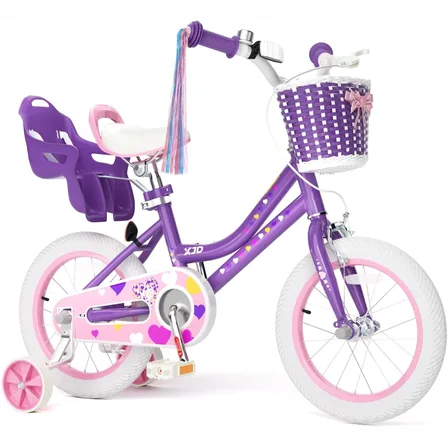
XJD Light Purple Girls Bike with Basket, Training Wheels, 12/14/16/20 Inch
The XJD Girls Bike with Basket in Light Purple is a single-speed training-wheel …$99.99
$119.99