

What heighth bike for my son age 11
For an 11-year-old son, start by comparing 20-inch and 24-inch bikes: use his measured height, then confirm stand-over room, reach and brake control.
Choose the starting wheel size from his height
Age alone does not determine the right size. At age 11, your son falls within two XBikes starting ranges, so measure him before choosing:
| Wheel size | XBikes age starting point | Rider height starting point |
|---|---|---|
| 20 Inch | Ages 7–12 | 48–60 in / 122–152 cm |
| 24 Inch | Ages 10–14 | 54–64 in / 137–163 cm |
| 26 Inch | Youth and adults | Over 60 in / 153 cm |
If he is under 54 inches / 137 cm, begin with a 20-inch bike. From 54 to 60 inches / 137 to 152 cm, both 20-inch and 24-inch ranges overlap, so compare both in person. From 60 to 64 inches / 153 to 163 cm, start with a 24-inch bike, while recognizing that the 26-inch starting point also begins above 60 inches / 153 cm. The individual fit check decides whenever ranges overlap.
Measure height and inseam
Measure his height without shoes, standing straight against a wall on a level floor. Record the result in inches or centimetres and compare it with the table.
Next, measure his inseam. Have him stand without shoes, feet slightly apart, and place a rigid book upright between his legs to represent a saddle. Measure from the floor to the top edge of the book. Do not convert that measurement into a bike size using an unsupported formula; use it to check whether he can stand over the actual bicycle comfortably.
Check the actual bicycle before buying
Have your son try the bicycle rather than selecting solely from the wheel label. While standing over it, he should have comfortable clearance and should not be forced onto his toes or against the frame. Seated, he should be able to hold the handlebar without an awkward stretch or cramped posture.
Ask him to demonstrate these controls while stationary and supervised:
- Mount and dismount without struggling or catching on the frame.
- Turn the handlebar both ways while remaining balanced and in control.
- Reach and operate each brake control confidently with his normal hand position.
- Place his feet as required for a controlled start and stop.
A bike that technically matches his height can still be unsuitable if the frame shape, reach or controls do not fit him. Current confidence matters too: a less-confident rider may handle a smaller option more easily within an overlapping height range.
Do not size up only for growth
An oversized bicycle can make starting, stopping, steering and braking harder. If he cannot stand over it comfortably, reach the handlebar naturally or operate the brakes reliably, choose the smaller fitting option rather than expecting him to grow into the larger one.
Conversely, do not keep him on a smaller bike if his posture is cramped or control is restricted. Compare real fit on the day of purchase, not just future growth or the age printed in a chart.
When the supplied cruiser options are relevant
The catalog options below are relevant only if the fit check points toward a 24-inch or 26-inch beach cruiser. They help compare the available wheel-size labels and colours, but they do not replace measuring your son and testing his reach, stand-over position and brake control.
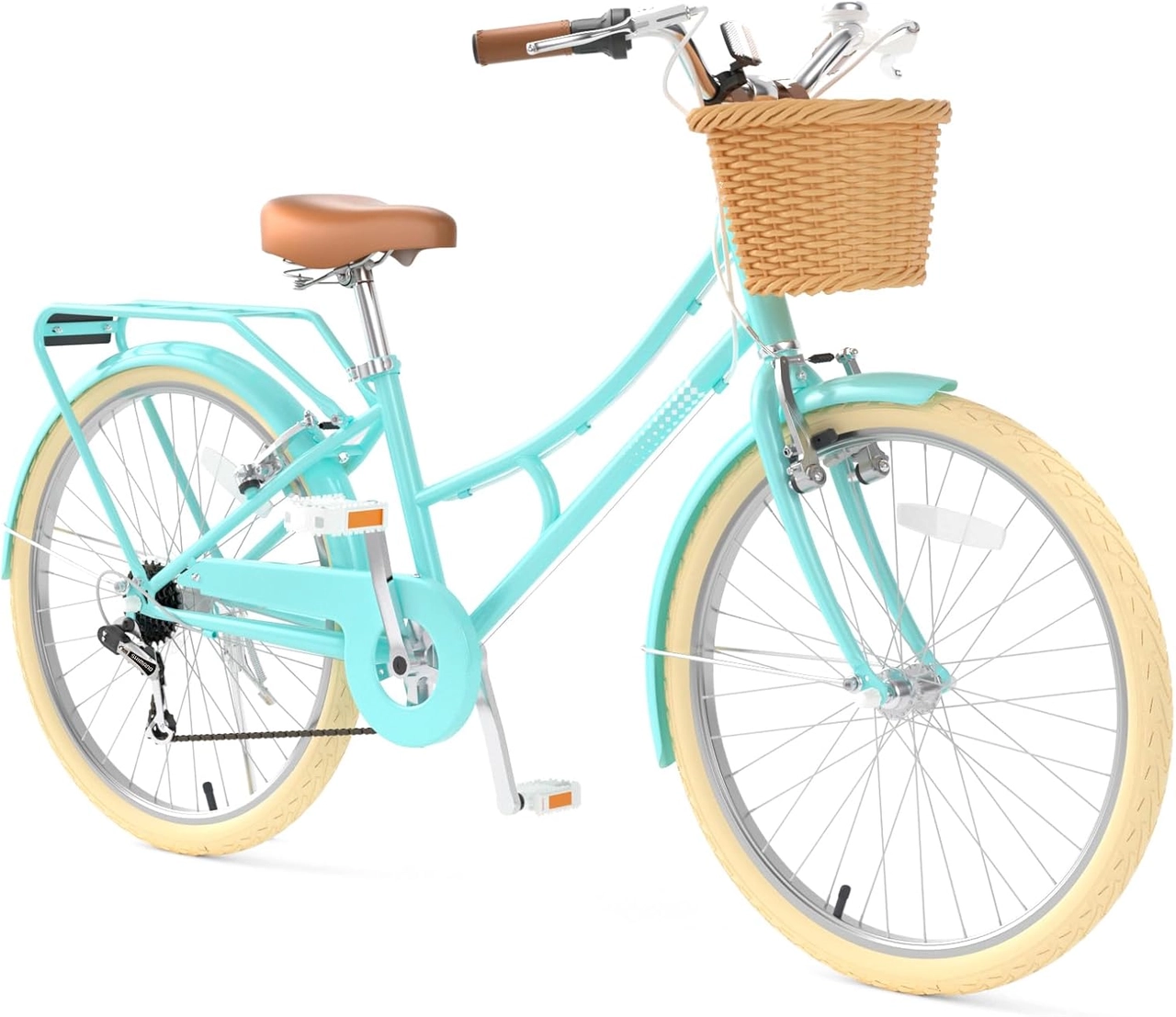 XJD 24-Inch Green Beach Cruiser Bike with U-Brake
A 24-inch candidate when the rider’s measured height and individual fit support that size. Catalog choices include Green / 24 Inch, Pink / 24 Inch and Pink / 26 Inch; the 26-inch option needs its own fit check.
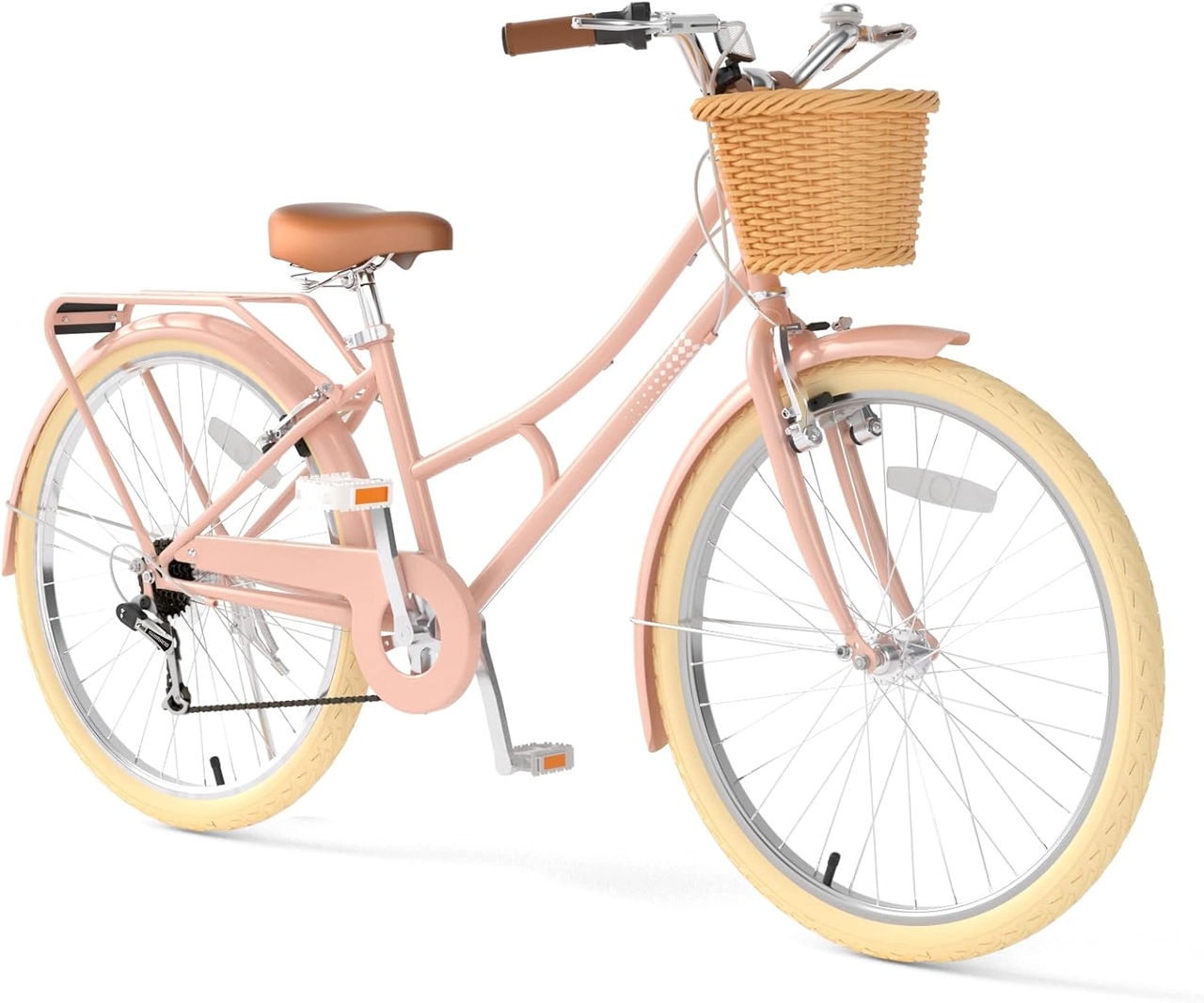 Pink XJD Beach Cruiser Bike, 24"/26", U-Brake
Offers 24 Inch and 26 Inch catalog labels. Compare the 24-inch version within the supplied height range; consider 26 inches only for a rider over 60 inches / 153 cm who passes the full control check.
XJD 24-Inch Green Beach Cruiser Bike with U-Brake has catalog options labelled Green / 24 Inch, Pink / 24 Inch and Pink / 26 Inch. Its 24-inch versions are reasonable candidates when his measured height and trial fit support 24 inches. The Pink / 26 Inch option is relevant only above the 26-inch height starting point and after a successful fit check.
Pink XJD Beach Cruiser Bike, 24"/26", U-Brake is offered with 24 Inch and 26 Inch labels. Compare the 24-inch option for a rider in the 24-inch height range; consider the 26-inch label only when he is over 60 inches / 153 cm and can control that exact bicycle comfortably.
Both supplied titles identify U-Brake models. That label does not prove that the controls fit his hands, so he still needs to demonstrate comfortable brake reach and operation. For assembly, adjustment, compatibility, maintenance, load limits or torque requirements, follow the exact product manual or use a qualified bicycle mechanic.
Make the final decision
- Measure his standing height and inseam without shoes.
- Use height to shortlist 20-inch, 24-inch or, above 60 inches / 153 cm, possibly 26-inch bikes.
- Have him try each shortlisted bicycle and compare stand-over room, reach, brake operation and confidence.
- Reject any option he cannot mount, steer, stop and control comfortably, even if its age range appears suitable.
Finish by fitting a bicycle helmet that sits level and uses its straps according to the helmet manufacturer’s instructions. For your 11-year-old, choose the smallest wheel-size candidate that gives a comfortable, controlled fit today—not a larger bike intended only for future growth.
Bikes for your next adventure
-

Black XJD Kids Bike for Boys – 12, 14 & 16 Inch Sizes
For a son between roughly 3 and 8 years old, the XJD Kids Bike in Black covers t…$169
$199 -
XJD Boys & Girls BMX Bike with Training Wheels, 12/14/16" – Blue
The XJD Boys & Girls BMX Bike in Blue is a first pedal bike for kids roughly age…$99.99
$119.99 -

Kids Bike Helmet by XJD for Boys & Girls – Black, Blue, Green, Pink, Purple
The XJD Kids Bike Helmet covers a wide 2-to-8-year age range thanks to two head-…$59.99