

What does toddler bike mean
A toddler bike means a small bicycle intended for a very young child, but the label does not define a standard size. Measure the rider and check the actual fit before choosing.
What the term tells you—and what it does not
“Toddler bike” is a shopping description, not a precise bicycle category or fit specification. It may describe a pedal bike with training wheels, but the words alone do not tell you which wheel size the child can comfortably control.
Age is only a starting clue. Children of the same age can differ in height, leg length, reach and confidence. Do not choose an oversized bicycle for future growth: the child needs to control it now.
Measure the child before comparing bikes
Start with the child’s current height. Then measure inseam from the floor to the crotch while the child stands upright, because total height does not show leg length by itself. Record both measurements rather than relying on clothing size or an old growth estimate.
Next, have the child try the complete bicycle whenever possible. Check that the child can stand over it with comfortable clearance, reach the handlebar without stretching, steer without the knees or arms becoming awkward, and operate the brakes with control. Exact setup and brake adjustment should follow the product manual or be handled by a qualified bicycle mechanic.
Use wheel size as a starting point
The XBikes figures below help narrow the search. They are not a substitute for checking inseam, stand-over room, reach, brake control and the rider’s present confidence.
| Wheel size | Starting age | Rider height |
|---|---|---|
| 12 Inch | 3–4 | 34–40 in / 86–102 cm |
| 14 Inch | 3–6 | 37–45 in / 94–114 cm |
| 16 Inch | 4–7 | 40–48 in / 102–122 cm |
| 18 Inch | 5–9 | 43–52 in / 109–132 cm |
| 20 Inch | 7–12 | 48–60 in / 122–152 cm |
| 24 Inch | 10–14 | 54–64 in / 137–163 cm |
| 26 Inch | Youth and adults | Over 60 in / 153 cm |
For a child described as a toddler, the measured height may point toward the smallest rows, but do not assume that it must. Overlapping ranges are intentional starting points. Where two sizes appear possible, compare both on the child and favor confident control rather than extra growing room.
When training wheels are relevant
Training wheels may be relevant when a parent wants a pedal bicycle with added side support while the child develops familiarity and confidence. They do not correct a frame that is too large, a handlebar that is out of reach or brakes the child cannot operate.
The catalog option below helps answer this question because it is specifically categorized as a training-wheel bike and provides three wheel-size labels that can be compared with the rider’s measured height.
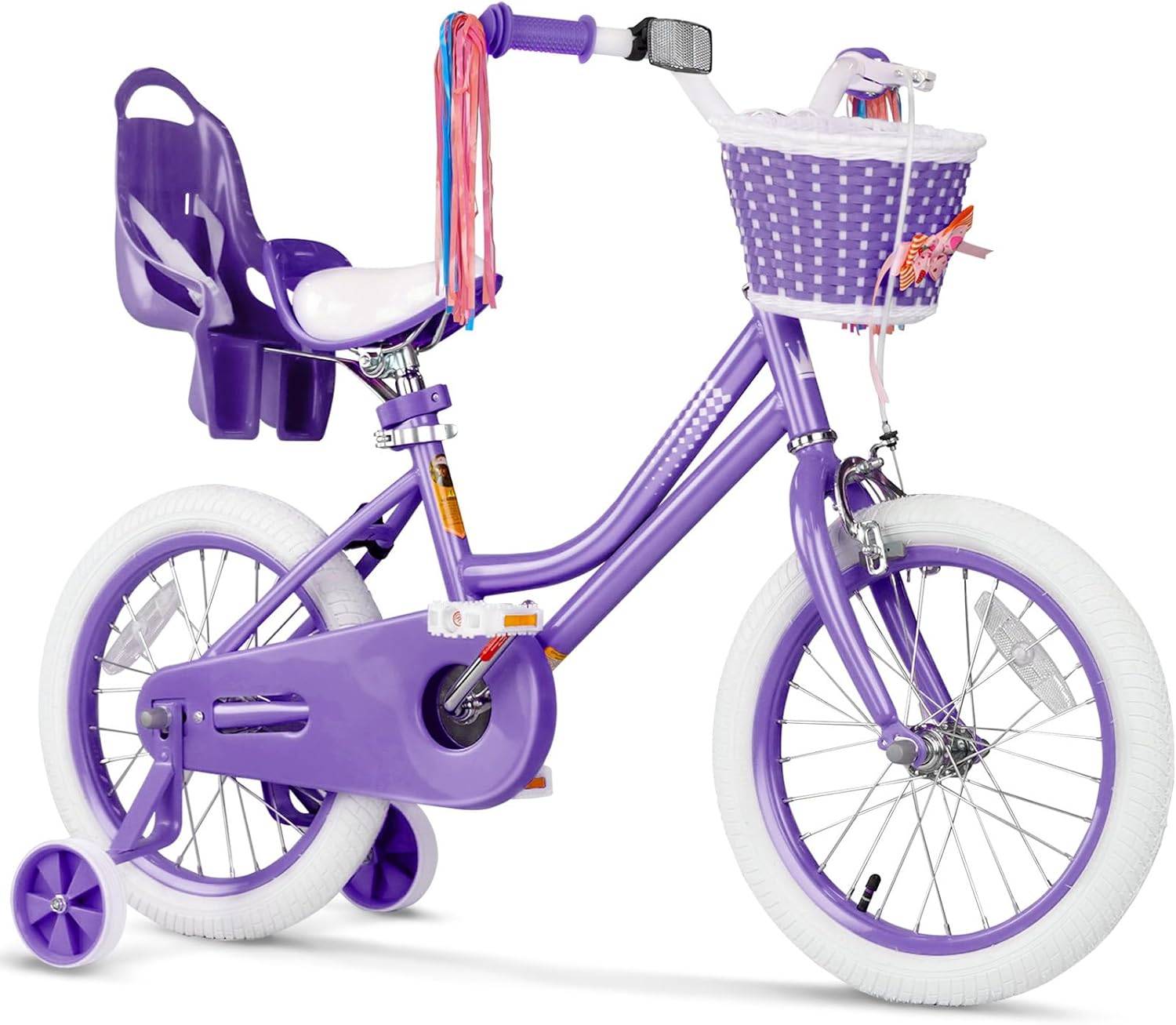
XJD Girls Bike for Kids Ages 3-8, 12/14/16 Inch with Training Wheels – Purple is listed under Training Wheel Bikes and is available with 12 Inch, 14 Inch and 16 Inch SKU labels. The “Ages 3-8” wording is part of its exact catalog title, not individual fit evidence. Compare the appropriate labeled size with the XBikes height starting points, then confirm the child’s actual stand-over clearance, reach, braking control and confidence.
This product is relevant if you want a purple training-wheel bicycle and the child fits one of those three offered wheel sizes. It is not the relevant catalog choice when measurements point to 18 Inch or larger, or when you are specifically seeking a different type of first bike. No supplied facts establish its materials, weight, brake type, load limit or assembly details; consult the exact product manual or a qualified bicycle mechanic for those points.
Complete the fit and helmet checks
- Measure height and inseam immediately before shopping.
- Use the height table to select one or two candidate wheel sizes.
- Place the child on each candidate and check stand-over room, natural reach and easy steering.
- Confirm that the child can operate the brakes reliably without straining.
- Choose for current ability and confidence, not hoped-for growth.
A bicycle helmet must fit properly, sit level and have its straps adjusted according to the helmet manufacturer’s instructions. A helmet cannot make an incorrectly sized bicycle manageable, so complete both checks separately.
Decide what “toddler bike” means for your child
Treat the phrase as an invitation to measure, not as a size recommendation. If the child’s height points to 12, 14 or 16 Inch and the individual fit check succeeds, the supplied training-wheel model is relevant for comparison. If control, reach or stand-over fit is poor, reject that size—even when an age label appears to match—and try the size that the child can confidently handle now.
Bikes for your next adventure
-

XJD 24-Inch Green Beach Cruiser Bike with U-Brake
This XJD 24-inch beach cruiser in green is made for riders about 4'8" to 5'4" ta…$159.99
$199.99 -

Kids Bike Helmet by XJD for Girls – Pink
The XJD Kids Bike Helmet in Pink is a lightweight multi-sport helmet for girls r…$59.99
$99 -
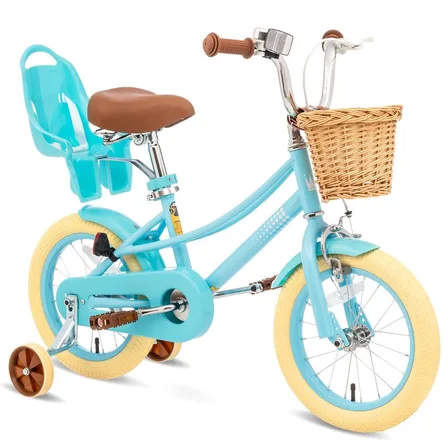
Girls' Training Wheel Bike by XJD, 12–20 Inch Wheels – Blue
This XJD girls' training wheel bike in Blue covers one of the widest fit ranges …$139
$159