

What inch bike does a 7 year old need
Most 7-year-olds start with a 20-inch bike, but height and fit decide: 16-inch may suit riders 40–48 in, 18-inch 43–52 in, and 20-inch 48–60 in.
Choose by measured height, not the birthday
Measure your child without shoes, standing straight against a wall. Compare that height with the XBikes starting points below. Where ranges overlap, the larger wheel is not automatically the right choice; the child still needs to try the bike and demonstrate comfortable control.
| Wheel size | XBikes age starting point | Rider height |
|---|---|---|
| 16 Inch | Ages 4–7 | 40–48 in / 102–122 cm |
| 18 Inch | Ages 5–9 | 43–52 in / 109–132 cm |
| 20 Inch | Ages 7–12 | 48–60 in / 122–152 cm |
A 7-year-old under 48 inches tall might fall within the 16-inch or 18-inch ranges. At 48 inches or taller, 20-inch becomes the relevant starting point. These ranges narrow the search; they do not confirm that a particular frame fits.
Measure inseam and check stand-over clearance
Measure inseam from the floor to the crotch while the child stands naturally. Take that measurement to the shop or compare it with the exact bicycle manufacturer's fit information. Wheel diameter alone does not reveal frame height, so two bikes with the same wheel size can fit differently.
Have the child straddle the bicycle with both feet flat on the ground. There should be usable clearance rather than pressure against the frame. If the child cannot stand securely, the bicycle is too large even when an age label or height chart appears to match.
Confirm reach, braking and confidence
Seat the child in a normal riding position and check that the handlebar can be reached without a strained stretch, locked elbows or loss of balance. The child should steer through turns while looking ahead and keeping control.
Confirm that the child can reach and operate the bicycle's brakes reliably. Brake configuration varies, so follow the exact product manual when identifying and adjusting the controls, or use a qualified bicycle mechanic. Do not buy an oversized bicycle merely to allow room for growth; difficult starts, stops and steering are signs to size down or try another frame.
- Proceed: the child can mount, start, steer, stop and dismount confidently.
- Try another fit: the child stretches for the bar, cannot control the brakes, or appears anxious because the bike feels large.
- Recheck after adjustment: any permitted seat or handlebar adjustment must follow the product manual.
How the supplied 16-inch options help
The three supplied catalog bicycles offer 12-, 14- and 16-inch SKU labels. For a 7-year-old measuring 40–48 in / 102–122 cm, their 16-inch versions are relevant candidates for an individual fit check. They do not include an 18-inch or 20-inch option, so they are nearest-size comparison points—not substitutes—when the child's measurement and control indicate either of those sizes.
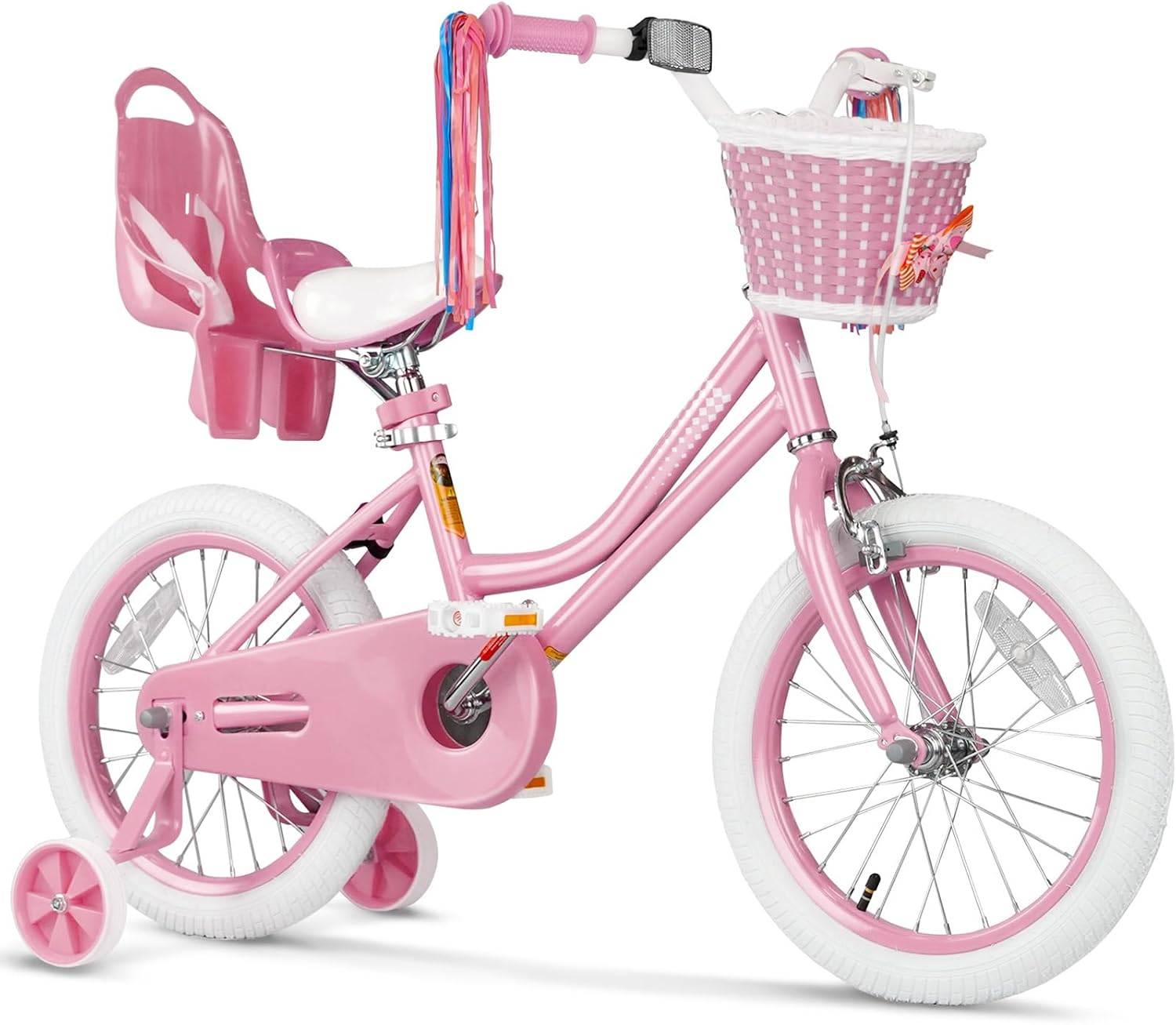 XJD Pink Girls' Bike – Kids 12/14/16 Inch Training Wheel Bicycle
Available in 12-, 14- and 16-inch labels. Its 16-inch version is relevant only for a 7-year-old whose measured height and individual fit support that size.
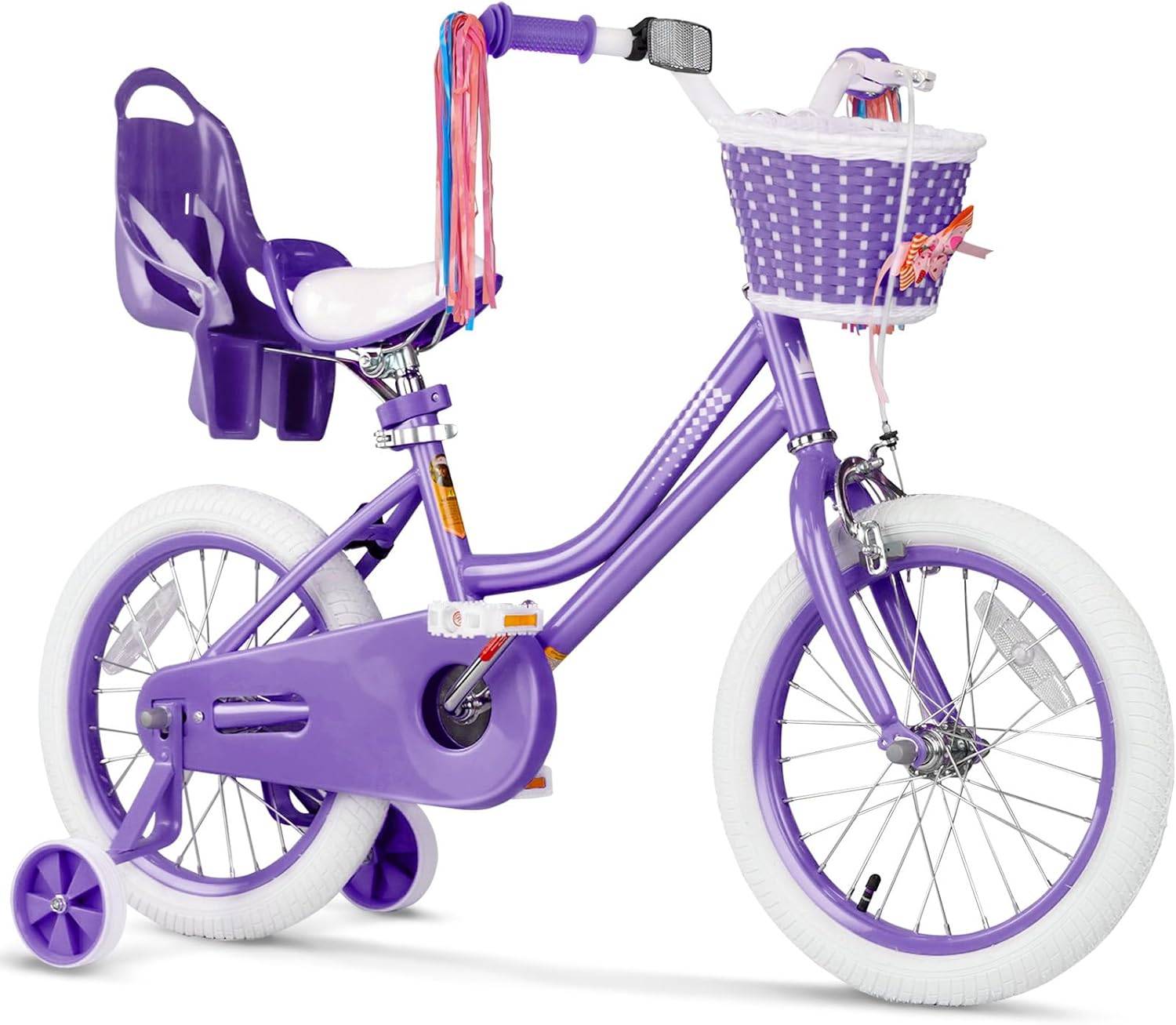 XJD Girls Bike for Kids Ages 3-8, 12/14/16 Inch with Training Wheels – Purple
This Training Wheel Bike has 12-, 14- and 16-inch labels. Treat the age wording in its title as a catalog label; verify height, reach and control separately.
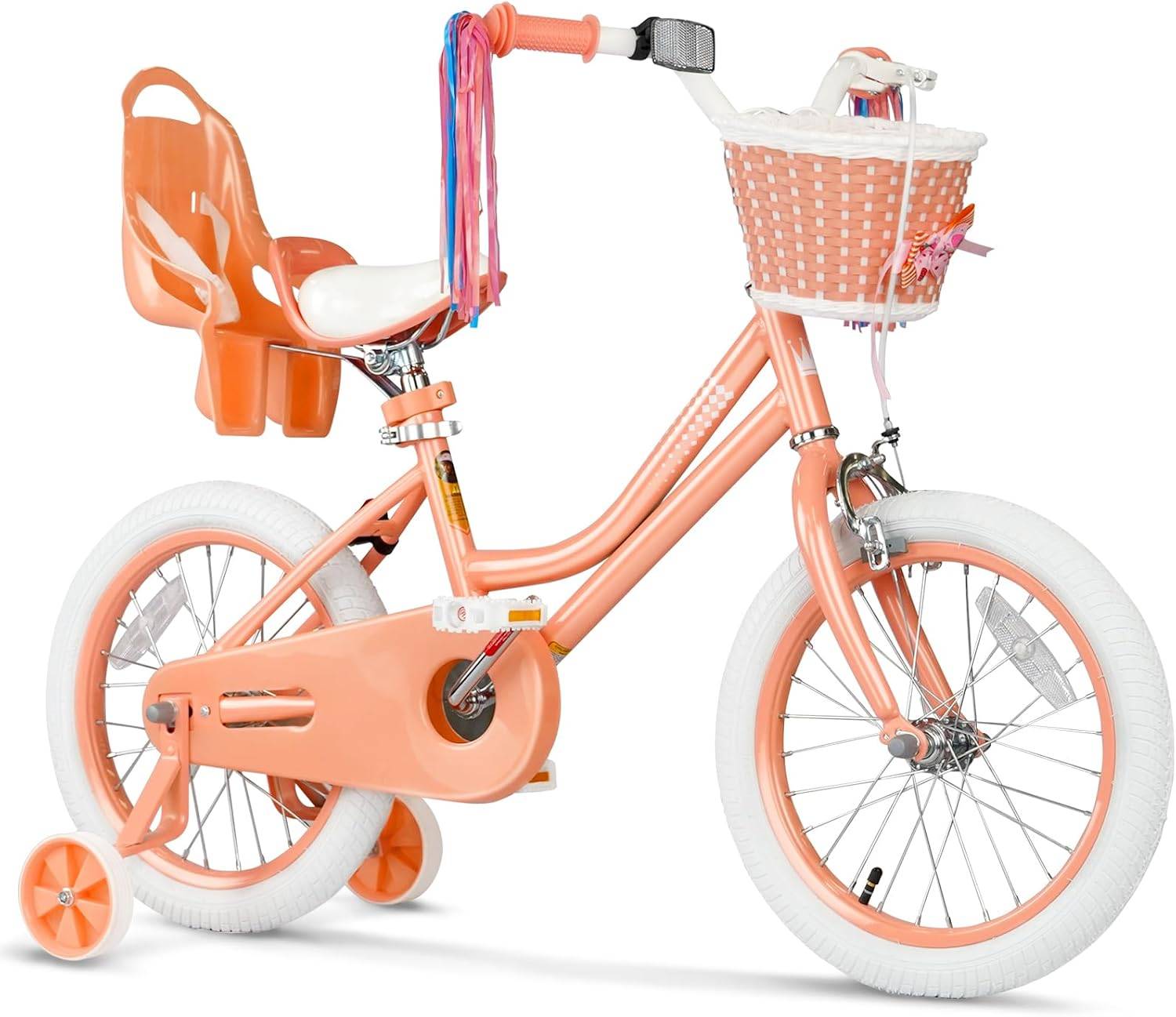 Girls 12/14/16 Inch Kids Bike by XJD with Training Wheels – Peach
Offered with 12-, 14- and 16-inch labels in the Training Wheel Bikes category. The 16-inch version can be compared when the rider falls within that starting range.
XJD Pink Girls' Bike – Kids 12/14/16 Inch Training Wheel Bicycle is categorized as a Training Wheel Bike and is available in 12-, 14- and 16-inch labels. Only its 16-inch version overlaps the XBikes starting range for some 7-year-olds.
XJD Girls Bike for Kids Ages 3-8, 12/14/16 Inch with Training Wheels – Purple is also categorized as a Training Wheel Bike with 12-, 14- and 16-inch labels. The age wording is part of its catalog title, not proof of fit; use measured height and a physical fit check.
Girls 12/14/16 Inch Kids Bike by XJD with Training Wheels – Peach provides the same listed wheel-size choices and category. Its 16-inch version is relevant only if the child's dimensions, reach, braking and confidence support that size.
Complete the pre-ride check
Once the size feels manageable, follow the exact bicycle manual for assembly, adjustments, maintenance, compatibility and any limits or torque requirements. Ask a qualified bicycle mechanic when the instructions are unclear or the bicycle cannot be set up as specified.
Add a properly fitting bicycle helmet. It should sit level and its straps should be used according to the helmet manufacturer's instructions. Recheck the fit rather than relying on the helmet's age label.
The decision for your 7-year-old
Measure height and inseam first, then try the matching range: consider 16-inch at 40–48 in, 18-inch at 43–52 in, or 20-inch at 48–60 in. Choose only the bike on which your child has suitable stand-over clearance, relaxed reach, dependable brake control and present-day confidence. If the child needs an 18- or 20-inch fit, do not treat the supplied 16-inch products as equivalent.
Bikes for your next adventure
-

26-Inch XJD Beach Cruiser Bike for Girls – Purple, V-Brake
This XJD 26-inch purple beach cruiser is sized for big kids and teens — suggeste…$218.49
$229.99 -

Light Purple XJD Toddler Bike Helmet, Adjustable, Size XS (46–51 cm)
This Light Purple XJD toddler bike helmet is made for the smallest riders — the …$20.39
-
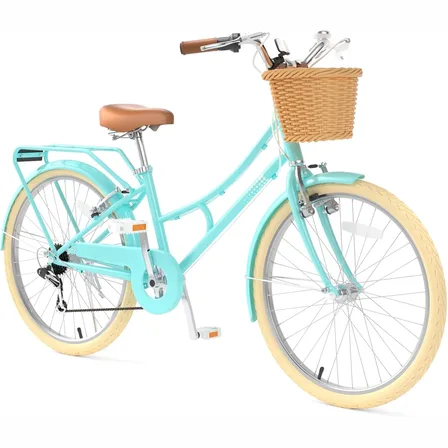
XJD 24-Inch Green Beach Cruiser Bike with U-Brake
This XJD 24-inch beach cruiser in green is made for riders about 4'8" to 5'4" ta…$159.99
$199.99