

What inch bike does a 5 year old need
A 5-year-old will most often compare 14-, 16-, and 18-inch bikes. Measure the child’s height first, then confirm stand-over room, reach, brake control, and confidence on the actual bike.
Which wheel size should you start with?
Age five falls inside three XBikes starting ranges: 14 Inch for ages 3–6, 16 Inch for ages 4–7, and 18 Inch for ages 5–9. Height narrows the choice more effectively than age:
| Wheel size | XBikes age starting point | Rider height starting point |
|---|---|---|
| 12 Inch | Ages 3–4 | 34–40 in / 86–102 cm |
| 14 Inch | Ages 3–6 | 37–45 in / 94–114 cm |
| 16 Inch | Ages 4–7 | 40–48 in / 102–122 cm |
| 18 Inch | Ages 5–9 | 43–52 in / 109–132 cm |
| 20 Inch | Ages 7–12 | 48–60 in / 122–152 cm |
These ranges overlap because wheel size alone cannot establish fit. A child around 40–45 inches tall may have more than one plausible starting size. Body proportions, coordination, and the geometry of the particular bicycle can change the result.
Measure height and inseam before choosing
Measure height with the child standing upright without shoes against a wall. For inseam, have the child stand naturally and measure from the floor to the top of the inside leg. Record both measurements rather than relying on clothing size or a recent age-based estimate.
Compare measured height with the table, then use inseam during the physical fit check. The inseam must allow suitable clearance when the child straddles the bicycle. Because stand-over height is not supplied for the catalog models, it must be checked on the assembled bike or confirmed in the exact product manual.
How to decide between overlapping sizes
Have the child try each realistic candidate. Do not select a larger bicycle merely to provide growing room. An oversized bike can make starting, stopping, steering, and putting a foot down harder.
- Check stand-over: the child should be able to straddle the bicycle comfortably rather than being forced onto tiptoes or against the frame.
- Check reach: seated riding posture should not require an exaggerated stretch to hold and turn the handlebar.
- Check braking: the child must be able to operate the bicycle’s braking controls reliably. If controls cannot be reached or used confidently, the bike is not an acceptable fit.
- Check control: ask the child to start, steer, stop, and place a foot down in a controlled practice area.
- Check confidence: choose the size the child can manage now, even when a larger candidate also falls within an overlapping height range.
How the supplied 12-, 14-, and 16-inch bikes help
The two supplied catalog options are useful because each offers 12 Inch, 14 Inch, and 16 Inch SKU labels, allowing comparison around the smaller sizes relevant to many young riders. Both are categorized as Training Wheel Bikes. Their titles and size labels do not replace an individual fit check.
 Black XJD Kids Bike for Boys – 12, 14 & 16 Inch Sizes
Available in 12, 14, and 16 Inch labels and categorized as a Training Wheel Bike. Its 14- and 16-inch choices are relevant comparison candidates for many five-year-olds, subject to measured height and an individual fit check.
 XJD Kids' Training Wheel Bike for Boys & Girls, 12/14/16 Inch – White
This white Training Wheel Bike has 12, 14, and 16 Inch labels. The 14- and 16-inch versions can be compared for an age-five rider, but height, inseam, reach, braking control, and confidence must determine fit.
Black XJD Kids Bike for Boys – 12, 14 & 16 Inch Sizes is available in 12 Inch, 14 Inch, and 16 Inch labels. XJD Kids' Training Wheel Bike for Boys & Girls, 12/14/16 Inch – White has the same three supplied size labels. Based on the catalog facts provided, the meaningful stated differences are their exact catalog titles and color wording; no further specification comparison can be established here.
For a typical age-five comparison, the 14- and 16-inch versions align with the XBikes age starting points. The 12-inch versions use an ages 3–4 starting point, although measured height and actual control remain more important than age alone. Neither supplied product offers an 18-inch SKU label. If the child’s measurements and trial indicate an 18-inch bike, these products are nearest-size comparison points, not substitutes for an 18-inch bike.
Complete the safety and setup check
Use a properly fitting bicycle helmet every ride. It should sit level, fit securely, and have its straps adjusted according to the helmet manufacturer’s instructions.
Before riding, follow the exact bicycle manual for assembly, adjustment, maintenance, compatibility, load limits, and torque requirements. Those details are not present in the supplied catalog facts. If the manual is unavailable or any setup is uncertain, use a qualified bicycle mechanic.
The practical answer for your 5-year-old
Start with 14 inches at 37–45 inches tall, 16 inches at 40–48 inches, or 18 inches at 43–52 inches, treating overlaps as candidates rather than automatic answers. Measure height and inseam today, let the child try the matching sizes, and choose the bicycle they can straddle, reach, brake, steer, and stop confidently now.
Bikes for your next adventure
-
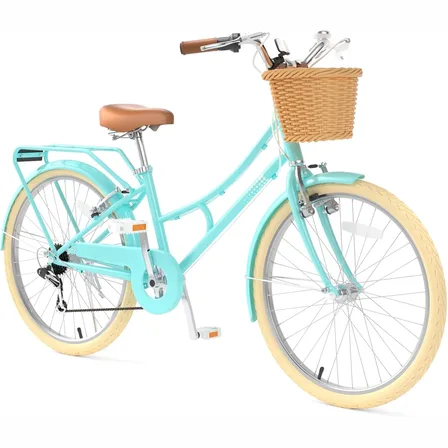
XJD 24-Inch Green Beach Cruiser Bike with U-Brake
This XJD 24-inch beach cruiser in green is made for riders about 4'8" to 5'4" ta…$159.99
$199.99 -
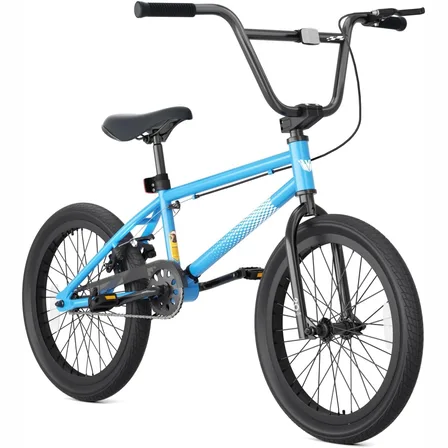
Blue XJD Freestyle BMX Bike, 20-Inch – No Pegs
The XJD 20-Inch Blue Freestyle BMX is an entry-level BMX bike for boys and girls…$189.99
-

Light Purple XJD Toddler Bike Helmet, Adjustable, Size XS (46–51 cm)
This Light Purple XJD toddler bike helmet is made for the smallest riders — the …$20.39