

What inch bike for 11 year old
For most 11-year-olds, start by comparing 20-inch and 24-inch bikes. Measure the child first: 20-inch suits 48–60 in (122–152 cm), while 24-inch suits 54–64 in (137–163 cm). Choose only after checking stand-over clearance, reach, braking and confident control.
Choose the starting size from measured height
Age points toward a likely wheel size, but height gives you a more useful first comparison. In the XBikes starting points, both 20-inch and 24-inch ranges can include an 11-year-old.
| Wheel size | XBikes age starting point | Rider-height starting point |
|---|---|---|
| 20 Inch | Ages 7–12 | 48–60 in / 122–152 cm |
| 24 Inch | Ages 10–14 | 54–64 in / 137–163 cm |
| 26 Inch | Youth and adults over 60 in / 153 cm |
An 11-year-old under 54 inches tall will usually begin with the 20-inch comparison. From 54 to 60 inches, compare both 20-inch and 24-inch options because the height ranges overlap. Above 60 inches, compare 24-inch bikes and, where appropriate, 26-inch models—but never move up solely because the child will grow.
Measure before visiting or ordering
Measure height without shoes, with the child standing straight against a wall. Then measure inseam from the floor to the crotch while the child stands naturally. Record both figures rather than relying on a recent medical or school measurement.
Height identifies which wheel-size range to investigate. Inseam helps assess whether the child can stand over the actual bicycle comfortably. It does not determine wheel size by itself because frame shapes and dimensions can differ even when two bicycles use the same wheel size.
Bring the measurements to the product comparison, but treat them as screening information. The final choice depends on the complete bicycle and the individual rider.
Check the actual bicycle fit
Have the child try the bicycle whenever possible. Do not buy an oversized model merely to leave growing room. A bike that is difficult to mount, stop or steer now is not made suitable by future growth.
- Stand-over: Ask the child to straddle the bicycle with both feet firmly on the ground. The frame should not prevent a comfortable, controlled stance.
- Reach: From the riding position, the child should reach the handlebar without stretching, locking the elbows or losing a stable posture.
- Brake control: Confirm that the child can reach and operate the available brake controls reliably while keeping control of the handlebar.
- Handling: In a suitable controlled area, check that the rider can start, steer, turn, slow and stop without the bike feeling unwieldy.
- Confidence: Watch for hesitation caused by excessive height or reach. Current control matters more than the age printed on a sizing chart.
How the catalog option helps the comparison
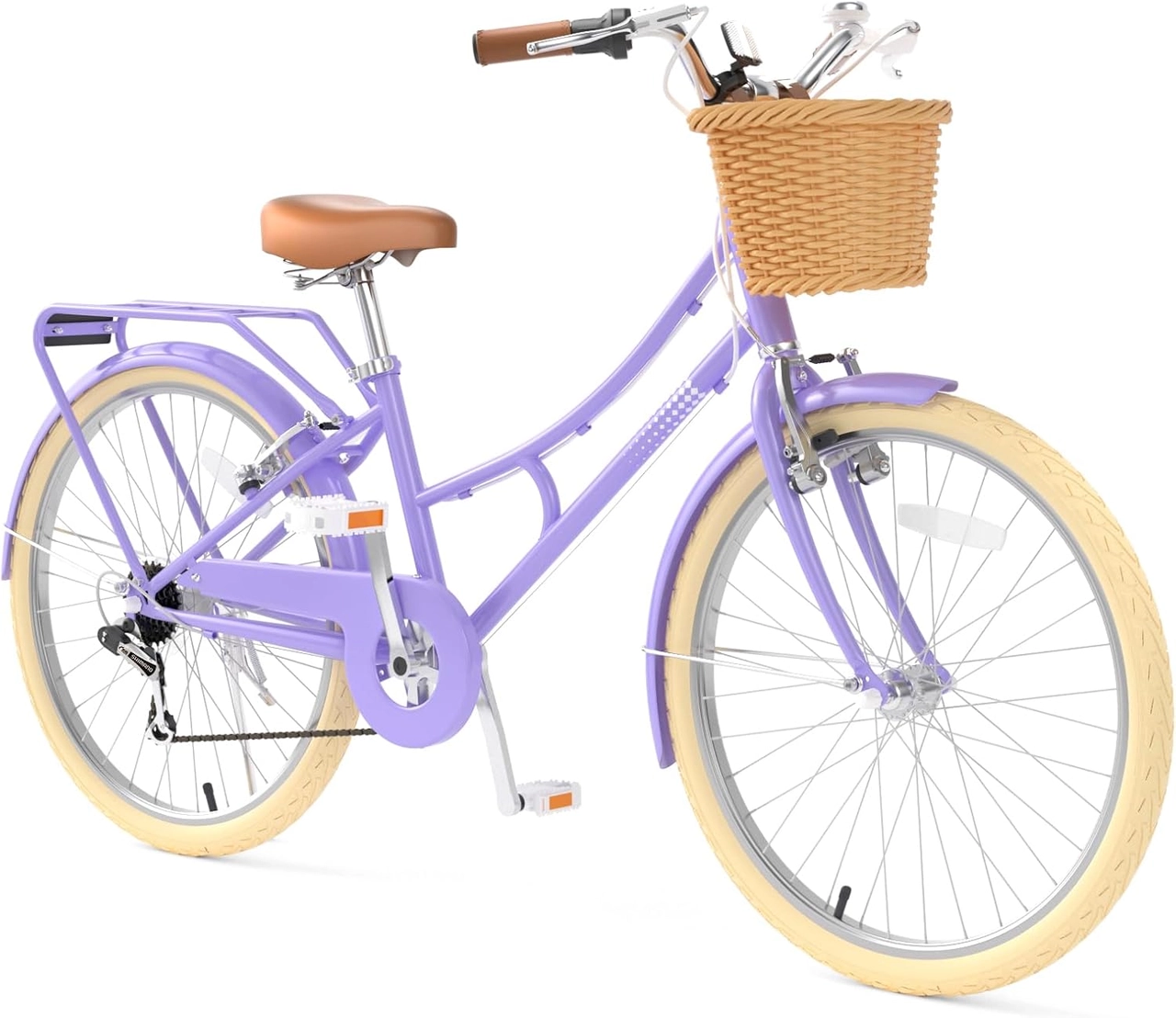
The supplied catalog includes the 24-Inch Purple XJD Beach Cruiser Bike with U-Brake. Because it is a 24-inch beach cruiser bike, it is relevant when the measured rider falls within the 24-inch starting range and can complete an individual fit check. Its U-brake is a supplied catalog feature, but the child must still demonstrate comfortable reach and brake operation on the actual bicycle.
This catalog option helps answer the title by giving parents a specific 24-inch model to compare after measuring an 11-year-old. It is not evidence that every child of that age fits a 24-inch bicycle, and no supplied 20-inch or 26-inch product is available here for a direct model-to-model comparison.
Decide between 20, 24 and 26 inches
Choose a 20-inch bicycle when the child is within its 48–60 inch starting range and a larger option compromises stand-over, reach, braking or confidence. Choose a 24-inch bicycle only when the child is within its 54–64 inch range and controls that specific bike comfortably. Consider 26 inches only for a rider over 60 inches, followed by the same full fit check.
If the child falls in an overlapping height range, do not settle the choice by age or wheel diameter alone. Compare the complete bicycles side by side and select the one the child can control now. Frame geometry, adjustment limits and riding position must be checked on the exact models.
Complete the safety and setup checks
Use a properly fitting bicycle helmet every ride. It should sit level and its straps should be adjusted according to the helmet manufacturer’s instructions.
Before riding, follow the exact bicycle manual for assembly, adjustments, maintenance, compatibility and load limits. If the manual is unavailable, a setup step is unclear or brake operation needs attention, use a qualified bicycle mechanic rather than guessing at a procedure or torque.
For an 11-year-old, measure height and inseam today, shortlist 20-inch or 24-inch bikes from the stated ranges, and buy only the specific bicycle on which the child passes the stand-over, reach, braking and control checks.
Bikes for your next adventure
-

XJD Girls Bike for Kids Ages 3-8, 12/14/16 Inch with Training Wheels – Purple
The XJD Girls Bike in Purple is a training-wheel bicycle for kids ages 3 to 8, f…$149
$169 -

Pink Girls' 12/14/16" Bike by XJD – Basket & Doll Seat
The XJD Pink Girls' Bike with Basket & Doll Seat is made for riders 71–122 cm ta…$75.99
$99.99 -

Kids Bike Helmet by XJD for Girls – Pink
The XJD Kids Bike Helmet in Pink is a lightweight multi-sport helmet for girls r…$59.99
$99