

What inch bike should a 6 year old have
Most 6-year-olds should start by comparing a 16-inch bike with an 18-inch bike, then choose by measured height and hands-on fit—not age alone.
The short answer by rider height
Under the XBikes starting points, a 16-inch bike covers rider heights of 40–48 inches (102–122 cm) and ages 4–7. An 18-inch bike covers 43–52 inches (109–132 cm) and ages 5–9. That makes both plausible at age six, with height and actual control deciding between them.
A smaller six-year-old measuring 37–45 inches (94–114 cm) may still fit a 14-inch bike. A rider at 48 inches (122 cm) reaches the height starting point for a 20-inch bike, but 20-inch sizing starts at ages 7–12. Because these ranges overlap, do not select from a birthday or height chart alone.
| Wheel size | XBikes age starting point | Rider height | Relevance at age six |
|---|---|---|---|
| 14 Inch | 3–6 | 37–45 in / 94–114 cm | Possible for a smaller rider |
| 16 Inch | 4–7 | 40–48 in / 102–122 cm | Common starting comparison |
| 18 Inch | 5–9 | 43–52 in / 109–132 cm | Compare when height and control support it |
| 20 Inch | 7–12 | 48–60 in / 122–152 cm | Only consider after a careful individual fit check |
Measure before choosing the inches
Measure the child barefoot or in the shoes normally worn for riding. Record total height, then measure inseam from the floor to the crotch. Wheel-size charts use height as a starting point; inseam helps you judge whether the child can stand over the particular frame comfortably.
- Measure height against a wall, with the child standing straight and looking ahead.
- Measure inseam with the feet slightly apart and the measuring point raised firmly to the crotch.
- Write both measurements down rather than estimating from clothing size or age.
- Compare height with the table, then try the actual bicycle.
Frame shapes and adjustment ranges can differ even when two bicycles share a wheel label. Consult the exact product manual for adjustment, assembly, compatibility, load limits and maintenance information not provided here. If setup is uncertain, use a qualified bicycle mechanic.
What a hands-on fit check should confirm
The American Academy of Pediatrics recommends having the child try the bicycle and avoiding an oversized bike bought merely for future growth. During the trial, check that the rider can stand over the frame, mount and dismount without struggling, and remain balanced while starting and stopping.
With the child seated in a normal riding position, look at reach. The hands should meet the controls without an uncomfortable stretch, and the child should be able to steer while looking ahead. Confirm that the rider can operate the brakes confidently with their own hands. A size is too demanding if control becomes hesitant, even when the height range appears suitable.
How confidence changes the decision
Where 16-inch and 18-inch ranges overlap, current ability becomes especially important. A cautious beginner may control the smaller suitable option more comfortably. A confident rider may be ready for the larger candidate only if stand-over clearance, reach, steering and braking all work in practice.
Training wheels do not correct a frame that is too tall, too long or difficult to control. Treat them as a product feature, not permission to size up. Recheck fit after adjustments and as the child grows.
Where the supplied XBikes options fit
The catalog options help because both are offered in 12-inch, 14-inch and 16-inch labels, allowing comparison around the smaller end of the six-year-old range. Neither supplied product offers an 18-inch or 20-inch label, so they are relevant only when an individual fit check supports 12, 14 or 16 inches; they are not substitutes when the child needs a larger size.
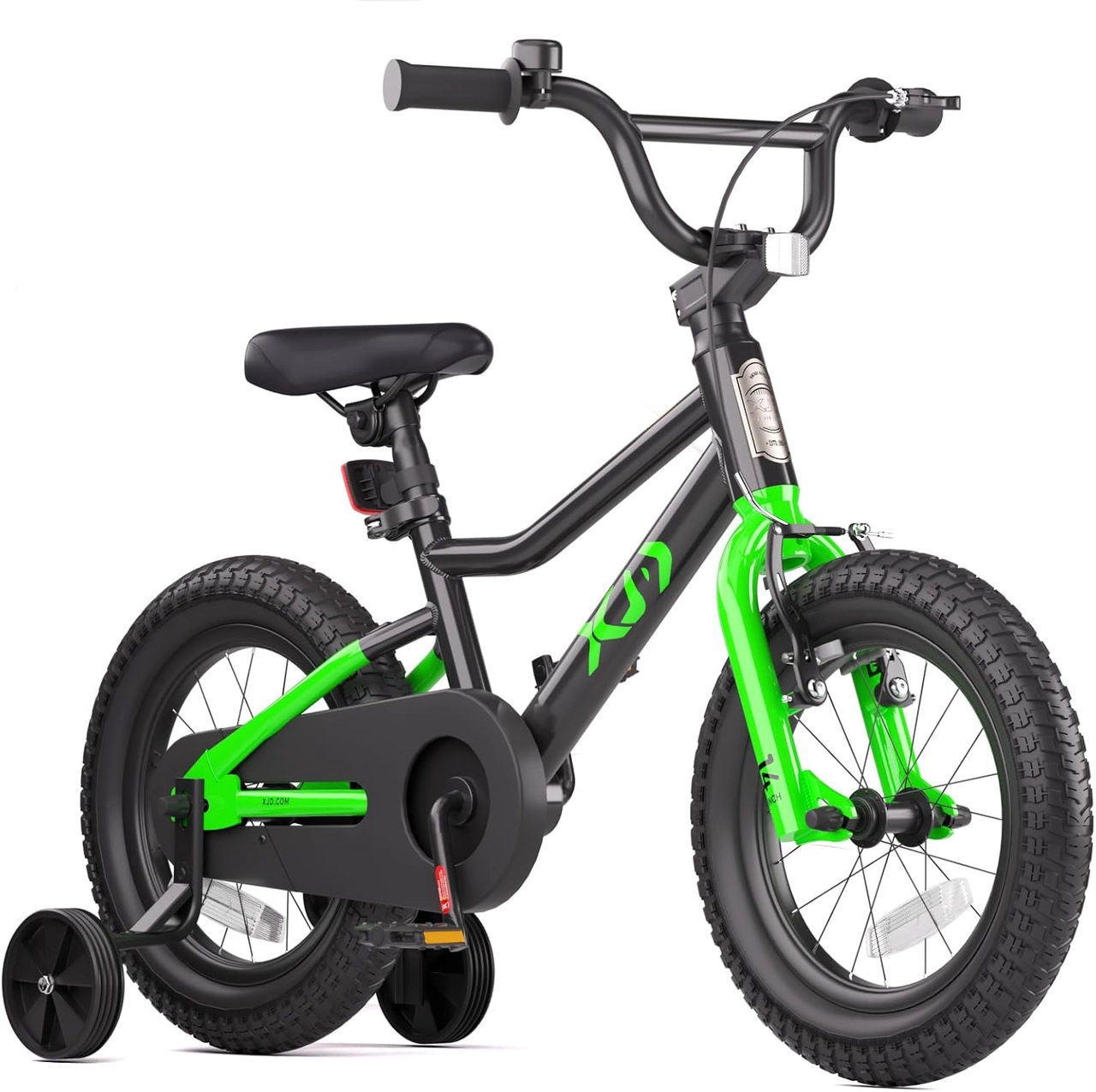 Black XJD Kids' BMX Bicycle with Training Wheels
Available in 12 Inch, 14 Inch and 16 Inch, this Kids' BMX Bike is relevant when the child's measurements and hands-on fit check support one of those sizes; it is not an 18-inch alternative.
 Pink Girls' 12/14/16" Bike by XJD – Basket & Doll Seat
This Training Wheel Bike offers 12 Inch, 14 Inch and 16 Inch labels. It can be compared for a smaller six-year-old or a rider suited to 16 inches, subject to an individual fit check.
The Black XJD Kids' BMX Bicycle with Training Wheels is categorized as a Kids' BMX Bike and is available in 12 Inch, 14 Inch and 16 Inch. The Pink Girls' 12/14/16" Bike by XJD – Basket & Doll Seat is categorized as a Training Wheel Bike with the same three available size labels. Those catalog labels establish the comparison choices, but they do not prove fit for a particular child.
If measurements and the riding trial point to 18 inches, continue looking for an actual 18-inch bicycle. Do not treat either supplied 16-inch option as equivalent. Likewise, choose 14 inches over 16 when that is the size the child can properly stand over, reach, steer and stop.
Helmet check and the next decision
Whichever wheel size fits, use a bicycle helmet that fits properly. U.S. Consumer Product Safety Commission guidance says it should sit level and its straps should be used according to the helmet manufacturer's instructions.
For a six-year-old, measure height and inseam now, compare 16 and 18 inches first, and include 14 or 20 inches only when the XBikes height ranges indicate them. Then let stand-over clearance, reach, brake control and present confidence make the final decision—never extra growing room.
Bikes for your next adventure
-

XJD Girls Bike for Kids Ages 3-8, 12/14/16 Inch with Training Wheels – Purple
The XJD Girls Bike in Purple is a training-wheel bicycle for kids ages 3 to 8, f…$149
$169 -

Pink Girls' 12/14/16" Bike by XJD – Basket & Doll Seat
The XJD Pink Girls' Bike with Basket & Doll Seat is made for riders 71–122 cm ta…$75.99
$99.99 -
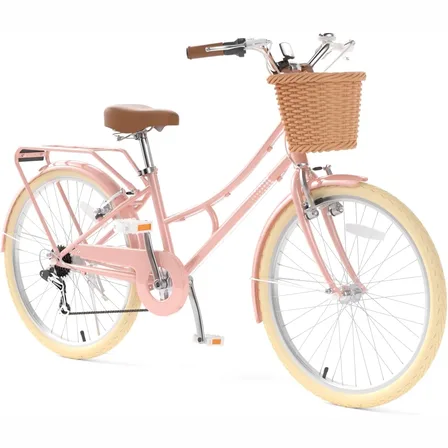
XJD Pink Beach Cruiser for Girls – Rear Rack & V-Brake
The XJD Pink Beach Cruiser for girls is the step-up bike for riders who've outgr…$179.99
$209.99