

What is a 10 inch bike
A 10 inch bike is a children’s bicycle identified by its nominal wheel size, not by the frame’s height. Confirm the wheel label, then check the child’s body fit and control before choosing it.
What “10 inch” actually describes
The phrase refers to the bicycle’s wheel-size designation. It does not mean that the frame, saddle, or complete bicycle is 10 inches tall, and it does not guarantee a particular fit. Nominal wheel sizes can also differ from a simple measurement across the outside of an inflated tire.
To identify an existing bike, first read the size molded or printed on the tire sidewall and compare it with the bicycle or tire documentation. If the marking is missing, damaged, or unclear, ask a qualified bicycle mechanic to identify the wheel and compatible replacement parts. Do not assume that an approximate ruler measurement proves the nominal size.
What to measure on the child
There is no supplied XBikes age or height starting point for a 10 inch bicycle, so age alone cannot establish whether one fits. Measure the child’s standing height and inseam, then have the child try the exact assembled bicycle.
- Height: Measure without shoes, standing upright against a wall.
- Inseam: Measure from the floor to the crotch while the child stands naturally. This helps assess stand-over room and the ability to get on and off.
- Reach: With the child seated, check that the handlebar can be held without excessive stretching, twisting, or locking the arms.
- Brake control: If the bicycle has hand brakes, the child must be able to reach and operate them confidently. Check every fitted control rather than presuming small wheels mean easy operation.
During the try-on, look for comfortable stand-over clearance, a stable seated position, easy steering, and controlled starting and stopping. Follow the exact product manual for saddle or handlebar adjustment. If setup, compatibility, or adjustment limits are uncertain, use a qualified bicycle mechanic.
How 10 inch compares with XBikes starting points
Because XBikes does not provide a numerical fit band for 10 inch bikes here, do not extrapolate one from the larger sizes. The nearest supplied starting points begin at 12 inches:
| Wheel size | Age starting point | Rider-height starting point |
|---|---|---|
| 12 Inch | Ages 3–4 | 34–40 in / 86–102 cm |
| 14 Inch | Ages 3–6 | 37–45 in / 94–114 cm |
| 16 Inch | Ages 4–7 | 40–48 in / 102–122 cm |
These ranges are comparison starting points, not a rule and not evidence that a 10 inch bike suits a younger or shorter child. Prioritize measured height, inseam, reach, brake control, and current confidence. A child near any boundary should try the relevant bicycles rather than choosing from age or wheel size alone.
When the supplied product is relevant
The Purple XJD Girls' Bike with Doll Seat & Basket is cataloged as a Training Wheel Bike with 12 Inch, 14 Inch, and 16 Inch SKU labels. Those choices help show the next supplied wheel-size categories to compare after investigating a 10 inch bike. None is a 10 inch option, so they are nearest-size comparison points rather than substitutes; each requires its own fit check.

Compare the child’s measurements and control on the exact selected SKU. Do not infer fit from the product title, styling, or the presence of training wheels. The supplied facts do not establish its brake type, weight, materials, load limit, assembly procedure, or compatibility details. Consult the manual or a qualified bicycle mechanic for those points.
Avoid sizing up for future growth
An oversized bicycle can make mounting, steering, braking, and stopping harder. Choose for the child’s present control instead of buying a larger wheel size solely to extend future use. If a 10 inch bicycle fits now but a 12 inch model does not permit comfortable stand-over, reach, and control, the 12 inch label is not an acceptable replacement just because it is the nearest catalog option.
Likewise, a small wheel label is not enough if the cockpit feels cramped, the child cannot operate the controls, or the bicycle falls outside its permitted adjustments. Recheck fit after adjustments and as the child grows.
What to do before the first ride
- Confirm the nominal wheel size from the tire marking and documentation.
- Measure the child’s height and inseam.
- Have the child try the exact bicycle and assess stand-over, reach, steering, braking, starting, and stopping.
- Follow the product manual for assembly, maintenance, adjustment, load limits, compatibility, and torque; use a qualified bicycle mechanic when anything is uncertain.
- Use a bicycle helmet that fits properly, sits level, and has straps positioned according to the helmet manufacturer’s instructions.
The practical decision is simple: treat “10 inch” as a wheel designation, not a promise of fit. Choose a 10 inch bike only after the exact bicycle matches the child’s current measurements and control; otherwise compare another size through a fresh, individual fit check.
Bikes for your next adventure
-

XJD Boys & Girls BMX Bike with Training Wheels, 12/14/16" – Blue
The XJD Boys & Girls BMX Bike in Blue is a first pedal bike for kids roughly age…$99.99
$119.99 -
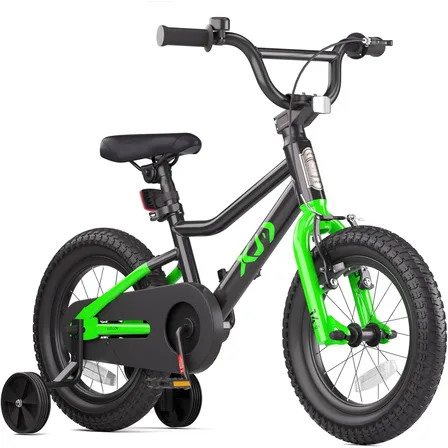
Black XJD Kids' BMX Bicycle with Training Wheels
The XJD Kids' BMX Bicycle with Training Wheels is built for children roughly 3 t…$99.99
$119.99 -
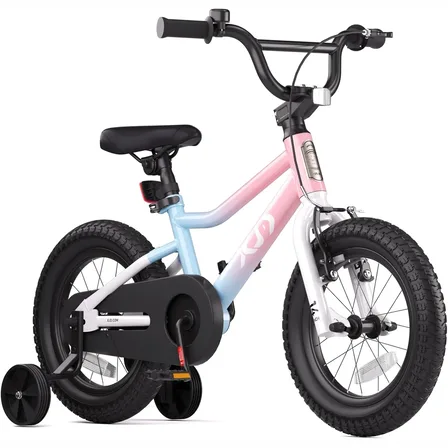
XJD Girls BMX Bike 12/14/16 Inch with Training Wheels – Pink Blue
The XJD Girls BMX Bike in Pink/Blue is built as a first pedal bike for kids roug…$99.99
$119.99